Theopolis Logo

Writing

Explore our collection of theological essays, biblical studies, and reflections on faith and culture.

See all
31-03-0213
Hermeneutics

Apocalyptic Eyes

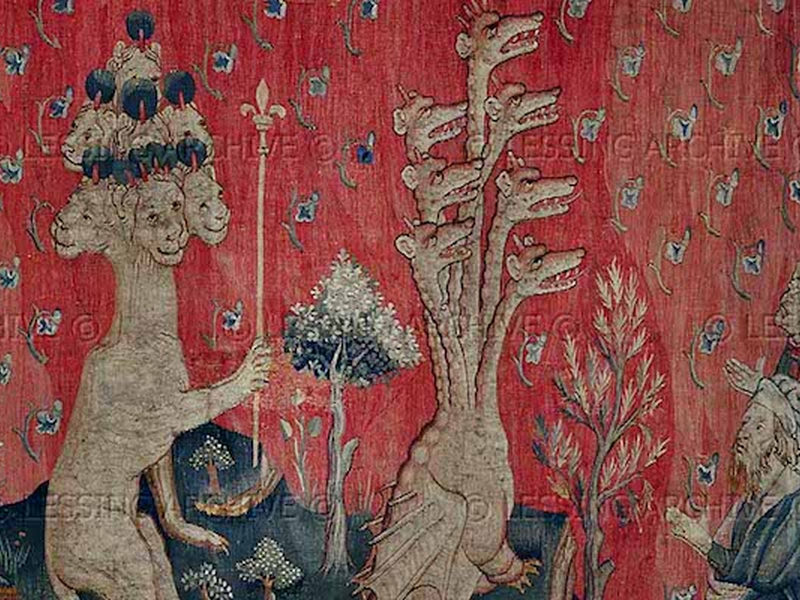
Flying scrolls. Red horses. Beasts coming out of the sea. Winged women. The list goes on. Apocalyptic literature in the Bible is like a cross between science fiction and Marvel comics. And the Bible has a fair bit of this sort of thing. Daniel sees visions in Babylon, Zechariah sees…

by Toby SumpterNovember 4, 2014

bhm-skyline-2
Theopolis News

New Name, New Look

Trinity House Institute has taken a new name, the Theopolis Institute. This striking new name expresses our unique vision and mission and captures the unified purpose behind all our specific programs and activities. We still have Bible, liturgy, and culture in our tagline. We still offer the same courses on…

by TheopolisNovember 4, 2014
istock_000012860926small
Atonement

Not Fearing the Devil

Adam Kotsko offers a socio-political variation on the Christus Victor atonement theory in his 2010 study, The Politics of Redemption: The Social Logic of Salvation . He does this by explaining "the devil" in terms of the Hegelian concept of "objective spirit," Geist . As Kotsko puts it, Geist "refers…

by Peter LeithartOctober 13, 2014
jez-timms-8muutamcwu4-unsplash
Leviticus

The Meaning of Sacrifice

Two factors keep Nahtali Meshel from discussing the meaning of sacrifice until late in his The "Grammar" of Sacrifice . The first has to do with the texts he draws from: "P says little about the meaning of its rituals" (174). The other has to do with the grammatical theory…

by Peter LeithartOctober 8, 2014
jez-timms-8muutamcwu4-unsplash
Leviticus

Praxemics

Chapter 5 of Naphtali Meshel's The "Grammar" of Sacrifice focuses on "praxemics," the physical actions of sacrificial ritual. Praxemes are constituted by six elements: an "atomact," an elementary physical act or gesture; an actor; an object that is acted up; a target for the action and often for the object…

by Peter LeithartOctober 6, 2014
markus-winkler-aid-xyrtlec-unsplash
Leviticus

Jugation and Hierarchy

Two chapters of Naphtali Meshel’s The “Grammar” of Sacrifice cover what he calls “jugation” and “hierarchies.” The first involves the addition of other materials to an animal offering. Jugates include wine, cereal, and oil that are added to the animals (zoemes) that are offered in sacrifice. Some jugates are coordinated…

by Peter LeithartOctober 1, 2014

Showing page 167 of 309

See all
See all
History

Money, Magic, and Signs

David Hawkes reviews a book on Literature and Economics in the Age of Milton in the April 2 TLS , and has this to say about the early modern suspicion of attempting to “do things with words”: “The influx into Renaissance Europe of precious metals from America, and the consequent…

April 19, 2004
History

On Books

David McKitterick ‘s Print, Manuscript and the Search for Order, 1450-1830 describes the move from manuscript to book as a gradual process rather than a sudden revolution. According to the reviewer in the TLS , McKitterick points out that books and manuscripts were not separated in library catalogues or apparently…

April 19, 2004
History

Goddesses in the Middle Ages

Robert Lerner reviews Barbara Newman ‘s God and the Goddesses: Vision, Poetry, and Belief in the Middle Ages in the March 19 issue if the TLS . Newman’s book analyzes the female deities and allegorical figures of medieval literature and belief, including Nature, Lady Love, Holy Wisdom, and Mary. As…

April 19, 2004

Luther on Justification

Robert Jenson has a brief but very challenging comment on Luther’s views on justification in the Fall 2003 issue of the Westminster Theological Journal (which, incidentally, under the editorship of Peter Enns is promising to be a lively forum of debate). Responding to Carl Trueman ‘s critique of the new…

April 19, 2004
Economics

Hayek

Francis Fukuyama reviews Bruce Caldwell ‘s new biography of Hayek in the Spring 2004 issue of The Wilson Quarterly . According to Caldwell, Hayek’s argument against a managed economy was basically an epistemological one: “There are limits to rationality, and what any individual knows tends to be local in nature.…

April 19, 2004
Media

McLuhan and Teilhard

Tom Wolfe has a fascinating sketch of the life and work of Marshall McLuhan in the Spring 2004 issue of The Wilson Quarterly . McLuhan converted to Catholicism during his studies, and Wolfe suggests that McLuhan’s greatest inspiration was a hidden one, Teilhard de Chardin . Wolfe writes, “Regardless of…

April 19, 2004

Showing page 2098 of 2212

Browse by Category

In Medias Res

Your weekly digest for all things Theopolis.

Donate

Theopolis is nearly 100% donor-supported. Consider joining us on our mission.