Theopolis Logo

Writing

Explore our collection of theological essays, biblical studies, and reflections on faith and culture.

See all
sodom
Judges

The Levite, the Concubine, and Israel's Story

The story of Judges 19 and the subsequent chapters are some of the most shocking and appalling accounts in all of Scripture. The callousness of the old host and the Levite, and the monstrous brutality of the men of Gibeah, leaves us feebly scrabbling for words by which to surmount…

by Alastair RobertsNovember 1, 2016
david-ark-2
Biblical Theology

Adam Ascended

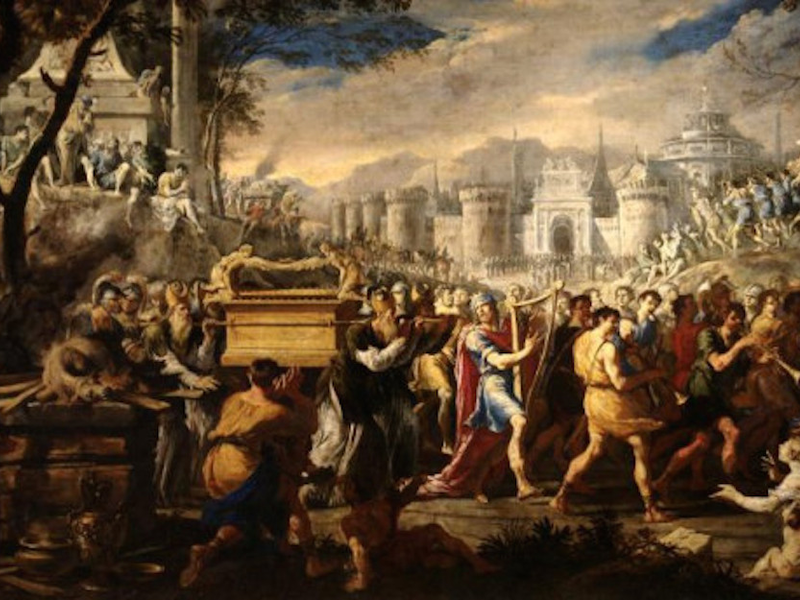
David has become king. He has conquered the capital city of Jerusalem. He has brought the ark of Yahweh into the city and placed it in a tent. He has stationed Levites at the tent to offer sacrifices of praise. An anomaly hits him: He has a cedar-paneled palace, and…

by Peter LeithartOctober 27, 2016
last-supper-2
Eucharist

The Epiclesis in the Reformed Eucharistic Prayer, 3

In Part 2 of this series we traced what we have of the development of the epiclesis in the liturgy of the Church. In this third and final part we’ll look at the theological implications of this and how we may apply what we’ve learned. As we saw in Part…

by Christopher KouOctober 25, 2016
jimpreaching
How to Worship

Reformational Catholicism, A Wish List

In a 2014 piece published in First Things , I offered a "wish list" for Protestant churches, a checklist for a future catholic Protestantism. The wish list doesn't cover everything. It doesn't mention those things that Protestants, especially Evangelicals, already do, often exceedingly well, things like missions and evangelism and…

by Peter LeithartOctober 20, 2016
last-supper-2
Eucharist

The Epiclesis in the Reformed Eucharistic Prayer, (Part 2)

In the first part of this series we examined the meaning of “blessing” in Scripture and its parallels in Jewish liturgical tradition, but did not find anything that we could properly call an epiclesis (an invocation of the Holy Spirit). We did find examples of invocation of Jesus to “come”…

by Christopher KouOctober 18, 2016
moses-gives-aaron-priesthood-39465-wallpaper
Baptism

Renewing Circumcision

When the Aaronic priests were ordained, the blood of the ram of "filling” was placed on the lobe of the right ear, the right thumb, and the right big toe (Lev. 8:22-24). Similarly, the cleansing rite for a leper included smearing the right ear lobe, thumb, and big toe with…

by Peter LeithartOctober 13, 2016

Showing page 123 of 309

See all
See all

Sacrilege or Exaltation

T he Hebrew word ma’al is a key term in Chronicles. It means “act of unfaithfulness” or “sacrilege,” and is the sin that leads to Saul's fall (he ma’aled a ma’al , 1 Chronicles 10:13) and to the exile of Judah, whose officials and priests ma’aled a ma’al (2 Chronicles…

November 7, 2016
Reformational Catholicism

End of Protestantism

M y End of Protestantism (the book) deals with a number of the questions Doug Wilson raises in his brief review . Here I correct several of Doug’s misrepresentations and clarify some points, but mainly point to fuller discussions in the book. First, on John 17: Doug says that I’m…

November 7, 2016
American Politics

American Prestige in Freefall

W riting in The Australian , Paul Kelly views the state of American politics from Down Under. He gets some things wrong, I think, but he also nails some of the cultural and political toxins of which the 2016 Presidential debate is symptomatic. He lays much of the blame on…

November 4, 2016

Pain and Negation

I n her The Body in Pain , Elaine Scarry describes the “aversiveness” of our experience of pain. By that, she means that pain is sheerly negative, experienced as something set against us. Even though it is in us, it’s not us. Scarry writes: The first, the most essential, aspect…

November 4, 2016

Aging and the Unmaking of the World

A ge obliterates and collapses our world, writes Elaine Scarry in The Body in Pain (32-3): “the body works to obliterate the world and self of the old person. Something of this world dissolution is already at work even in the tendency of those in late middle age, no longer…

November 4, 2016

Divine Sentience

I n several places in Scripture, idols are characterized by their sensory deprivation (Psalms 115; 135). They have eyes but cannot see, ears but cannot hear prayer, noses but cannot smell incense of sacrifice. By implication, Yahweh the living God can do all these things. Elaine Scarry points out (…

November 4, 2016

Showing page 235 of 2212

Browse by Category

In Medias Res

Your weekly digest for all things Theopolis.

Donate

Theopolis is nearly 100% donor-supported. Consider joining us on our mission.