Theopolis Logo

Writing

Explore our collection of theological essays, biblical studies, and reflections on faith and culture.

See all
sixteen-miles-out-al48tflf4e8-unsplash
Food

Gluttony In The Bible (As Opposed To Gluttony In The American Church)

In the Bible, fatness is such a blessing, that it is especially hard to understand why wicked men are permitted to enjoy such a state. It requires a theodicy and faith in God. Thus: “For they have no pangs until death; their bodies are fat and sleek . They are…

by Mark HorneAugust 12, 2013

jeremy-yap-j39x2xx_8cq-unsplash
How to Worship

Biblical Worship (Video with James B. Jordan)

[fve]http://vimeo.com/71901553[/fve]

by Peter LeithartAugust 8, 2013
chris-bair-ndczc5739ck-unsplash
Deuteronomy

Holy Things for Holy People

The allusion to the Exodus story is contained in the first words of Deuteronomy 14:1 — “ye are the sons of Yahweh your God” — as well as in 14:2 in the use of the technical term translated “treasured possession,” “His own possession,” “peculiar people,” “precious people,” and so forth.…

by Ralph Allan SmithAugust 5, 2013
adam-and-eve-in-the-garden-of-eden-wenzel-peter
Deuteronomy

Forbidden Foods

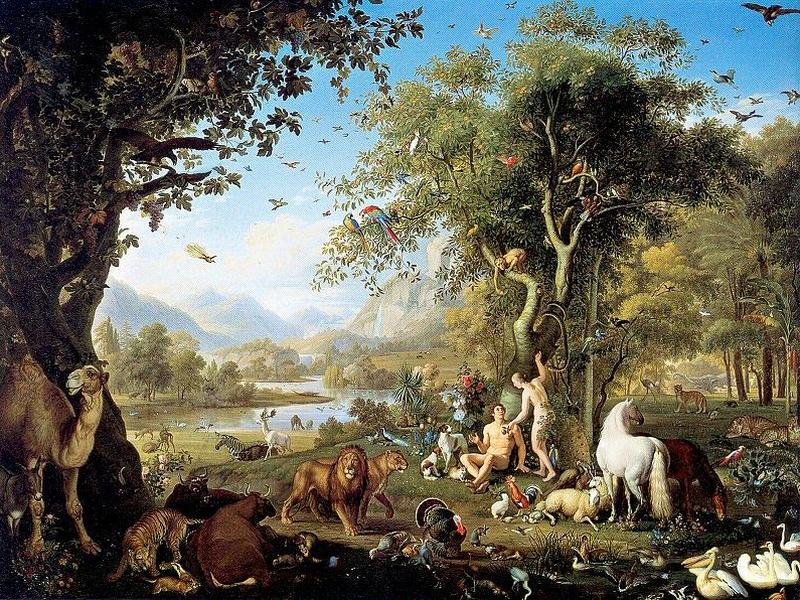
I have argued that Deuteronomy 14:1-21 is an independent literary unit that applies the Third Word to the lives of Israelites from the time of Moses and Joshua. In this short pericope, Moses suggests broad and deep meaning by means of literary allusion to the stories of the creation and…

by Ralph Allan SmithJuly 31, 2013
david-weber-fwuo_zluhnw-unsplash
How to Worship

Pro-Sacramental Reformation

In his recently republished The New Creation , the late, delightful Herbert McCabe defends the priesthood of the plebs as roundly as anyone could want. Citing Hebrews, he claims that "there is an essential difference between the Christian community and the community of the Old Law, or any other religious…

by Peter LeithartJuly 29, 2013
eric-ward-7kqe_8meex8-unsplash
Augustine

Sexual Idolatry

Augustine famously prayed, “Our hearts our restless until they rest in You.” True indeed. Being creatures, we inherently sense our ontological poverty—our innate condition of dependence—and are compelled to find a sense of security. And it is also true—as Augustine’s own narrative painfully illustrates—that one of the things we most…

by Gerald HiestandJuly 24, 2013

Showing page 190 of 309

See all
See all

Building Churches in Egypt

S arah Eekhoff Zylstra reports in Christianity Today on efforts to change laws concerning church construction in Egypt: “Current laws, which have been in place since 1856, require Christians to get the consent of the local Muslim community—and the country’s president—before building a church.” At times, “Christians were required to…

September 2, 2016

Madness

D arian Leader notes in What Is Madness? that the various theories of madness that have been developed over the past fifty years are “more or less unknown outside a very narrow professional field” (2). That research has been undertaken within a psychoanalytic framework, and is barely known even to…

September 2, 2016

Lightning Flash

Haiku is the most mockable poetic form. It seems easy, and a lot of bad haiku gets written. The best haiku exemplifies the nature of poetry, which I have described as a “ concentrated excess of language .” Reading a well-constructive haiku is like viewing a scene in a flash…

September 2, 2016

Tragic Teen

A s Rhodri Lewis points out , the evidence that Hamlet is young is overwhelming: “Claudius counsels Hamlet that his enduring display of grief for his father is ‘unmanly,' a term whose persuasive force depends on Hamlet aspiring to, rather than already having attained, the condition of manliness; Laertes thinks…

September 2, 2016
Church Calendar

Sunrise, Sunset

E ach day the sun rises and sets. Each year, the sun does the same, ascending during the spring to its zenith in the summer solstice and then descending again to its nadir in the winter solstice. As Jean Hani points out ( Symbolism of the Christian Temple , 73-4),…

September 2, 2016

Revelation between Protestant and Catholic

T he Reformers read Revelation as a prophetic outline of history, and so identified the beast and harlot with the Catholic church of their time. In response, Catholics developed “preterist” and “futurist” readings of the book, which viewed the Apocalypse as a prophecy of fulfilled events of the distant past,…

September 2, 2016

Showing page 258 of 2212

Browse by Category

In Medias Res

Your weekly digest for all things Theopolis.

Donate

Theopolis is nearly 100% donor-supported. Consider joining us on our mission.