Theopolis Logo

Writing

Explore our collection of theological essays, biblical studies, and reflections on faith and culture.

See all
screen-shot-2022-08-04-at-9-36-57-am
Matthew

Paul Doesn't Care About Universal Individual Sinfulness or General Revelation

One reason readers assume Paul is trying to prove that all human beings are sinful is that they understand him to be arguing that no one can keep the law. That means, they think, his opponents must believe that human nature is potentially sinless. Taking Paul’s statement that, if you…

by Mark HorneJune 17, 2013

karsten-wurth-imegmbunara-unsplash
Mission

Dreams and Visions

[Note: This post was written prior to our name changing to Theopolis Institute.] What is Trinity House for? Three things: We aim to advance the reformation of the church and, through the church, to promote the renewal of culture; in furthering reformation, we aspire to be a site of fraternal,…

by Peter LeithartJune 12, 2013
sixteen-miles-out-al48tflf4e8-unsplash
Deuteronomy

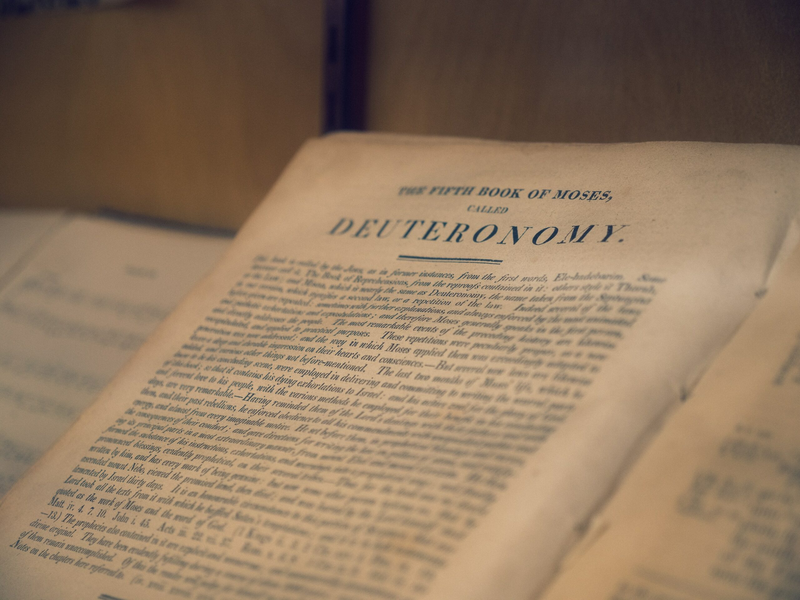
Sons to Yahweh your God!

This is the third in a series of studies of the Third Word, and especially of Deuteronomy 14. In 1979 Stephen Kaufman penned a groundbreaking essay on Deuteronomy, arguing that it was a meticulously structured and carefully composed book. In his view, chapters 12 to 26 in particular follow the…

by Ralph Allan SmithJune 10, 2013
kelly-sikkema-gpoh17dxqdm-unsplash
Romans

How is Wrath Revealed?

A large mistake is made in understanding Romans if one assumes that Paul is concerned with proving the fact that no one can ever live without sin—or that all attempts at obeying God’s commands are at least tainted with human sinfulness. The first problem with such an assumption is that…

by Mark HorneJune 5, 2013
chris-bair-ndczc5739ck-unsplash
Deuteronomy

The Third Word

This is the second in a series of studies on the Third Word, and especially on the food laws of Deuteronomy 14. In the second part of this series, I argue that Moses’ reworking of the Ten Words in Deuteronomy 5 includes adding nuance to the Third Word. This prepares…

by Ralph Allan SmithJune 3, 2013
yannis-papanastasopoulos-if_29sed7ta-unsplash
Culture

Turning Babel into a Beast

Recent months have brought a lively discussion of Christian participation in the culture war. On the one hand, the pro-life movement appears to be making some slow progress on the abortion issue. The trial of abortionist and serial murderer Kermit Gosnell has the potential to awaken those who are nominally…

by Joe RigneyMay 29, 2013

Showing page 193 of 309

See all
See all

Jacob Have I Loved

W illiam Johnstone points out in the first volume of his commentary on 1 & 2 Chronicles that the Chronicler's (C) list of the kings of Edom oddly repeats the phrase “then king so-and-so died and there reigned in his place” seven times. In part, this places greater stress on…

June 23, 2016

Jesus the Teacher

I f not unique, Robert Banks's Reenvisioning Theological Education is a rarity among studies of theological education in the amount of attention he devotes to biblical models of education and training. In reviewing recent literature on efforts to rethink seminary education, he notes again and again that little attention is…

June 23, 2016

Fulfilling Paganism

R obert Pogue Harrison ( The Dominion of the Dead ) spends several pages on Walter Pater's novel, Marius the Epicurean . A deathbed convert to Christianity, Marius is struck in his first encounter with the church by the continuities between Christianity and the oldest of Roman religions, the religion…

June 22, 2016

Ancient Memory

R emember the poor,” Paul told the Galatians. But what did that mean? Peter Brown ( The Ransom of the Soul: Afterlife and Wealth in Early Western Christianity , 39-40) explains that “For early Christians, as for many other ancient persons, memory was far more than a passive storage space.…

June 22, 2016

Attention Deficit

A ccording to Lily Gurton-Wachter's Watchwords: Romanticism and the Poetics of Attention , “the first documentation of the disorder we now call Attention Deficit Hyperactivity Disorder” is found in “a medical text published in London in 1798.” Scottish physician Alexander Crichton described the “morbid alterations to which attention is subject”…

June 22, 2016

Can An Architect Save Us?

R obert Pogue Harrison calls the twentieth century “the fitful and prolonged continuation of a process that began in earnest a century earlier: the end of the Neolithic era” ( Dominion of the Dead , 31). One might think that we left the Neolithic a long time ago, but Harrison…

June 21, 2016

Showing page 276 of 2212

Browse by Category

In Medias Res

Your weekly digest for all things Theopolis.

Donate

Theopolis is nearly 100% donor-supported. Consider joining us on our mission.