
Theopolis Logo

Writing

Explore our collection of theological essays, biblical studies, and reflections on faith and culture.

See all
emmanuel-phaeton-1bwmfmvybi8-unsplash
Federal Vision

The Righteous Judge

God is a righteous judge, And a God who has indignation every day. If a man does not repent, He will sharpen His sword; He has bent His bow and made it ready (Psalm 7.11, 12). David’s inspired lyrics do not sound very encouraging to modern ears–especially to modern Christian…

by Mark HorneJune 7, 2003
screenshot-2024-06-07-at-11-46-17-am
Luke

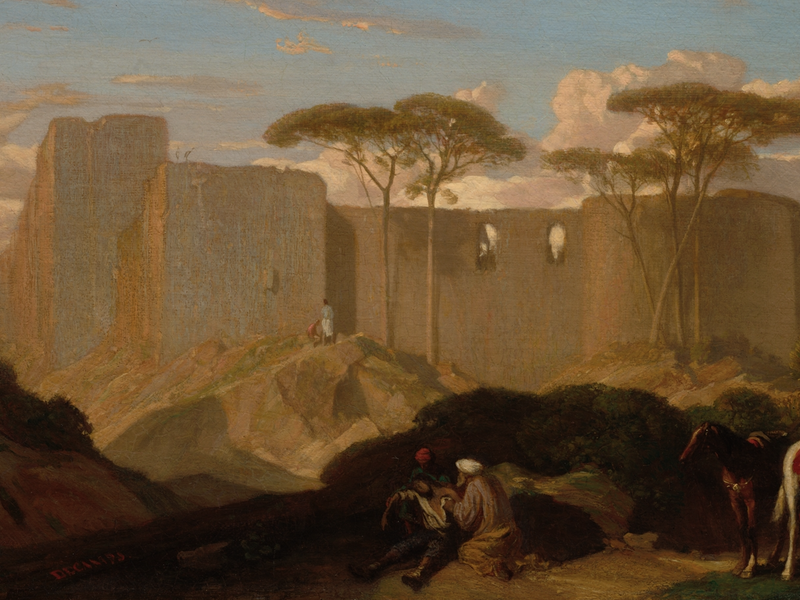
The Justification of the Good Samaritan

The story of the Good Samaritan (Lk. 10:25-37) is one of the best known and most loved of Jesus’ parables. I am not going to attempt to exegete the passage, as that has been done admirably and ably by others. Rather, I want to briefly examine what bearing the passage…

by Rich LuskJune 7, 2003
kelly-sikkema-gpoh17dxqdm-unsplash
1 Corinthians

The Grace of Judgment According to Works

In Romans 2.6-16, Paul writes, He will render to each one according to his works: to those who by patience in well-doing seek for glory and honor and immortality, he will give eternal life; but for those who are self-seeking and do not obey the truth, but obey unrighteousness, there…

by Mark HorneJune 7, 2003
karsten-wurth-imegmbunara-unsplash
Matthew

The Extra Mile: Matthew 5:38-42

It was still dark as David approached the crest of the little ridge. The eastern horizon was not even gray. It was early. But he knew this trail well. Every morning before dawn and every evening before dark, he would walk down to the well and carry water back to…

by Jeff MeyersJune 7, 2003
briana-tozour-mrfapsuyy8a-unsplash
Romans

Romans and God's Covenant Loyalty

The theme of Romans is the righteousness of God (Rom. 1:16-17). That is to say, Romans is something of a theodicy. Paul is defending God’s covenant faithfulness, particularly in light of Jewish unfaithfulness. How does it work? Without getting into exegetical details, we can still sketch out the big picture.…

by Rich LuskJune 6, 2003
jan-kahanek-g3o5ztrk2e4-unsplash
Federal Vision

Putting the New Perspective into Perspective: Some Thoughts on Second Temple Judaism

The New Perspective on Paul (NPP) is a loosely defined movement held together primarily by a common understanding of Second Temple Judaism. All NPP theologians basically adhere, with varying degrees of intensity and consistency, to Ed Sanders’ claims with regard to the nature of pre-70 A.D. Judaism. Sanders has sought…

by Rich LuskJune 6, 2003

Showing page 229 of 309

See all
See all

Easy Sainthood

Rowan Williams concludes a brief summary of the patristic debates about the double/single will of Jesus by saying “we are encouraged to see Jesus as fully aware of the general possibilities of human nature, including the possibilities of betrayal, cowardice, and self-gratification, aware of those as part of his composition…

May 17, 2016

Ministering Sacraments by Faith

For many Christians, sacraments are locked in a winner-take-all battle with faith. Are we reconciled to God by faith or by baptism? Do we feed on Christ by believing or by eating bread and drinking wine? When we place too much emphasis on sacraments, many believe, we run the risk…

May 17, 2016

Why Do We Want Houses?

Peter King begins his Private Dwelling by posing what he describes as simple, silly, obvious questions about housing: What is its use? Who needs it? What is housing for? Early on, he points to the “iconography” implied by our language about housing: “There is an iconography attached to housing that…

May 16, 2016

Sensitivity to Intrinsic Rightness

Charles Taylor's The Language Animal is a defense of HHH against HLC. That is, he thinks the linguistic perspective developed by Hamann, Herder, and Humboldt is superior to the rationalist and empiricist tradition of Hobbes, Locke, and Condillac. HLC “tried to understand language within the confines of the modern representational…

May 16, 2016

A Community of the Fearless

Monks fled. They did not flee from community or contact with others. They fled in order to become more deeply engaged with others in a more radical form of community. Rowan Williams writes ( Silence and Honey Cakes ), “What is learned in the desert is clearly not some individual…

May 16, 2016

Benjamin and Art's Disenchantment

Walter Benjamin had no totalizing philosophical system. He was an essayist, admits Ranier Rochlitz ( The Disenchantment of Art ). Rochlitz doesn't use the term to demean, however. Benjamin “is not an essayist in the manner of Montaigne; the scientific imperative is not lacking in his essays. He conducts concrete…

May 13, 2016

Showing page 289 of 2212

Browse by Category

In Medias Res

Your weekly digest for all things Theopolis.

Donate

Theopolis is nearly 100% donor-supported. Consider joining us on our mission.