Theopolis Logo

Writing

Explore our collection of theological essays, biblical studies, and reflections on faith and culture.

See all
tanner-mardis-xuxghzhibn4-unsplash-1-2
Biblical Studies

Tweets-turned-Notes on the Bible’s Chronology

Summary In what follows, I will consider the “year-stamps” employed in Scripture, i.e., statements of the form, “Such-and-such an event took place in the Xth year of Y.” In the process, I will suggest some ways in which the Biblical narrative might relate to events in the extra-Biblical world, though…

by James BejonJuly 16, 2019
durer-prodigal-son-2
Luke

Perspectives on the Prodigal, (Part 2)

In the first essay on the parable of the Prodigal Son, I suggested that the problems commentators and others encounter in interpreting Jesus three-part parable are not accidental. These are not just problems in our ignorance of cultural background. They are intentional features of the stories —stories designed to poke…

by Ralph Allan SmithJuly 11, 2019
durer-prodigal-son-2
Luke

Perspectives on the Prodigal, (Part 1)

The story of the Prodigal Son is perhaps the most well-known story in the Bible. As others have observed, it may also be one of the most misunderstood. In two short essays, I will point out features of this story that are commonly neglected, aspects of Jesus’ parable that might…

by Ralph Allan SmithJuly 9, 2019
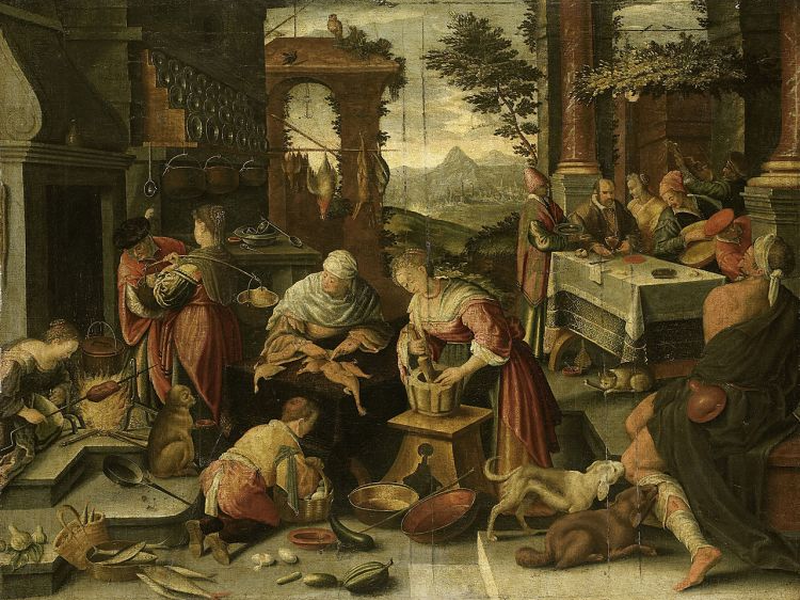
de-rijke-man-en-de-arme-lazarus-by-jacopo-da-ponte-16th-century
Luke

Lazarus and the Rich Man

The parable of Lazarus and the nameless rich man is not an independent story. It is part of a long context that begins in Luke 15:1, where Jesus is eating with tax collectors and sinners and the scribes and Pharisees grumble. In response to their hardheartedness, Jesus tells a three-part…

by Ralph Allan SmithJuly 4, 2019
aaron-burden-uynrnfdkjwg-unsplash
Luke

Everybody has Dropsy - Luke 14:1-24

The Bible is written so that even when a reader cannot pick up on what might be deeper or more detailed aspects of a text, there is virtually always a message to be heard. In the ancient world, where the “reader” of Scripture would likely be a church official facing…

by Ralph Allan SmithJuly 2, 2019
communion
Biblical Theology

Fruit Trees and Grain Plants

The distinction between garden (or vineyard) and field begins in Genesis 2. This relates to the ordering of the formless world. Plants of the field are contrasted with the garden planted by God in Genesis 2:5&8. Later on, under the Old Covenant the Israelites will be required to keep their…

by James B. JordanJune 27, 2019

Showing page 77 of 309

See all
See all

More Than Cool Reason

Antonio Damasio began to doubt the purity of reason when he encountered a patient with a brain disease that destroyed the portion of his brain that controlled emotional responses: “I had before my eyes the coolest, least emotional, intelligent human being one might imagine, and yet his practical reason was…

May 9, 2016

The Persistence of Modernism

In a contribution to a forthcoming collection of essays on Time , David James explores the usefulness of periodization categories like “modern” and “postmodern.” To be sure, some believe that modernism and modernity are passe: “' Many emerging artists,' reflects Terry Smith, ‘sense that Modernism—no matter how often and subtly…

May 6, 2016

Singers and Priests

The genealogy of Levi in 1 Chronicles 6 begins and ends with the genealogy of Aaron (6:1-15; 6:49-53). In between are two lists of the clans of Levi, the first a simple genealogy arranged according to the subclans of Kohath, Gershom, and Merari (6:16-30) and the second a genealogy of…

May 6, 2016

No Deal

David Goldman (Spengler) writes that “Republican voters bought Trump’s message that the wicked Chinese and the feckless Mexicans have stolen jobs and wealth that rightfully belonged to Americans, and that he, Donald Trump, with his world-class negotiating skills, would go out and get them back.” The problem is that “There’s…

May 6, 2016

What Is A Family?

In her Sexual Authenticity , Melinda Selmys says that the distinction between “traditional” and “alternative” families is often misunderstood: “At the heart of it is distinction between family as something we choose to meet our own needs and desires (for comfort, security, affection, etc.), and family as something that we…

May 5, 2016

Sacramental Art

Nearly everything about modern art “can be empirically explained by examining style, iconography and patronage,” writes Richard Nelson ( The Spirit of Secular Art ). What cannot be explained is the prestige of art, and this eludes because it is reliant on intuitions that artists dismiss as archaic and outmoded.…

May 5, 2016

Showing page 292 of 2212

Browse by Category

In Medias Res

Your weekly digest for all things Theopolis.

Donate

Theopolis is nearly 100% donor-supported. Consider joining us on our mission.