Theopolis Logo

Writing

Explore our collection of theological essays, biblical studies, and reflections on faith and culture.

See all
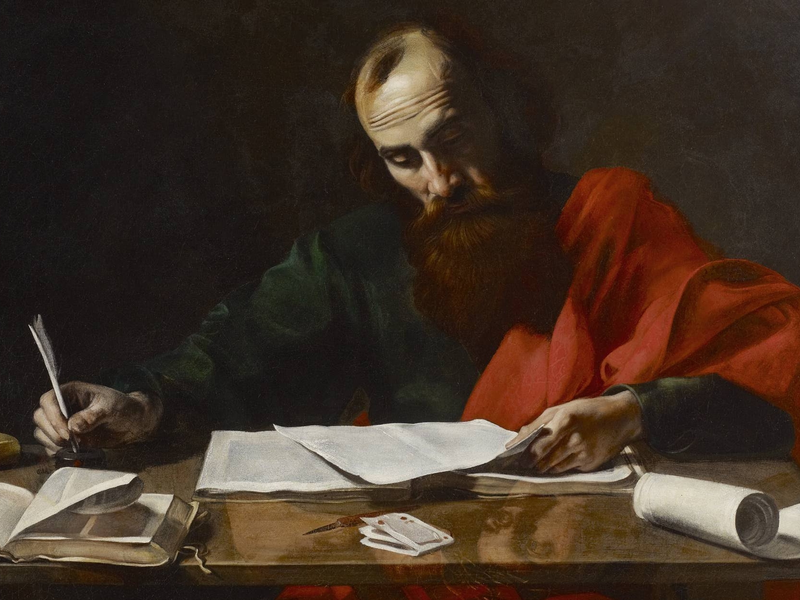
13071-probablyvalentindeboulogne-saintpaulwritinghi-1
1 Corinthians

The Great Exchange: Understanding Second Corinthians 5.21

He made Him who knew no sin to be sin on our behalf, that we might become the righteousness of God in Him. My argument is simple: What Paul means in writing the quotation above in context is the same as what he was telling the Ephesians when he wrote,…

by Mark HorneJune 7, 2004

ben-white-w8qqn1pmqh0-unsplash
Biblical Theology

What is Biblical Theology (Part 3) : The Art of Biblical Theology

THE ART OF BIBLICAL THEOLOGY IN PRACTICE: INTERTEXTUALITY AND TWO PAULINE CASE STUDIES The Art of Biblical Theology: Intertextuality Biblical Theology is really an art. Like other skills of this sort, it is not a matter of following rules (though there are certainly guidelines and techniques). Rather, it’s matter of…

by Rich LuskJune 6, 2004
malcolm-lightbody-tc2f02iq8le-unsplash
Biblical Theology

What is Biblical Theology: (Part 2) The Christotelic Spiral

Click HERE for Part 1 Reading Christotelically Jesus Christ is the heart of God’s plan for creation and history. There is no “hidden plan” or “hidden God” lurking behind Christ; rather, in and through Christ God has revealed himself and his intentions towards the world. In Christ, the Father has…

by Rich LuskJune 6, 2004
aaron-burden-qjdzyt_k8xg-unsplash
Biblical Studies

What is Biblical Theology? (Part 1)

STORY THEOLOGY AND A THEOLOGY OF STORY Defining Biblical Theology What is Biblical Theology? How does it compare to other ways of doing theology, such as Systematic Theology? Geerhardus Vos suggested that whereas Biblical Theology draws a line, Systematic Theology draws a circle. That is to say, Biblical Theology is…

by Rich LuskJune 6, 2004
screenshot-2023-09-21-at-3-59-23-pm
Hebrews

Living by His Faith: Some Rough Thoughts on the Faithfulness of Christ

The gospels strongly imply Jesus lived by faith in the promise of his heavenly Father. How else can his prayer life understood? How else could he have wrestled through the Gethsemane experience? How else could he have committed himself into his Father’s care at death? How could Jesus have presented…

by Rich LuskJune 6, 2004
sixteen-miles-out-al48tflf4e8-unsplash
John

John 3:16

John 3:16 is probably best-known, or at least, best-liked Bible passage in North America: “For God so loved the world, that he gave his only Son, that whoever believes in him should not perish but have eternal life.” This declaration of God’s love of the whole world is greatly comforting…

by Mark HorneJune 6, 2004

Showing page 223 of 309

See all
See all

Losing Face

In his 2013 book, Saving Face , Stephen Pattison observes that infants very quickly begin to notice and recognize faces, and to imitate the expressions they see. “To be and to become human socially and emotionally,” he writes, “is to engage in real, nuanced, face-to-face visual relations.” When a child…

April 1, 2016

De-Aristotelianizing Plato

Between 1900 and 1960, scholars believed that Plato held to a “cosmological” view of the divine, the notion that gods are “personified forces responsible for bringing order to the sensible world.” Since then, scholars have adopted a “metaphysical” interpretation, arguing that Plato's god is finally a metaphysical principle. So argues…

April 1, 2016

Breaking the Contract

Ryan Leif Hansen ( Silence and Praise ) describes Roman imperial religion as a social contract that bound the gods, the emperor, and the Roman people in a stable, peaceful order: “ Cultic ritual, sacrifice, and the related economic exchange were integral for sustaining the order of the cosmos ,…

March 31, 2016

Son of Pain

Sara Japhet ( I and II Chronicles ) notes the “unusual” structure of the etiological story behind the name “Jabez” in 1 Chronicles 4:9-10. Typically, “an aetiology offers an explanation for a given datum (commonly, but not always, a name) by recounting the causes from which it arose and demonstrating…

March 31, 2016
daniel-james-dhw68hz9kba-unsplash

Sterilizing Marriage

In his powerful manifesto, Nation of Bastards , Douglas Farrow argues that the Kulturkampf in which we find ourselves began in the early part of the 20th century with “the promotion of sterilization, eugenics, and the contraceptive mentality.” In short, it started “as an attack on children,” more horrifically in…

March 31, 2016

Art of Politics

In his reflections on Carl Schmitt, Paul W. Kahn ( Political Theology ) contrasts Enlightenment political rationalism to Schmitt's political voluntarism. Kant stands as the representative of the rationalist tradition: “For Kant, the question of freedom was that of how a subject could determine his own action in a causally…

March 30, 2016

Showing page 304 of 2212

Browse by Category

In Medias Res

Your weekly digest for all things Theopolis.

Donate

Theopolis is nearly 100% donor-supported. Consider joining us on our mission.