Theopolis Logo

Writing

Explore our collection of theological essays, biblical studies, and reflections on faith and culture.

See all
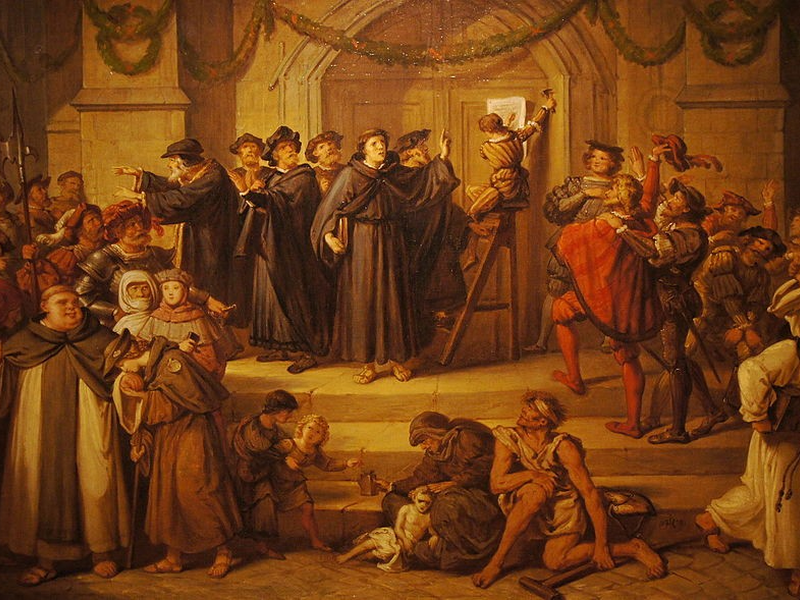
der_anschlag_von_luthers_95_thesen-1024x589
Church Calendar

Five Misconceptions of Reformation Day

For many people the date October 31 is significant not only for being the Eve of All Saints (All Hallows Eve, Halloween) but as the day in 1517 when Martin Luther nailed his 95 theses to the door of the Castle Church in Wittenburg. These theses were a list of…

by Timothy LeCroyOctober 31, 2017
sacre-bleu-r__kixb0i5m-unsplash
Church Calendar

Concerning Halloween

It has become routine in October for some Christian schools to send out letters warning parents about the evils of Halloween, and it has become equally routine for me to be asked questions about this matter. "Halloween" is simply a contraction for All Hallows’ Eve. The word "hallow" means "saint,"…

by James B. JordanOctober 26, 2017
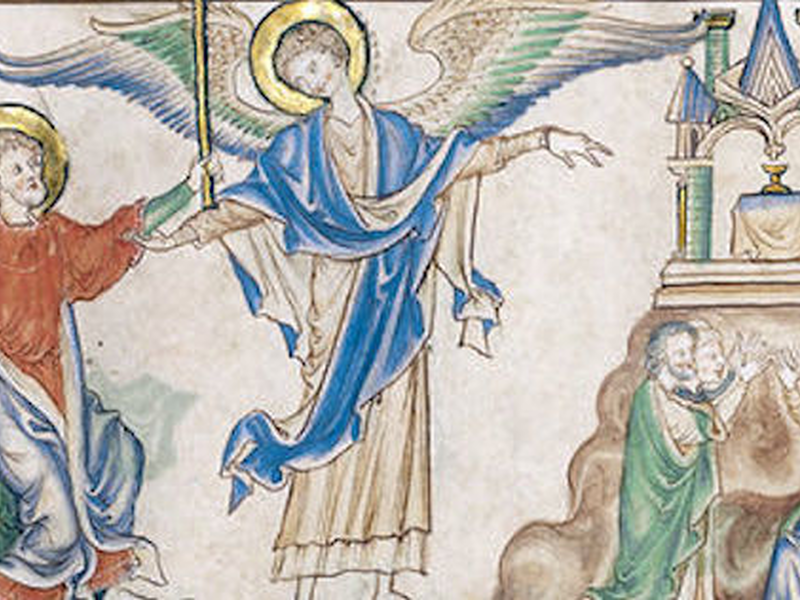
revelation-john-with-rod
Revelation

Preaching, An Art of Division

The following is an excerpt from Peter Leithart's forthcoming two-volume commentary on Revelation (T&T Clark). Y ou must prophesy again concerning many peoples and nations and tongues and kings,” a voice tells John (Rev. 10:11). Then someone gives him a “reed like a rod” and instructs him to measure (11:1).…

by Peter LeithartOctober 24, 2017
josiah-death

Back To Egypt

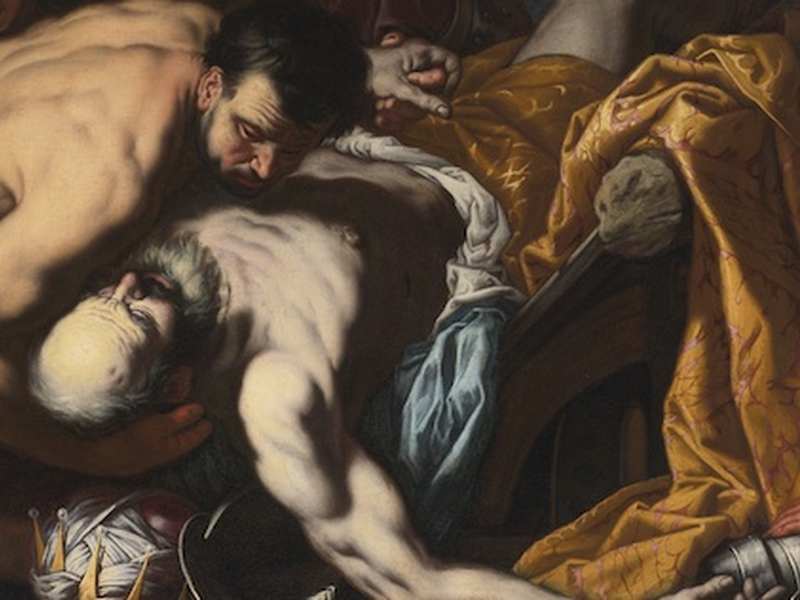
Josiah is an ideal Davidic king in many ways. He not only “did right,” but he “walked in the ways of his father David” and “did not turn aside to the right or to the left” (2 Chronicles 34:2). At the age of 16, he began to seek Yahweh, and…

by Peter LeithartOctober 19, 2017
augustine
Augustine

Augustine and the Music of Time

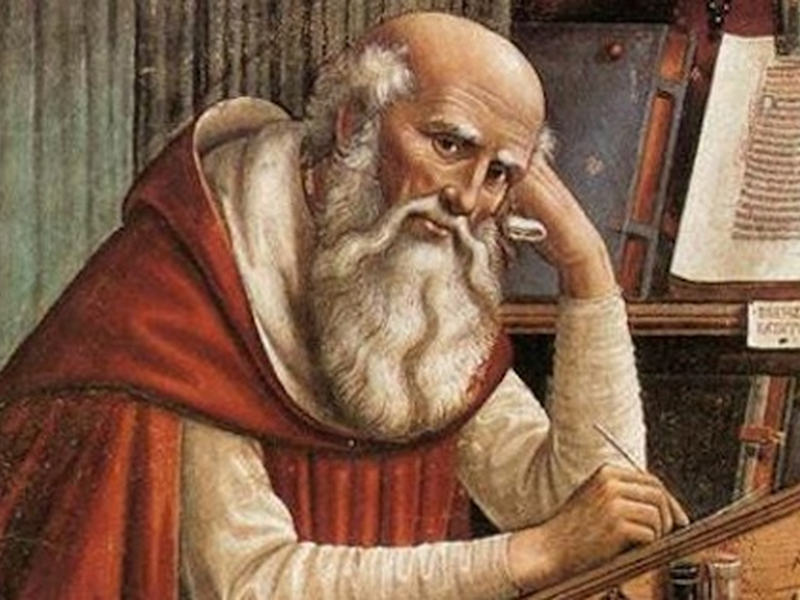
One of the best discussions of Augustine’s views on time comes from Jeremy Begbie’s Theology, Music, and Time (ch. 3). Following Paul Ricoeur, Begbie claims that Augustine’s distentio “is conceived as the three-fold present, and the threefold present as distentio . The distentio consists in the non-coincidence of the mind’s…

by Peter LeithartOctober 17, 2017
img_1043
How to Worship

The Psalter Should be Woven into the Fabric of Worship

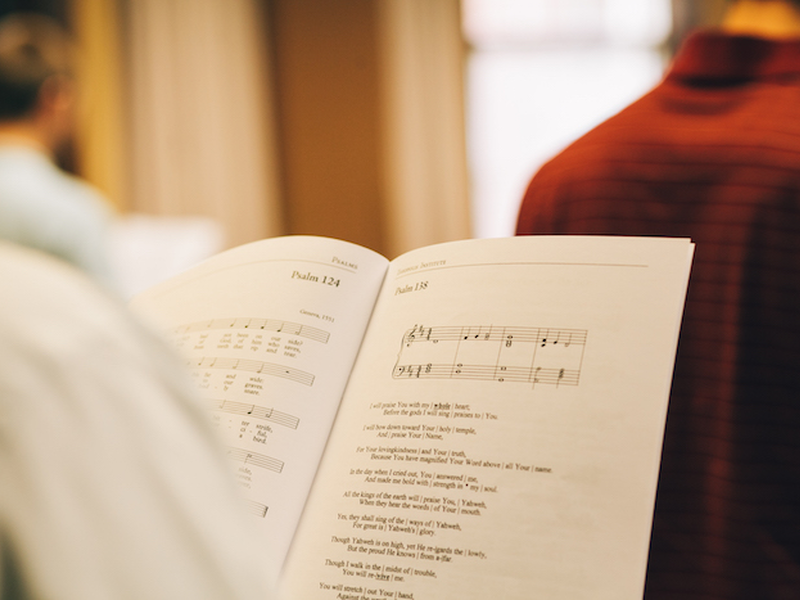
This has always been the position of the Christian Church, and from an historical perspective the present situation in evangelicalism is appalling. The early liturgies of the Church, which are still used in Episcopal and Lutheran worship, are laced with psalm phrases. The early hymns, such as the Te Deum…

by James B. JordanOctober 12, 2017

Showing page 104 of 309

See all
See all

Classifying God

The “do Muslims and Christians worship the same God?” controversy surges on, reported most recently in the Economist . It's worth revisiting. In an earlier post, I charged that the claim that Muslims and Christians worship the same God (what I will call the “identity theory”) implicitly denies a central…

January 15, 2016

Empire with the Soul of a Church

In an article on Revelation, J. Daryl Charles observes that the Roman Empire “had brought about the ‘solution' - ‘salvation' for the human race - and was thus worthy of popular adoration. Empire-adoration necessitated a personal symbol which the ancient city-state could not generate. In the Imperial cult resided the…

January 15, 2016

Spaces of Apocalyptic

In his packed little book, Theology and the Spaces of Apocalyptic , Cyril O'Regan observes that “there seems to be a binary opposition in the modern world between apocalyptic and the discipline of theology” (15). Heterodox apocalyptic is everywhere, in Milton and Blake and Romanticism, among Hegelians, especially those on…

January 15, 2016

The Great City

G. Biguzzi asks whether the city “Babylon” (Revelation 17-18) represents Rome or Jerusalem. The first option was presented early, by Victorinus. He “(i) gives the circumlocution, ‘city of Rome,' as toe equivalent of Babylon: . . . ruina Babylonis, id est civitatis Romanae, (ii) identifies the seven mountains of Rev…

January 14, 2016

Anagogy in Modernity

Medieval biblical scholars read Scripture through the lens of the quadriga, fourfold sense of Scripture. Texts had a literal sense, an allegorical or Christological sense, a tropological or moral sense, and an anagogical sense. In his recent study of de Lubac, Between Apocalypse and Eschaton , Joseph Flipper focuses on…

January 14, 2016

How To Write An Introduction

Here's some seasoned advice to young scholars on how to write an introduction. 1. Write the book first. You don't know what the book is about until you finish it, and you can't introduce what you don't know. This may seem backwards, but it is inevitable, because a thing is…

January 14, 2016

Showing page 332 of 2212

Browse by Category

In Medias Res

Your weekly digest for all things Theopolis.

Donate

Theopolis is nearly 100% donor-supported. Consider joining us on our mission.