Theopolis Logo

Writing

Explore our collection of theological essays, biblical studies, and reflections on faith and culture.

See all
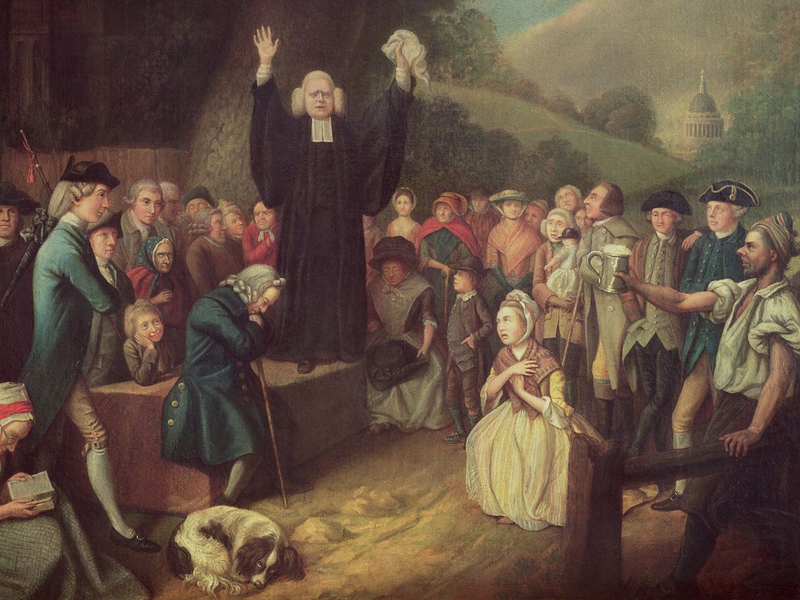
georgewhitefield-71901184-de237affa7764d6e95818a589190adf7
Biblical Horizons

The Great Awakening: A Critique

The following material was published in 1984 in Christianity and Civilization No. 4: The Reconstruction of the Church, pages 6-9, and are reprinted here as grist for the mill of the discussion of “evangelicalism.” Footnotes have not come through, of course. Though this material is offered in connection with a…

by James B. JordanJune 19, 2012

aaron-burden-1ebsmyrau-s-unsplash
Biblical Horizons

Concerning Regeneration

I wrote my beef about “regeneration” a decade ago, and I don’t really see the need to reopen what I think now. (Jordan, Thoughts on Sovereign Grace and Regeneration: Some Tentative Explorations. Biblical Horizons Occasional Paper No. 32) But. My pal Doug Wilson has been writing a series of essays…

by James B. JordanJune 19, 2012

jelleke-vanooteghem-gnxb59lgu1m-unsplash
John

Born From Above: Some Notes on John 3

Nicodemus’s conversation with Jesus in John 3:1-15 is sometimes regarded as an illustration of the tremendous stupidity of the Jews of our Lord’s day. Nicodemus is treated as just some guy who comes to Jesus at night because he doesn’t want to get into trouble by being seen with Him.…

by James B. JordanJune 18, 2012
screen-shot-2020-12-03-at-1-47-33-pm
Biblical Horizons

Is James B. Jordan an “Evangelical”?

During the last couple of weeks, Douglas Wilson has issued several posts over on his Blog and Mablog blog that deal with “evangelicalism” and who is and who is not an “evangelical.” In the course of these postings, Doug has written that while I am a fine Christian who has…

by James B. JordanJune 18, 2012
karsten-wurth-imegmbunara-unsplash
Biblical Horizons

Three Issues in Regard to Eastern Orthodoxy

Here are three issues in regard to the Eastern Church. First, here is the quote from Bavinck’s The Doctrine of God, page 317, Banner of Truth edition (1977) under the heading of Inter-Personal Relations. The Greeks derived the unity of God’s essence and the unity of the persons not from…

by Richard BledsoeJune 14, 2012
screen-shot-2020-12-03-at-1-47-33-pm
Biblical Horizons

Clerical Garb

Elsewhere on the blogosphere men are mocking the wearing of collars and albs to lead in worship. When it is pointed out that historically Reformed ministers have worn daily uniforms and robes in worship, it is replied that that was then and this is now. We ought to conform to…

by James B. JordanJune 9, 2012

Showing page 200 of 309

See all
See all

Classifying God

The “do Muslims and Christians worship the same God?” controversy surges on, reported most recently in the Economist . It's worth revisiting. In an earlier post, I charged that the claim that Muslims and Christians worship the same God (what I will call the “identity theory”) implicitly denies a central…

January 15, 2016

Empire with the Soul of a Church

In an article on Revelation, J. Daryl Charles observes that the Roman Empire “had brought about the ‘solution' - ‘salvation' for the human race - and was thus worthy of popular adoration. Empire-adoration necessitated a personal symbol which the ancient city-state could not generate. In the Imperial cult resided the…

January 15, 2016

Spaces of Apocalyptic

In his packed little book, Theology and the Spaces of Apocalyptic , Cyril O'Regan observes that “there seems to be a binary opposition in the modern world between apocalyptic and the discipline of theology” (15). Heterodox apocalyptic is everywhere, in Milton and Blake and Romanticism, among Hegelians, especially those on…

January 15, 2016

The Great City

G. Biguzzi asks whether the city “Babylon” (Revelation 17-18) represents Rome or Jerusalem. The first option was presented early, by Victorinus. He “(i) gives the circumlocution, ‘city of Rome,' as toe equivalent of Babylon: . . . ruina Babylonis, id est civitatis Romanae, (ii) identifies the seven mountains of Rev…

January 14, 2016

Anagogy in Modernity

Medieval biblical scholars read Scripture through the lens of the quadriga, fourfold sense of Scripture. Texts had a literal sense, an allegorical or Christological sense, a tropological or moral sense, and an anagogical sense. In his recent study of de Lubac, Between Apocalypse and Eschaton , Joseph Flipper focuses on…

January 14, 2016

How To Write An Introduction

Here's some seasoned advice to young scholars on how to write an introduction. 1. Write the book first. You don't know what the book is about until you finish it, and you can't introduce what you don't know. This may seem backwards, but it is inevitable, because a thing is…

January 14, 2016

Showing page 332 of 2212

Browse by Category

In Medias Res

Your weekly digest for all things Theopolis.

Donate

Theopolis is nearly 100% donor-supported. Consider joining us on our mission.