
Theopolis Logo

Writing

Explore our collection of theological essays, biblical studies, and reflections on faith and culture.

See all
sinitta-leunen-dvibhmzsy8e-unsplash
Epistemology

A Cheer for the Mystics

Mystical theologians are often unguarded, extreme, un-nuanced, pressing to the edges of heresy, sometimes beyond. Still, the mystics are worthy of study. Why? Many reasons. Unlike some late medieval and post-Reformation dogmaticians, mystical theologians are often instinctively and richly Trinitarian. Historical-critical approaches to Scripture left mystical theologians virtually untouched; mystics…

by Peter LeithartSeptember 2, 2013
portrait-of-william-shakespeare-1564-1616-ca-1865
Literature

Shadow and Substance in Shakespeare's Venice

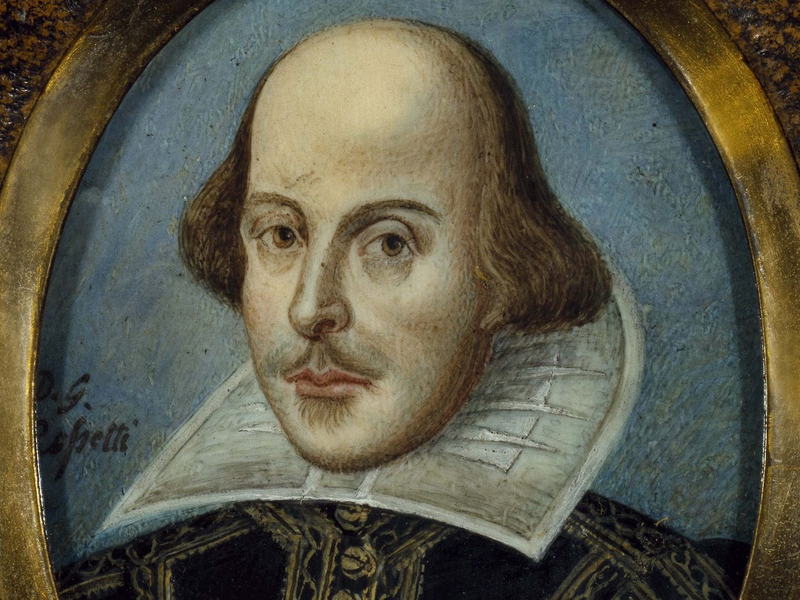
Portia of Belmont is a “lady richly left,” as Bassanio says of her in the first Act of The Merchant of Venice . Plus, she’s beautiful and wise. Suitors clamber to Belmont in hope. Her father knew it would be so, and in his will set up a fairy-tale test…

by Peter LeithartAugust 28, 2013
carlo-alberto-burato-smdx3gleu_m-unsplash
Liturgy

Liturgy Traps

[fve]http://vimeo.com/72195198[/fve]

by James B. JordanAugust 26, 2013
screen-shot-2022-05-12-at-12-07-23-pm
Deuteronomy

Victory Food

In the nature of the case, “the” Christian meditation on Deuteronomy 14:1-21 cannot be written. Meditation offers too many possibilities, opens too many doors. There is not one and only one correct set of associations for a Christian to consider when thinking of Deuteronomy 14:1-21. We could, for example, consider…

by Ralph Allan SmithAugust 21, 2013
aaron-burden-1ebsmyrau-s-unsplash
Romans

David's Sin and Israel's Salvation, Part I

Having retold the story of the cumulative sin of Israel leading to the great atonement on the cross, Paul then reemphasizes that, just as both Jew and Gentiles were locked into sin and judgment, now they are both justified by faith: Then what becomes of our boasting? It is excluded.…

by Mark HorneAugust 20, 2013
ben-white-w8qqn1pmqh0-unsplash
Deuteronomy

You are what you eat

Deuteronomy 14 is full of allusions to events of Israel’s history and other portions of Scripture. What would an Israelite learn by mediation on these allusions? The answer, I believe, is at least fourfold. Faith, Worship, War For the ancient Israelite first hearing Moses’ sermon, or perhaps hearing it read…

by Ralph Allan SmithAugust 15, 2013

Showing page 189 of 309

See all
See all

Heavenly Court, Caesar's Court

David Aune has argued that the heavenly court scene of Revelation 4-5 “bears such a striking resemblance to the ceremonial of the imperial court and cult that the latter can only be a parody of the former” (5). He proposes this against the main “major competing view” that “the heavenly…

January 11, 2016

Culture and Biology in Judith Butler

Will Rees says in his TLS review of Judith Butler's Senses of the Subject that the “biggest topic of discussion” has been Butler's writing style, which he characterizes as “torturous.” It's not just the style. In her poststructuralist early work, Butler argues that “gender identities are constructed by the machinations…

January 11, 2016

The Church in Britain's Future

The Economist reports on “an immigrant-led surge in London churchgoing. Weekly participation in Christian services in the capital has grown by 16% since 2005. Most devout Londoners (88%) worship outside the ranks of the established church whose spires pierce the skyline; about a third are Pentecostal.” It is the same…

January 11, 2016

Anti-Kantian

Drawing on the work of CS Peirce, Giovanni Maddalena ( The Philosophy of Gesture ) argues that pragmatism must be understood as more than an anti-Cartesian movement in philosophy. To the critique of Descartes, it adds a critique of Kant. He summarizes Peirce's critique. Kant is a nominalist, which means…

January 8, 2016

Doctrina sacra

The Summa Theologica of Thomas Aquinas has a clear surface structure. A first part, two parts of the second part, and a third part. But that obvious structure doesn't tell the whole story. Thomas explains the structure of the treatise at the outset (1, 2): “Because the chief aim of…

January 8, 2016

Tribes, Tongues, Peoples, Nations

In his Climax of Prophecy , Richard Bauckham’s devotes a long, complicated, fascinating chapter to an analysis of the phrase “tribes, tongues, nations, peoples” (and variations) in Revelation. The arrangement of the lists varies, but the variations are not random. They reinforce substantive connections between different parts of the book.…

January 8, 2016

Showing page 334 of 2212

Browse by Category

In Medias Res

Your weekly digest for all things Theopolis.

Donate

Theopolis is nearly 100% donor-supported. Consider joining us on our mission.









