Theopolis Logo

Writing

Explore our collection of theological essays, biblical studies, and reflections on faith and culture.

See all
sixteen-miles-out-al48tflf4e8-unsplash
Food

Gluttony In The Bible (As Opposed To Gluttony In The American Church)

In the Bible, fatness is such a blessing, that it is especially hard to understand why wicked men are permitted to enjoy such a state. It requires a theodicy and faith in God. Thus: “For they have no pangs until death; their bodies are fat and sleek . They are…

by Mark HorneAugust 12, 2013

jeremy-yap-j39x2xx_8cq-unsplash
How to Worship

Biblical Worship (Video with James B. Jordan)

[fve]http://vimeo.com/71901553[/fve]

by Peter LeithartAugust 8, 2013
chris-bair-ndczc5739ck-unsplash
Deuteronomy

Holy Things for Holy People

The allusion to the Exodus story is contained in the first words of Deuteronomy 14:1 — “ye are the sons of Yahweh your God” — as well as in 14:2 in the use of the technical term translated “treasured possession,” “His own possession,” “peculiar people,” “precious people,” and so forth.…

by Ralph Allan SmithAugust 5, 2013
adam-and-eve-in-the-garden-of-eden-wenzel-peter
Deuteronomy

Forbidden Foods

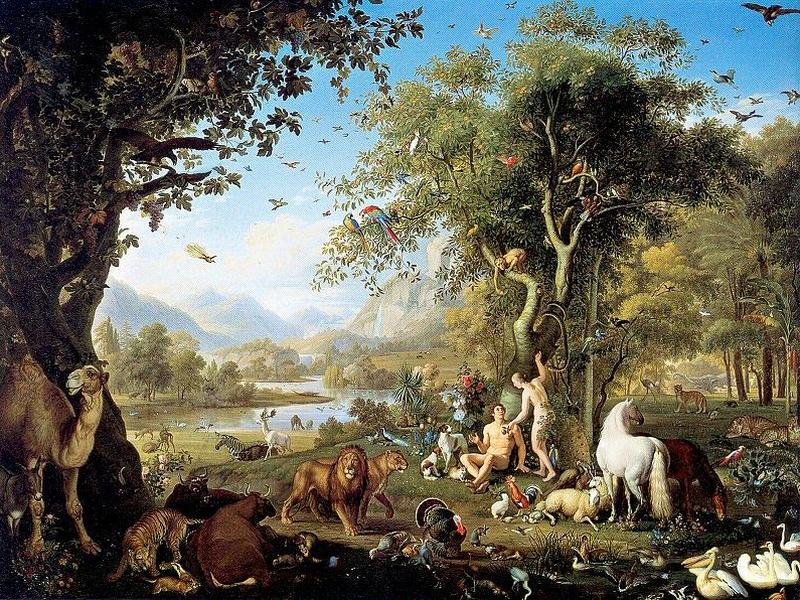
I have argued that Deuteronomy 14:1-21 is an independent literary unit that applies the Third Word to the lives of Israelites from the time of Moses and Joshua. In this short pericope, Moses suggests broad and deep meaning by means of literary allusion to the stories of the creation and…

by Ralph Allan SmithJuly 31, 2013
david-weber-fwuo_zluhnw-unsplash
How to Worship

Pro-Sacramental Reformation

In his recently republished The New Creation , the late, delightful Herbert McCabe defends the priesthood of the plebs as roundly as anyone could want. Citing Hebrews, he claims that "there is an essential difference between the Christian community and the community of the Old Law, or any other religious…

by Peter LeithartJuly 29, 2013
eric-ward-7kqe_8meex8-unsplash
Augustine

Sexual Idolatry

Augustine famously prayed, “Our hearts our restless until they rest in You.” True indeed. Being creatures, we inherently sense our ontological poverty—our innate condition of dependence—and are compelled to find a sense of security. And it is also true—as Augustine’s own narrative painfully illustrates—that one of the things we most…

by Gerald HiestandJuly 24, 2013

Showing page 190 of 309

See all
See all
Liturgy

Sabbath Threshing

Solomon built the temple on the threshing floor that David bought from Araunah the Jebusite (2 Samuel 24; 2 Chronicles 3). What might that mean? Grain is threshed when an animal walks over it, sometimes dragging a threshing sledge, to separate the grain from the chaff. Threshed grain is winnowed,…

October 23, 2015
Art

Life and Culture Series

These are remarks delivered to introduce conductor John Mason Hodges as the first Birmingham Life and Culture speaker. This is the first of what we hope will be an annual lecture on the arts and culture. Each year, we’ll bring a painter, musician, poet, sculptor, novelist, critic, architect, or scholar…

October 22, 2015

Two Tables

Jesus’ action in the temple was a symbolic enactment of the coming destruction of the temple. The Jewish leaders had turned what should have been a house of prayer for the Gentiles into a den of brigands. Jesus overturned the tables and chairs to dramatize what lay on the horizon…

October 22, 2015

Double Time in Othello

AC Bradley ( Shakespearean Tragedy ) points out that Othello has an unusual structure for a Shakespeare tragedy. The main conflict doesn't arise until the third act, and then the pressure and movement is relentless from that point to the end. In the other tragedies, the crisis emerges earlier, Act…

October 22, 2015

The Quadrigal Form of Christian Thought

The quadriga - the fourfold sense, consisting of literal, allegorical, tropological, and anagogical - isn't only a “method” for interpreting Scripture but a framework for interpreting everything . Two assumptions guide my reflections here. First, medieval biblical scholars insisted that biblical allegory and typology was not merely a method of…

October 22, 2015
Rosenstock-Huessy

Listening

Theories of language, Rosenstock-Huessy comments, focus almost exclusive attention on the speaker or writer, and almost none on the listener: “Our philology is built around the process of talking, speaking, writing.” Listening is emphasized in “military training for obedience, understanding to psychology, listening and learning to acoustics and education.” But…

October 21, 2015

Showing page 360 of 2212

Browse by Category

In Medias Res

Your weekly digest for all things Theopolis.

Donate

Theopolis is nearly 100% donor-supported. Consider joining us on our mission.