Theopolis Logo

Writing

Explore our collection of theological essays, biblical studies, and reflections on faith and culture.

See all
ivan-aleksic-16yxcjsoaek-unsplash
Biblical Chronology

Jubilee (Part 2)

The Building of the Temple Solomon began work on the Temple in the second month of his fourth year. This was the year 2993, a sabbath year. He finished in the eighth month of his eleventh year, the year 3000, also a sabbath. (1 Ki. 6:1, 38). This is said…

by James B. JordanMarch 4, 1993
whichbooksbelongintheot
Biblical Chronology

Jubilee (Part 1)

The Bible expresses its chronology not only in sequences of years, but also in sequences of sabbath years and jubilees. This enables us to make a cross-check of our chronology, and when we find apparent problems, to refine it. If our chronology is right, we should find some significant correlations…

by James B. JordanFebruary 4, 1993
alfons-morales-ylswjsy7stw-unsplash-1
Biblical Studies

Adele Berlin, Poetics and Interpretation of Biblical Narrative

Adele Berlin, Poetics and Interpretation of Biblical Narrative Sheffield, England: Almond Press, 1983. This volume is the ninth in the "Bible and Literature Series" under the general editorship of David M. Gunn. According to its author, who teaches Hebrew at the University of Maryland, the book is an effort to…

by Peter LeithartJanuary 17, 1993
screenshot-2023-08-08-at-11-13-28-am
Ruth

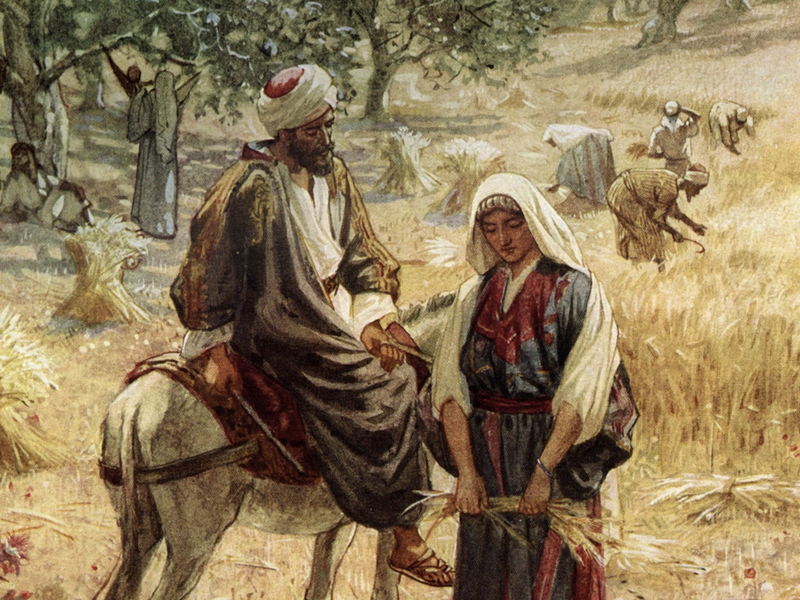
The Structures of Ruth

V. Propp’s classic work Morphology of the Folktale (University of Texas, 1968) argues that one of the basic structures of folk literature is "lack, lack liquidated." A king sets out to look for a wife, and the tale ends with a wedding. Often, the hero sets out on some business…

by Peter LeithartJanuary 17, 1993
painting-of-saint-luke
Luke

Second Samuel

Luke’s gospel begins and ends in the temple. It opens with Gabriel’s annunciation to the priest Zacharias (whose name, appropriately, means "Yahweh remembers") of the coming of a forerunner. Zacharias is performing priestly service at the time. The book ends with the joyful worship of a new priesthood in the…

by Peter LeithartJanuary 17, 1993
screen-shot-2023-01-26-at-3-44-00-pm
Biblical Chronology

Problems With New Testament History

Last time we arrived at the year A.M. 3960 as the date for the inauguration of the New Creation through the death, resurrection, ascension, and session of Christ, and the sending of the Holy Spirit. We also saw that this is most likely the year of Paul’s conversion. Fourteen years…

by James B. JordanJanuary 4, 1993

Showing page 286 of 309

See all
See all

Ritual and Spontaneity

For the first 1500 years of its existence, Christianity was a liturgical faith. That began to change with Wyclif and the Hussites, and the Reformation produced permanent forms of un- and even anti-liturgical Christianity. Ceremony took on negative connotations, synonymous with hollowness and superstition. Ritual was no longer seen as…

October 13, 2015

Locusts and Honey

John the Baptist is presented in the gospels as the fulfillment of the Old Testament promise that God would send His messenger to prepare the way for the coming of the glory of the Lord (Isaiah 40), and the promise to send Elijah before Him to turn the people to…

October 12, 2015
Eucharist

Showing the Lord's Death

How does the Lord’s Supper proclaim the death of Jesus until He comes? (1 Corinthians 11:26). Historically, liturgists have attempted to locate some act in the rite of the Supper that corresponds to the death of Jesus: the fraction (breaking of bread), or the fact that bread and wine are…

October 12, 2015

Eucharistic Modalism

One of the earliest Trinitarian heresies is called “modalism.” It taught that the “persons” of the Trinity are not distinct persons, but only the masks or roles that the one Person of God adopts at various times. The fundamental problem with modalism is that it stretches out a veil, or…

October 12, 2015

Irritability and Intellect

We like to pretend our notions are the product of careful study and rational analysis. We like to pretend our likes and dislikes are deeply rooted in principle. Montaigne thought otherwise. In “An Apology for Raymond Sebond,” he wrote, “I have seen some, who without infringing their patience, could not…

October 12, 2015

From the Mouth

Four times Revelation refers to the sword that comes from the mouth of Jesus, twice at the beginning of the book (1:16; 2:16) and twice at the end (19:15, 21). Jesus' mouth-sword frames the book, and the four uses hint at His universal conquest: Jesus will extend the reign of…

October 9, 2015

Showing page 365 of 2212

Browse by Category

In Medias Res

Your weekly digest for all things Theopolis.

Donate

Theopolis is nearly 100% donor-supported. Consider joining us on our mission.