Theopolis Logo

Writing

Explore our collection of theological essays, biblical studies, and reflections on faith and culture.

See all
last-supper
Eucharist

The Epiclesis in Reformed Eucharistic Prayer, (Part 1)

What happens at the Table of the Lord? If Christ is really present, then how is this so? The witness of the Church throughout history has been that Christ is present in the Eucharist through the operation of the Holy Spirit, and in the practice of the Church, prayers at…

by Christopher KouOctober 11, 2016

sixteen-miles-out-al48tflf4e8-unsplash
Spiritual Warfare

Enemies and Victims

In the power of the Spirit, the gospel forms a society in which there is neither Jew nor Greek, slave nor free, a society that is characterized by unity, long-suffering, patience; love. The gospel forms a culture whose participants do not steal but labor and give, who are not angry…

by Peter LeithartOctober 6, 2016
sixteen-miles-out-d40gdcd_-he-unsplash
Mark

Sovereignty and Self-Gift

At the 1997 Biblical Horizons Summer Conference, the Rev. Jeffrey Meyers presented a series of remarkable lectures on the gospel of Mark. Among his many insightful comments, he suggested that the second gospel continues where the first gospel ends; Matthew ends with Jesus saying "Go" (Matthew 28:19), and Mark’s shows…

by Peter LeithartOctober 4, 2016
e99a2338
Art

Birmingham Life and Culture Series: Joseph Bottum

On October 25 at Avondale Brewery , Theopolis will be co-sponsoring the 2nd Annual Birmingham Life and Culture Series. This year's event will feature author Joseph Bottum. Joseph is known for his writings on literary criticism, religion, and his short stories. Essayist and reviewer Mary Eberstadt has said that "his…

by Brian MoatsSeptember 29, 2016
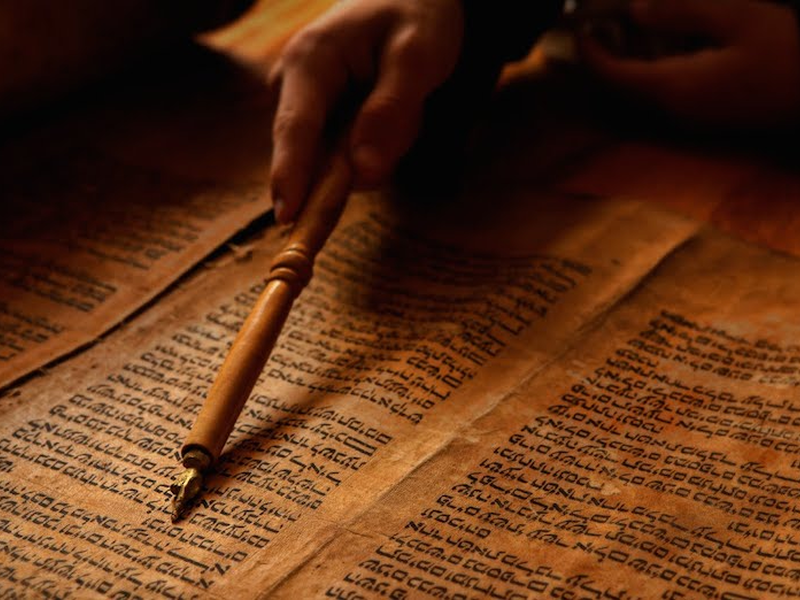
hebrew-manuscript
Biblical Studies

Are Not All These Galileans?

One of the curiosities of the New Testament revelation is its focus on Galilee. The region of Galilee was given to Asher, Zebulun, Naphtali, and Issachar, and the events of Judges 4-8 occurred there, so it had some importance in Israelite history. But when the tribe of Ephraim led the…

by James B. JordanSeptember 29, 2016
screen-shot-2016-03-31-at-9-32-11-am
Hermeneutics

Hero's Theme

In a recent post , Ian Paul discusses the practice of allegorical interpretation, reflecting in particular upon a conversation he had with someone concerning the reading of the story of Rahab. Paul’s interlocutor argued strongly for an allegorical reading of the Rahab story, writing: “Joshua is a type of Christ…

by Alastair RobertsSeptember 27, 2016

Showing page 124 of 309

See all
See all

History of Disgust

Norbert Elias’s The Civilizing Process traces modern standards of disgust and cleanliness to the development of court society during the Renaissance. Drawing on Elias, William Miller ( Anatomy of Disgust ) suggests sensitivity to disgust and being civilized are directly proportional. Martha Nussbaum ( Hiding from Humanity , 115-6) disagrees…

December 15, 2014

Islamic Revolutionaries

In his brilliant Earthly Powers (3), Michael Burleigh cites a passage from Tocqueville’s book on the French Revolution. Taking a note from Schiller about “how early modern religious wars spilled across political boundaries, which reminded Tocqueville of the ideological struggle between Jacobins and counter-revolutionaries in late-eighteenth-century Europe,” Tocqueville drew a…

December 12, 2014

Sacrificial Politics

Semyon Frank was a Russian emigre to London. Michael Burleigh ( Sacred Causes , 39) sums up his life: “Born in 1877 into a Russian-Jewish family, he had quickly outgrown a juvenile Marxism, converting to Orthodox Christianity in 1912, on the ground that the Jewish God was as remote from…

December 12, 2014
Modernity

Un-Secular Age

Our secular age can be sustained only if the secular has been carefully distinguished from the sacred, and only if the boundary between the two is vigorously, not to say violently, guarded. But boundary-drawing between the sacred and profane is the work of a priest. It is the sacred act…

December 12, 2014

Pure Aesthetics

Hugh Grady opens his Shakespeare and Impure Aesthetics (6-10) with a brief and illuminating discussion of Kant’s aesthetics of purity. By “pure” here is meant the freedom of aesthetic experience from cognitive reason and teleological judgments, from practical or moral interests. This disinterested experience of art is an encounter with…

December 12, 2014

After the Temple

Jonathan Klawans is a great one for cutting through nonsense. In his Purity, Sacrifice, and the Temple , he points to the oddity that “documents composed three, four, or even five centuries after the destruction are labeled as delayed responses to the destruction. . . the suggestion that it took…

December 11, 2014

Showing page 487 of 2212

Browse by Category

In Medias Res

Your weekly digest for all things Theopolis.

Donate

Theopolis is nearly 100% donor-supported. Consider joining us on our mission.