Theopolis Logo

Writing

Explore our collection of theological essays, biblical studies, and reflections on faith and culture.

See all
timothy-eberly-djj49s6ud2o-unsplash
Leviticus

Yahweh's War Against Death

Stories, frankly all human stories are practically always about one thing aren’t they? Death. The inevitability of death. . . . “There is no such thing as a natural death. Nothing that happens to man is ever natural, since his presence calls the whole world into question. All men must…

by Brian MarrApril 14, 2014

screenshot-2023-09-21-at-4-52-42-pm
Matthew

Inescapable Blood

Matthew is organized around 5 discourses, which trace out the history of Jesus as a recapitulation of the history of God and Israel in the Old Testament. Jesus first speaks as a new Moses, instructing His disciples on a mountain about a righteousness that surpasses the righteousness of the scribes…

by Peter LeithartApril 10, 2014
screen-shot-2022-05-12-at-12-07-23-pm
Angels

Did Angels Marry People? The Sin of Cultural Intermarriage

The fall of the Sethites in Genesis 6 is the third fall of mankind, or the third degree of Adam’s original fall. Adam sinned in a Garden against his Father by stealing something he was supposed to wait to obtain. (“Every tree shall be food for you” Genesis 1:29.) Cain…

by James B. JordanApril 7, 2014
sixteen-miles-out-al48tflf4e8-unsplash
Angels

Did Angels Marry People? The Sons of God in Genesis 6

The recent fantasy film Noah and a slightly related blog comment by my friend Douglas Wilson have stirred up again the question of whether the “sons of God” in Genesis 6 who married the “daughters of men” were fallen angels or the priestly line of Seth. Doug argues for angels,…

by James B. JordanApril 4, 2014
kiwihug-l4gw27xzn1i-unsplash
Angels

The Angels of Jude

The prophecy of Jude concerns apostasy. An illustration of apostasy and its consequences is found in verse 6, which the New American Standard Bible translates this way: "And angels who did not keep their own domain, but abandoned their proper abode, He has kept in eternal bonds under darkness for…

by James B. JordanApril 3, 2014
screenshot-2023-09-21-at-4-22-42-pm
Matthew

Women at the Cross

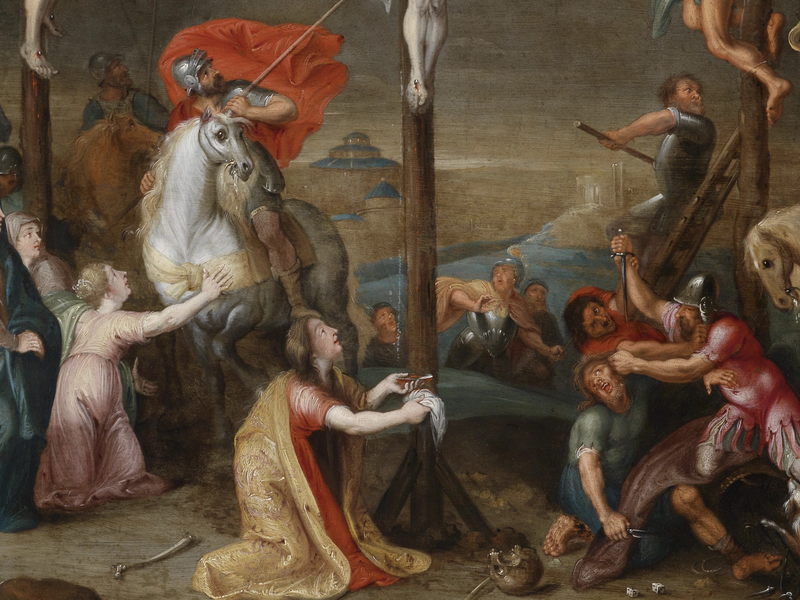
At His death, Jesus is surrounded by a Roman centurion and his cohort of Gentile solders. Matthew doesn't say that any disciples are there. But women are, and so is Joseph of Arimathea, identified as a “disciple” but, as John tells us, a “secret disciple for fear of the Jews,”…

by Peter LeithartMarch 31, 2014

Showing page 176 of 309

See all
See all

History of Disgust

Norbert Elias’s The Civilizing Process traces modern standards of disgust and cleanliness to the development of court society during the Renaissance. Drawing on Elias, William Miller ( Anatomy of Disgust ) suggests sensitivity to disgust and being civilized are directly proportional. Martha Nussbaum ( Hiding from Humanity , 115-6) disagrees…

December 15, 2014

Islamic Revolutionaries

In his brilliant Earthly Powers (3), Michael Burleigh cites a passage from Tocqueville’s book on the French Revolution. Taking a note from Schiller about “how early modern religious wars spilled across political boundaries, which reminded Tocqueville of the ideological struggle between Jacobins and counter-revolutionaries in late-eighteenth-century Europe,” Tocqueville drew a…

December 12, 2014

Sacrificial Politics

Semyon Frank was a Russian emigre to London. Michael Burleigh ( Sacred Causes , 39) sums up his life: “Born in 1877 into a Russian-Jewish family, he had quickly outgrown a juvenile Marxism, converting to Orthodox Christianity in 1912, on the ground that the Jewish God was as remote from…

December 12, 2014
Modernity

Un-Secular Age

Our secular age can be sustained only if the secular has been carefully distinguished from the sacred, and only if the boundary between the two is vigorously, not to say violently, guarded. But boundary-drawing between the sacred and profane is the work of a priest. It is the sacred act…

December 12, 2014

Pure Aesthetics

Hugh Grady opens his Shakespeare and Impure Aesthetics (6-10) with a brief and illuminating discussion of Kant’s aesthetics of purity. By “pure” here is meant the freedom of aesthetic experience from cognitive reason and teleological judgments, from practical or moral interests. This disinterested experience of art is an encounter with…

December 12, 2014

After the Temple

Jonathan Klawans is a great one for cutting through nonsense. In his Purity, Sacrifice, and the Temple , he points to the oddity that “documents composed three, four, or even five centuries after the destruction are labeled as delayed responses to the destruction. . . the suggestion that it took…

December 11, 2014

Showing page 487 of 2212

Browse by Category

In Medias Res

Your weekly digest for all things Theopolis.

Donate

Theopolis is nearly 100% donor-supported. Consider joining us on our mission.