Theopolis Logo

Writing

Explore our collection of theological essays, biblical studies, and reflections on faith and culture.

See all
hebrew-manuscript-2
Hermeneutics

The Complexity of Biblical Allusion

There is no question about the fact that the book of Deuteronomy is full of literary allusion. But there is a serious problem, even a paradox, of understanding how that allusion works. To begin with, if we assume that Deuteronomy was written by Moses — with some editorial emendations added…

by Ralph Allan SmithJanuary 23, 2018

bladerunner
Culture

The Artificial Resurrection

Genesis and Genetics in Blade Runner 2049 The power of science fiction, and what’s positive about it, is that you’re able to experience the worst-case scenario without actually having to live it. (Actor Ryan Gosling, who plays Officer “K”) (Warning: The following analysis contains spoilers for both Blade Runner films.)…

by Mike BullJanuary 18, 2018
sixteen-miles-out-d40gdcd_-he-unsplash
Biblical Studies

The Battle of Gog and Magog

The battle of Gog and Magog is found in Ezekiel 38-39. My purpose in this brief essay is to propound an explanation for this passage that I have not encountered in any of my commentaries, but that makes more sense to me than any other. I offer it here in…

by James B. JordanJanuary 16, 2018
resurrection

Deep Hope

I. Varlam Shalamov in Kolyma Tales describes his experience of the Gulag, where he spent more than a dozen of years. In a story titled The Life of Engineer Kipreev Shalamov reflects on the theme of hope in the life of a prisoner: “Hope always shackles the convict. Hope is…

by Bogumil JarmulakJanuary 11, 2018
abraham-defeats-kings-g-jollain-2
Biblical Theology

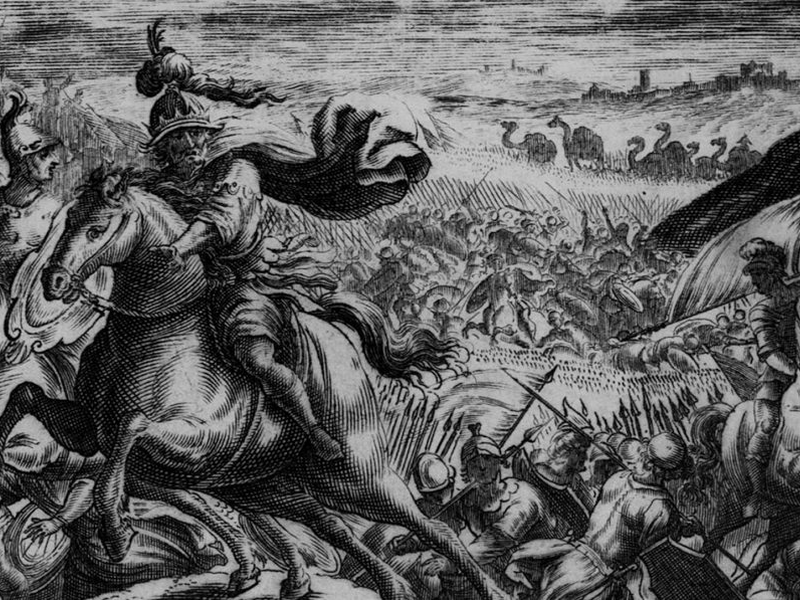
Abram’s 318 Men

Genesis 14:14 says that Abram mustered his trained men, “born in his house,” to rescue Lot, and gives their number as 318. It is clear that the precise number is provided for some reason, but what is it? S. Gevirtz notes that 318 is the sum of all the prime…

by James B. JordanJanuary 9, 2018
tanner-mardis-xuxghzhibn4-unsplash-1
Biblical Studies

The Flying Scroll

And he said to me, "What do you see?" And I answered, "I see a flying scroll; its length is twenty cubits and its width ten cubits" (Zechariah 5:2). Immediately following his vision of the outpouring of the Spirit upon the restoration community (4:1-14), Zechariah saw a flying scroll. The…

by Peter LeithartJanuary 4, 2018

Showing page 100 of 309

See all
See all

Sharing death

Matthias Grebe’s Election, Atonement, and the Holy Spirit is an impressive piece of work. Grebe is as much at home in Barth and Barthian scholarship as in Leviticus and Old Testament scholarship, and the driving question of his book has to do with dogmatic logic that connects election and atonement…

December 1, 2014

The Thunder-Spirit

John eats a book from an angel and is told to prophesy (Revelation 10:10-11). But the angel doesn’t commission him as prophet. Rather, “ they said, ‘You must prophesy’” (v. 11). Who are they? The nearest plural speakers are the thunders (10:3-4). It seems that the seven thunders commission John…

December 1, 2014

Elemental Life

After reviewing Greek texts that describe the “strife of the elements,” Eduard Schweitzer summarizes the grim world of the ancients: He stresses “how widespread the conviction was that the four elements, though originally in a harmony of equilibrium, were continually threatening the existence of the world by their ‘mighty strife’…

December 1, 2014

Purity, Life, Death

Fernando Belo’s summary of the symbolic system of purity ( A Materialist Reading of the Gospel of Mark , 38-9) is a bit too schematic, but still illuminating. He sees two overlapping systems in the Pentateuch: one of pollution/contagion and one of debt. I focus on the first. Israel’s “symbolic…

November 26, 2014

Hope of Heaven and Earth

Struggling to articulate the cosmic deliverance of Romans 8, Stanislas Breton ( A Radical Philosophy of Saint Paul , 116-7) writes that “heaven and earth . . . are traversed by a visceral yearning orienting them toward and subordinating them to another kingdom, one that is more than human precisely…

November 26, 2014

Hero-less

The incomparable Martin Hengel begins The Atonement with a question: Did Greco-Roman culture have categories to understand Jesus’ death as an expiatory sacrifice? He answers with a dense Hengelian catalog of mythic and historical instances of the apotheosis of heroes, death for the fatherland, death for the truth, expelled pharmakoi…

November 26, 2014

Showing page 493 of 2212

Browse by Category

In Medias Res

Your weekly digest for all things Theopolis.

Donate

Theopolis is nearly 100% donor-supported. Consider joining us on our mission.