Theopolis Logo

Writing

Explore our collection of theological essays, biblical studies, and reflections on faith and culture.

See all
little-girl
Children

Honor God With Your Body

I am making a new rule in our house! We are actually kind of skimpy on the house rules. I try very hard to keep things simple: love God, love others, be joyful. It’s not complicated to avoid discipline here. But I have found myself repeating this new rule over…

by Lindsey TollefsonApril 9, 2015

giotto-noli-me-3
John

The Gardener and the Beloved, (Part 3)

Click HERE for Part 2 The voice of Jesus transforms and changes Mary when she hears him speak her name. This is her last “turning.” So also the woman in the Song of Songs longs to hear the voice of her beloved. Let me see your face, let me hear…

by Jeff MeyersApril 6, 2015
giotto-noli-me-2
John

The Gardener and the Beloved, (Part 2)

Click HERE for Part 1. The details of this story call the attentive reader back to the drama of Solomon’s Song of Songs. And the Song of Song’s alludes to, ties us into the story of Adam and Eve in the Garden and the promise of a coming Messiah that…

by Jeff MeyersApril 4, 2015
easter-term-2015-2
Theopolis News

Easter Term, 2015

“The course was a paradigm shift for me,” said Jonathan Sedlak, a Milwaukee electrical contractor who attended Theopolis’s course on Revelation. “I am left with a book that is far more practical than it has ever seemed before.” Jonathan Anderson of Louisville, Kentucky found the course “refreshing.” “I finished with…

by TheopolisApril 2, 2015
psalm-singing
Genesis

Worship as Response: Liturgical Logic, (Part 1)

“It is only by participation in a rational, practice-based community that one becomes rational.” – Alasdair MacIntyre It may be perfectly clear to a chef why adding unsifted powdered sugar to a hot frosting is a bad idea. But for an amateur cook, this may be the kind of rule…

by Jonathan BarlowApril 2, 2015
giotto-noli-me
John

The Gardener and the Beloved, (Part 1)

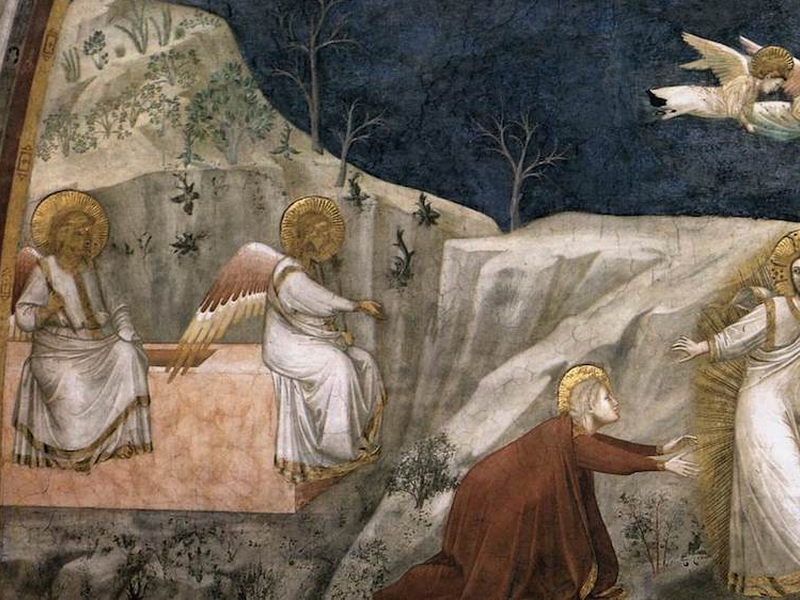
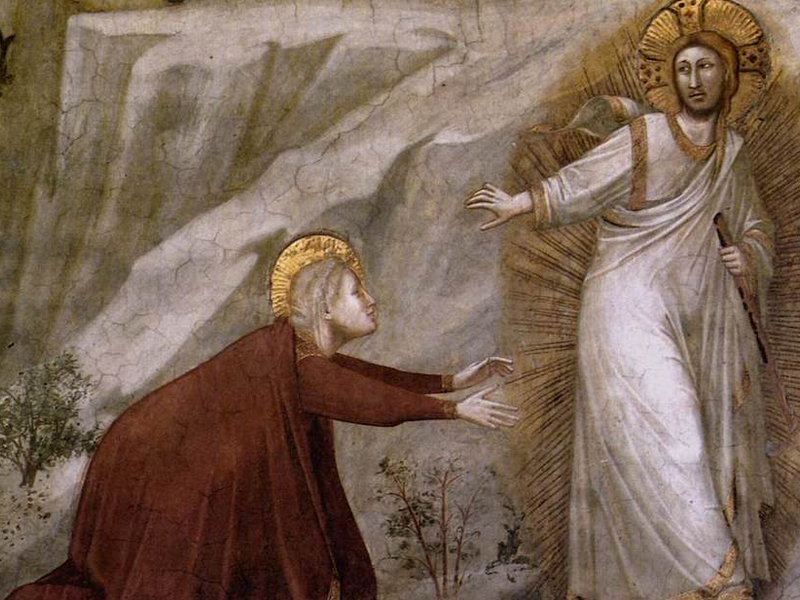
On a fresco in a chapel in Padua, Italy, there is a famous painting depicting the dramatic post-resurrection scene in John 20 with Mary and Jesus outside of the garden tomb. Giotto di Bondone painted it in the early 14th century. Jesus is striding from the tomb with a victor’s…

by Jeff MeyersApril 1, 2015

Showing page 156 of 309

See all
See all

Sharing death

Matthias Grebe’s Election, Atonement, and the Holy Spirit is an impressive piece of work. Grebe is as much at home in Barth and Barthian scholarship as in Leviticus and Old Testament scholarship, and the driving question of his book has to do with dogmatic logic that connects election and atonement…

December 1, 2014

The Thunder-Spirit

John eats a book from an angel and is told to prophesy (Revelation 10:10-11). But the angel doesn’t commission him as prophet. Rather, “ they said, ‘You must prophesy’” (v. 11). Who are they? The nearest plural speakers are the thunders (10:3-4). It seems that the seven thunders commission John…

December 1, 2014

Elemental Life

After reviewing Greek texts that describe the “strife of the elements,” Eduard Schweitzer summarizes the grim world of the ancients: He stresses “how widespread the conviction was that the four elements, though originally in a harmony of equilibrium, were continually threatening the existence of the world by their ‘mighty strife’…

December 1, 2014

Purity, Life, Death

Fernando Belo’s summary of the symbolic system of purity ( A Materialist Reading of the Gospel of Mark , 38-9) is a bit too schematic, but still illuminating. He sees two overlapping systems in the Pentateuch: one of pollution/contagion and one of debt. I focus on the first. Israel’s “symbolic…

November 26, 2014

Hope of Heaven and Earth

Struggling to articulate the cosmic deliverance of Romans 8, Stanislas Breton ( A Radical Philosophy of Saint Paul , 116-7) writes that “heaven and earth . . . are traversed by a visceral yearning orienting them toward and subordinating them to another kingdom, one that is more than human precisely…

November 26, 2014

Hero-less

The incomparable Martin Hengel begins The Atonement with a question: Did Greco-Roman culture have categories to understand Jesus’ death as an expiatory sacrifice? He answers with a dense Hengelian catalog of mythic and historical instances of the apotheosis of heroes, death for the fatherland, death for the truth, expelled pharmakoi…

November 26, 2014

Showing page 493 of 2212

Browse by Category

In Medias Res

Your weekly digest for all things Theopolis.

Donate

Theopolis is nearly 100% donor-supported. Consider joining us on our mission.