Theopolis Logo

Writing

Explore our collection of theological essays, biblical studies, and reflections on faith and culture.

See all
max-kukurudziak-qbc3zmxw0g8-unsplash
History

Report from Ukraine

We lost Crimea. That is very clear. Putin proved he was not lying when he said he would place women and children ahead of his soldiers to storm Ukrainian military bases. Russian soldiers did exactly that with women (some who volunteered and some who were forced). Russia now occupies all…

by San SanychMarch 28, 2014

screenshot-2023-09-21-at-3-59-23-pm
Church Calendar

God Gone Silent

Sound is an indicator of life and energy. “Sound signals the present use of power, since sound must be in active production to exist at all.” Things don’t have to be alive to make themselves visible, and “a primitive hunter can see, feel, smell, and taste an elephant when the…

by Peter LeithartMarch 26, 2014
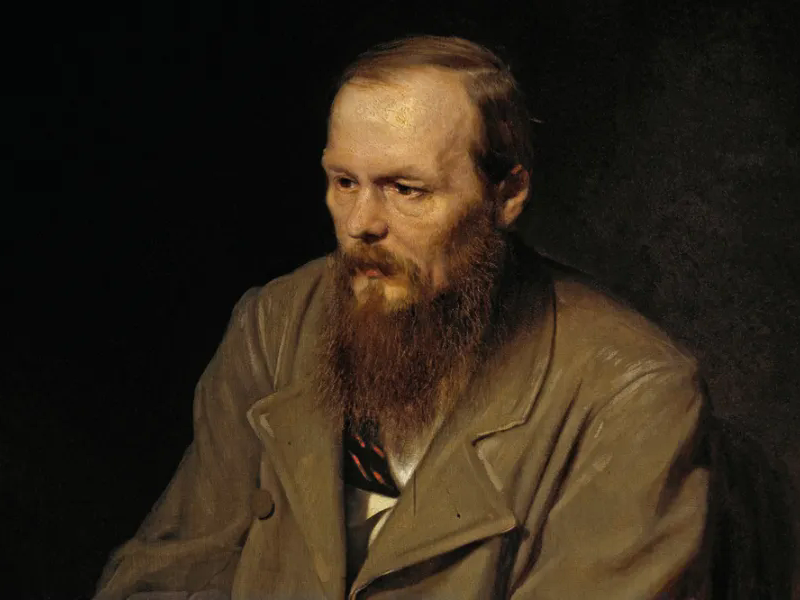
web-lead-image_final_dostoevsky
Books

Dostoevsky the Liberal

In the most famous section of his best-known novel, Dostoevsky’s Ivan Karamazov brings forward his case against God. He opens with a horrific litany of outrages against children. Turkish soldiers make a baby laugh and then shoot a pistol into his face. A little girl is beaten, thrashed, kicked by…

by Peter LeithartMarch 24, 2014
kelly-sikkema-ggs0_g6wi-i-unsplash
Epistemology

Subsidiary-Focal Integration and Liturgy

​At the heart of Esther Lightcap Meek's splendid ​Little Manual for Knowing is a concept she picked up from Michael Polanyi, "subsidiary-focal integration." The concept begins from the insight that all our knowing, all our experience, is double. We focus on something, but we are capable of "indwelling" that focal…

by Peter LeithartMarch 19, 2014
engin-akyurt-uz9qpvbol0e-unsplash
Revelation

White Stone

Jesus promises the overcomers of Pergamum "hidden manna" and a "white stone." The hidden manna is often linked with the manna stashed away in the ark of the covenant. The white stone has proved more elusive. Exodus tells us that manna was white (Exodus 16:31) and like bdellium (Numbers 11:7),…

by Peter LeithartMarch 17, 2014
226961fgsdl
Leviticus

A Theology of Festivity

Leviticus 23 begins with a reference to “Yahweh’s appointed times” ( mo’ade-YHWH ). Mo’ed is the common term for the feasts of Israel. A few dimensions to this term. First, it means “appointed time” or “designated time.” It is a time set by Yahweh. Yahweh has claimed certain times as…

by Peter LeithartMarch 12, 2014

Showing page 177 of 309

See all
See all

Sharing death

Matthias Grebe’s Election, Atonement, and the Holy Spirit is an impressive piece of work. Grebe is as much at home in Barth and Barthian scholarship as in Leviticus and Old Testament scholarship, and the driving question of his book has to do with dogmatic logic that connects election and atonement…

December 1, 2014

The Thunder-Spirit

John eats a book from an angel and is told to prophesy (Revelation 10:10-11). But the angel doesn’t commission him as prophet. Rather, “ they said, ‘You must prophesy’” (v. 11). Who are they? The nearest plural speakers are the thunders (10:3-4). It seems that the seven thunders commission John…

December 1, 2014

Elemental Life

After reviewing Greek texts that describe the “strife of the elements,” Eduard Schweitzer summarizes the grim world of the ancients: He stresses “how widespread the conviction was that the four elements, though originally in a harmony of equilibrium, were continually threatening the existence of the world by their ‘mighty strife’…

December 1, 2014

Purity, Life, Death

Fernando Belo’s summary of the symbolic system of purity ( A Materialist Reading of the Gospel of Mark , 38-9) is a bit too schematic, but still illuminating. He sees two overlapping systems in the Pentateuch: one of pollution/contagion and one of debt. I focus on the first. Israel’s “symbolic…

November 26, 2014

Hope of Heaven and Earth

Struggling to articulate the cosmic deliverance of Romans 8, Stanislas Breton ( A Radical Philosophy of Saint Paul , 116-7) writes that “heaven and earth . . . are traversed by a visceral yearning orienting them toward and subordinating them to another kingdom, one that is more than human precisely…

November 26, 2014

Hero-less

The incomparable Martin Hengel begins The Atonement with a question: Did Greco-Roman culture have categories to understand Jesus’ death as an expiatory sacrifice? He answers with a dense Hengelian catalog of mythic and historical instances of the apotheosis of heroes, death for the fatherland, death for the truth, expelled pharmakoi…

November 26, 2014

Showing page 493 of 2212

Browse by Category

In Medias Res

Your weekly digest for all things Theopolis.

Donate

Theopolis is nearly 100% donor-supported. Consider joining us on our mission.