
Theopolis Logo

Writing

Explore our collection of theological essays, biblical studies, and reflections on faith and culture.

See all
giammarco-zeh-ljawhtg-unsplash
Biblical Horizons

OPEN BOOK: Views and Reviews

Isaac E. Mozeson, The Word: The Dictionary that Reveals the Hebrew Sources of English (Northvale, NJ: Jacob Aaronson Inc., 1995), 310 pp. Reviewed by James B. Jordan. Once there was only one language in the world, the language God spoke to Adam. At the Tower of Babel, there came to…

by James B. JordanJune 28, 1996
tim-wildsmith-j6jv-mkdzqs-unsplash
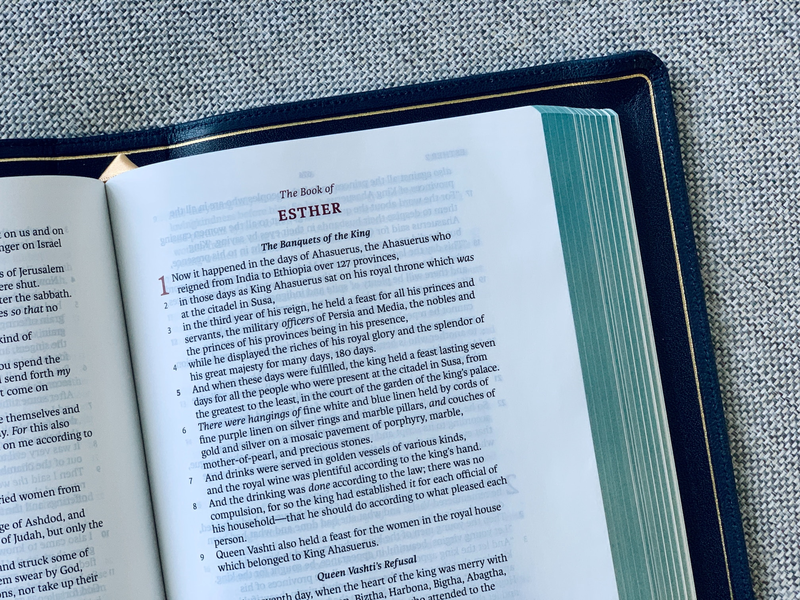
Esther

Esther: Historical & Chronological Comments (IV)

2. The Setting of the Book of Esther A. Xerxes (continued from previous issue) Ezra 6:14 says that the Jews finished building "according to the command of the God of Israel and the decree of Cyrus and Darius and Artaxerxes king of Persia." The problem with this verse is that…

by James B. JordanJune 28, 1996

ales-krivec-4mibe6zg5r0-unsplash
Acts

Jesus and Amalek

This essay goes with our previous study of the Amalek pattern back in Biblical Horizons No. 2. Since many do not have this essay, entitled "The Battle of Gog and Magog," let me cite the relevant paragraphs: Note in Genesis 12-15 that Abram moves into the land after escaping Pharaoh…

by James B. JordanJune 28, 1996

aaron-burden-1ebsmyrau-s-unsplash
Proverbs

The Strange Woman

Proverbs 7:6-23 is one of several passages early in the Proverbs in which Solomon warns his son about the wiles and dangers of the "strange woman." It is certainly quite proper to take these as straightforward warnings against sexual sins, and these are certainly warnings that need to be impressed…

by Peter LeithartJune 27, 1996
jan-kahanek-g3o5ztrk2e4-unsplash
Biblical Studies

Some Observations

1. In Luke 4:20 we read that after Jesus finished reading from Isaiah, "the eyes of all in the synagogue were fixed upon Him." This is usually taken in a psychological sense: They were amazed at Jesus somehow. I suggest that, as always, a merely psychological reading is a modern…

by James B. JordanMay 28, 1996
tim-wildsmith-j6jv-mkdzqs-unsplash
Esther

Esther: Historical & Chronological Comments (III)

2. The Setting of the Book of Esther Up to now we have assumed what we must prove, that the king in Esther is Darius the Great. While Biblical chronologists have usually taken this position, commentators on the book of Esther have often taken others as the king. One view,…

by James B. JordanMay 28, 1996

Showing page 265 of 309

See all
See all

Tent of Meeting

Leviticus 1 tells us that Yahweh called Moses from the tent of meeting to deliver instructions about sacrifice. What is that "tent of meeting" ( 'ohel mo'ed )? Judging by the usage of Leviticus, it would seem to be the tabernacle or a portion of the tabernacle. Most of the…

January 8, 2019

Don't Do, Don't Desire

The Ten Words include twelve negative commands. Most of the verbs that are negated are unique: 1) Thou shalt not have ( lo' yihyeh-leka ; literally, "there shalt not be to thee") other gods. 2) Thou shalt not prostrate ( lo'-tishtachweh ) to them (i.e., images). 3) Thou shalt not…

January 7, 2019
Philosophy

Theology's Maidservant

Thomas Aquinas summed up a long tradition when he said that philosophy is theology's ancilla , its maidservant. That's an apt description, and applies as well to natural science, social science, poetry, literary criticism, history, etc. etc. Philosophy has a special role only because her work often resembles theology's, and…

December 20, 2018

The Limits of Natural Law

John Milbank currently has a series of essays on natural law running a Church Life Journal . It's a "revisionist" account of natural law. And one of the revisions is Milbank's post-Kantian conception of the relation of nature and culture, something he lays out in his essay, " Only Theology…

December 19, 2018

Simplicity: Further Exploration

Steven Duby ( Divine Simplicity ) addresses the sort of argument I offered in yesterday's post . I quote a long paragraph (p. 148), with comments interspersed. "One might contend," Duby writes, "for a divine complexity that is necessary and irrevocable with no risk of divisibility. Such a hypothesis elicits…

December 18, 2018

Divine Simplicity: An Experimental Response

This is a response to the notion of divine simplicity. It's not a refutation. It's an experiment designed to tease out the logic of the claim. Simplicity means that God is without parts. He has no physical parts, and He's not a composite of any metaphysical "parts" either. He's not…

December 17, 2018

Showing page 50 of 2212

Browse by Category

In Medias Res

Your weekly digest for all things Theopolis.

Donate

Theopolis is nearly 100% donor-supported. Consider joining us on our mission.