Theopolis Logo

Writing

Explore our collection of theological essays, biblical studies, and reflections on faith and culture.

See all
tim-marshall-k2u71wv2ei4-unsplash
Modernity

Protestantism and the Postmodern self

Postmodernism has, we are told, “decentered” the modern self, that unified, sovereign, isolated, godlike “thinking thing” discovered by Rene Descartes. The postmodern self is not single but multiple; not sovereign but controlled by external forces; not isolated but “embedded” in the world and in relation; not godlike, but human, all…

by Peter LeithartMay 6, 2013

kiwihug-l4gw27xzn1i-unsplash
Matthew

Law and History: How to Read the Law of Moses (Part 8)

This is the eighth in a series of studies on Deuteronomy 22:30-23:8. And Jesus went out thence, and withdrew into the parts of Tyre and Sidon. And behold, a Canaanitish woman came out from those borders, and cried, saying, Have mercy on me, O Lord, thou son of David; my…

by Ralph Allan SmithMay 1, 2013
screen-shot-2023-09-20-at-7-04-07-am
Augustine

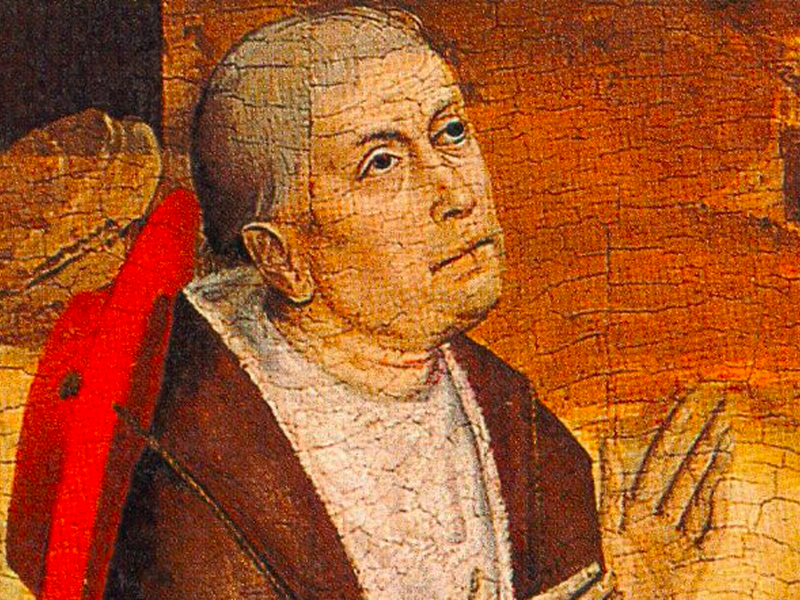
A Cusan Modernity?

The fifteenth-century German Cardinal Nicholas of Cusa led a busy and wide-ranging life. Educated in liberal arts and law at Heidelberg and Padua, Nicholas was a leading figure in the Conciliarist movement, and later served as a papal legate to both Constantinople and throughout Germany. As Bishop of Brixen, he…

by Peter LeithartApril 29, 2013
screenshot-2023-07-27-at-10-25-35-am
Deuteronomy

Law and History: How to Read the Law of Moses (Part 7)

This is the seventh in a series of studies on Deuteronomy 22:30-23:8. Thou shalt not abhor an Edomite, for he is thy brother; thou shalt not abhor an Egyptian, because thou wast a sojourner in his land. The children of the third generation that are born unto them shall enter…

by Ralph Allan SmithApril 25, 2013
ivan-aleksic-16yxcjsoaek-unsplash
Romans

What Advantage the Jew?

A sermon on Romans 3:1-8. 1 Then what advantage has the Jew? Or what is the value of circumcision? 2 Much in every way. To begin with, the Jews were entrusted with the oracles of God. A lot of people speculate here about what kind of advantage Paul is talking…

by Mark HorneApril 22, 2013
screenshot-2023-07-27-at-10-25-35-am
Deuteronomy

Law and History: How to Read the Law of Moses (Part 6)

This is the sixth in a series of studies on Deuteronomy 22:30-23:8. An Ammonite or a Moabite shall not enter into the assembly of Yahweh; even to the tenth generation shall none belonging to them enter into the assembly of Yahweh forever: because they met you not with bread and…

by Ralph Allan SmithApril 17, 2013

Showing page 195 of 309

See all
See all

Holy and Profane

Students of Ancient Near Eastern religions and cultures have typically assumed that the peoples of the ANE operated, like ancient Israelites, with a dichotomy of holy and profane. Beate Pongratz-Leisten doubts this, both for Mesopotamia and for Israel. The notion that this dichotomy is a universal religious structures goes back…

July 26, 2014

Ritual and Trascendence

K. van der Toorn has a 1989 article summarizing the purity system of ancient Mesopotamia. He describes purity rules as a form of temple etiquette. What makes something unclean is not that it is immoral but that it is displeasing in a particular setting, in this case displeasing before the…

July 26, 2014

Doing Righteousness

Rivka and Moshe Ulmer summarize rabbinic teaching about charitable giving in Righteous Giving to the Poor . The book includes an overview of rabbinic literature in general before it gets to its main topic. Rich in quotation, the section on tzedakah examines the theological underpinnings of charity, the this- and…

July 25, 2014

Conversion to Civil Society

Lida V. Nedilsky’s Converts to Civil Society is a sociological study of civil society in contemporary Hong Kong. But the use of the religious term “convert” is not accidental. Nedilsky argues that Christian conversion in Hong Kong opens up possibilities for other forms of voluntary association, both religious and non-religious.…

July 25, 2014

Making Money

Ole Bjerg ( Making Money ) doesn’t believe the classic “commodity” accounts of the rise of money, found in both Adam Smith and Marx. Both posit an original barter economy that is made more efficient by the introduction of a commodity that is used as a medium of exchange. Bjerg…

July 25, 2014

Body, Soul, Spirit

Gerd Theissen’s contribution to The Depth of the Human Person sharply challenges mainstream views of Paul’s anthropology. It’s not that Paul’s theory is holistic rather than dualistic. That assumption is based on a faulty understanding of ancient anthropology. A holistic anthropology doesn’t necessarily imply a positive view of the body,…

July 25, 2014

Showing page 564 of 2212

Browse by Category

In Medias Res

Your weekly digest for all things Theopolis.

Donate

Theopolis is nearly 100% donor-supported. Consider joining us on our mission.