Theopolis Logo

Writing

Explore our collection of theological essays, biblical studies, and reflections on faith and culture.

See all
tree-2
Creation

This Is Our Home

In the beginning, this was home. The world, I mean. Creation wasn’t just a series of unconnected events, a flashy display of building prowess. Yes, creation was intended to give God glory—which I guess you could say means that the creation was supposed to show the greatness—the weight —of God.…

by Tim GallantSeptember 19, 2017
img_5107
Theopolis News

Theopolis Institute Regional Course: Who is God?

We think we know. God is a stern Rule-Maker who has a bit of an anger management problem. Or, God is the indulgent Daddy in the sky. Or, God used to be a stern Ruler, but he got nice. Christians don't believe any of that. Christians say the one God…

by TheopolisSeptember 19, 2017
e99a2313
Baptism

God is Shouting, "Baptism Saves!"

Unfortunately today, baptism seems so… tiny . It’s actually… cute (maybe sweet?) when it’s given to a child. A little baby, a small gathering of people, a little bowl of water, tiny drops sprinkled upon the little baby’s head followed by a small applause and a short prayer. How… small!…

by Mani MarprelateSeptember 14, 2017
breviaryworn
Prayer

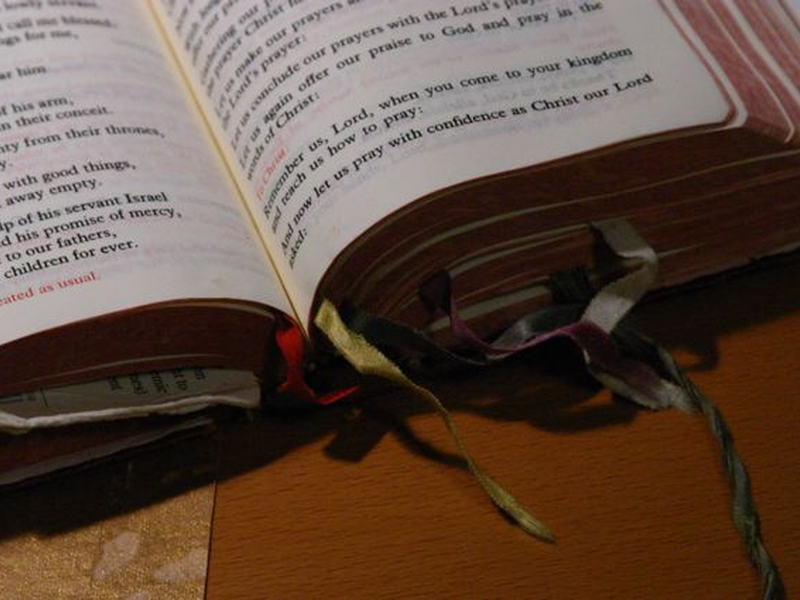
Reflections on Reformation: Why Pray the Hours?

Early on in the history of the church, Christians understood that the 1st century Jewish practice of meeting for prayer at set times of the day was a good and biblical practice to continue. We find references to this in several places in Scripture. In Acts 3 we find Peter…

by Timothy LeCroySeptember 12, 2017
emmanuel-phaeton-1bwmfmvybi8-unsplash
Biblical Studies

Navigating and Celebrating the Complexity of Scripture: A Conversation with Richard Hays

Editors’ note: For those interested in a review of Richard Hays’s latest book, see here . Richard Hays is a renowned New Testament scholar. The professor of New Testament at Duke Divinity School originally studied English literature, giving his reading of Scripture a pronounced literary sensibility. He’s perhaps best known…

by Alastair RobertsSeptember 7, 2017
hebrew-manuscript-2
Genesis

Toledoth and the Structure of Genesis

As many commentators point out, Genesis is structured by 10 uses of the word toledoth , "generations." The word means something along the lines of "begotten things," and the toledoth statements head the various sections of Genesis. When Genesis 2:4 announces "these are the begettings of heaven and earth" and…

by Peter LeithartSeptember 5, 2017

Showing page 106 of 309

See all
See all
Uncategorized

Gone Fishin’

June 24, 2014

Impure Holiness

Isaiah 65 piles up charges of idolatry and impurity against Israel. They are supposed to offer continuous sacrifices, but their sacrifices are a continuous provocation (65:3). They build their altars from bricks rather than from stones, as the law requires (65:3). The sacrificial smoke doesn’t sooth Yahweh but is an…

June 23, 2014

Coding Trance

In an essay at Slate , David Auerbach tells a story about John Harris, a game-programmer: “While working on an 8-bit Atari port of Frogger in the early 1980s, Harris said, “’ glued my hands to the keyboard.’ One day he started programming midafternoon, losing himself in work. The next…

June 23, 2014

Smart Dumb

P oet Kenneth Goldsmith gives a taxonomy of smartness and dumbness. There are various permutations. He prefers dumb, but it has to be smart dumb: “There is dumb dumb and there is smart dumb. There is also smart smart. Dumb dumb is plain dumb and smart smart is plain smart.…

June 23, 2014

Kynics and Cynics

In a 1987 review of Peter Sloterdijk’s Critique of Cynical Reason , Neil Wilson observes that for Sloterdijk “cynicism is enlightenment turned sour: a sourness which results from the self-denial that self-survival in a society dominated by instrumental rationality requires” (55). It is not a new attitude, but an ancient…

June 23, 2014

Physiognamy’s revenge

Peter Sloterdijk distinguishes in his Critique of Cynical Reason (139-40) between the objectifying and distancing aims of Enlightenment thought and the inescapable “physiognomic sense” of life among fleshly humans: “Whereas the process of civilization, whose core is constituted by the sciences, teaches us to distance ourselves from people and things…

June 23, 2014

Showing page 581 of 2212

Browse by Category

In Medias Res

Your weekly digest for all things Theopolis.

Donate

Theopolis is nearly 100% donor-supported. Consider joining us on our mission.