Theopolis Logo

Writing

Explore our collection of theological essays, biblical studies, and reflections on faith and culture.

See all
little-girl
Children

Honor God With Your Body

I am making a new rule in our house! We are actually kind of skimpy on the house rules. I try very hard to keep things simple: love God, love others, be joyful. It’s not complicated to avoid discipline here. But I have found myself repeating this new rule over…

by Lindsey TollefsonApril 9, 2015

giotto-noli-me-3
John

The Gardener and the Beloved, (Part 3)

Click HERE for Part 2 The voice of Jesus transforms and changes Mary when she hears him speak her name. This is her last “turning.” So also the woman in the Song of Songs longs to hear the voice of her beloved. Let me see your face, let me hear…

by Jeff MeyersApril 6, 2015
giotto-noli-me-2
John

The Gardener and the Beloved, (Part 2)

Click HERE for Part 1. The details of this story call the attentive reader back to the drama of Solomon’s Song of Songs. And the Song of Song’s alludes to, ties us into the story of Adam and Eve in the Garden and the promise of a coming Messiah that…

by Jeff MeyersApril 4, 2015
easter-term-2015-2
Theopolis News

Easter Term, 2015

“The course was a paradigm shift for me,” said Jonathan Sedlak, a Milwaukee electrical contractor who attended Theopolis’s course on Revelation. “I am left with a book that is far more practical than it has ever seemed before.” Jonathan Anderson of Louisville, Kentucky found the course “refreshing.” “I finished with…

by TheopolisApril 2, 2015
psalm-singing
Genesis

Worship as Response: Liturgical Logic, (Part 1)

“It is only by participation in a rational, practice-based community that one becomes rational.” – Alasdair MacIntyre It may be perfectly clear to a chef why adding unsifted powdered sugar to a hot frosting is a bad idea. But for an amateur cook, this may be the kind of rule…

by Jonathan BarlowApril 2, 2015
giotto-noli-me
John

The Gardener and the Beloved, (Part 1)

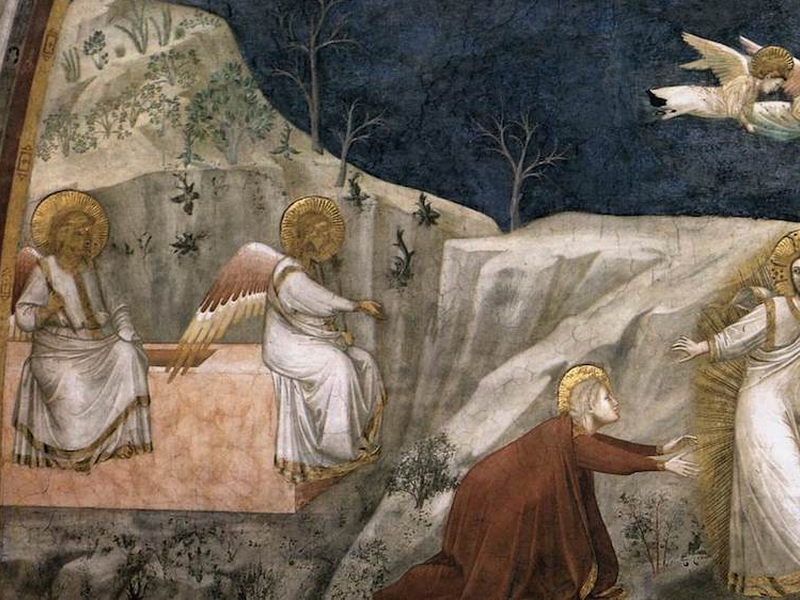
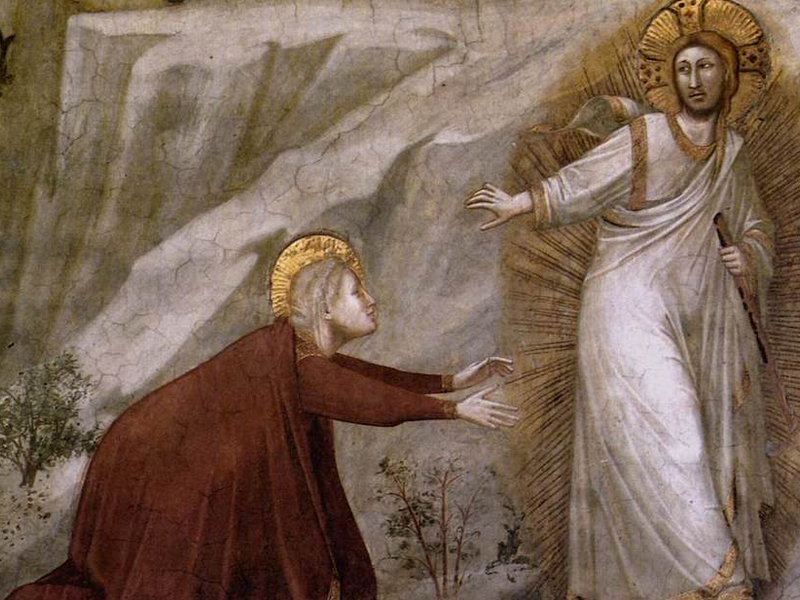
On a fresco in a chapel in Padua, Italy, there is a famous painting depicting the dramatic post-resurrection scene in John 20 with Mary and Jesus outside of the garden tomb. Giotto di Bondone painted it in the early 14th century. Jesus is striding from the tomb with a victor’s…

by Jeff MeyersApril 1, 2015

Showing page 156 of 309

See all
See all

Burning Offerings in Israel and Elsewhere

Erhard Gerstenberger ( Leviticus , 34) claims that “The completely burned sacrifice is probably an Israelite peculiarity.” James Watts ( Ritual and Rhetoric ) disagrees. He argues (75) that “The practice of burning offerings gained popularity during the first millennium and spread from its original home in northwest Syria. Burnt…

May 31, 2014

Blood and Water

Sacramental interpretations of the blood and water from Jesus’ side are too tempting to resist. We ought not resist them. Of course, it is the blood of the new covenant and the water of baptism (John 20:34). But the order brings us up short: Not water and blood, but blood…

May 31, 2014

Table Among Enemies

It’s one of the most famous lines in one of the most famous songs: “You spread a table before me in the presence of my enemies” (Psalm 23). Israel knows very well that this is what Yahweh the Shepherd does. This is how Israel was born as a people -…

May 31, 2014

Heartless

Ancient Israelites offered the inner organs of sacrificial animals - entrails, kidneys, a portion of the liver. The heart is never mentioned. In all of the complicated sacrificial instructions of Leviticus, the word leb never appears, even once. We learn what happens to the stomach (Deuteronomy 18:3) but not the…

May 31, 2014

Peace System

If we stay with the strict terminology of Leviticus, the word “sacrifice” ( zabach ) is not a generic term for offering animals on altars but is used specifically of the “peace offering,” often in phrases like “the sacrifice of the peace offerings.” The burnt or ascension offering ( olah…

May 30, 2014

Numerological Patterns in Leviticus

As Wilfried Warning points out in his engaging study, Literary Artistry in Leviticus , the book of Leviticus uses word repetitions to create meaningful literary and theological patterns. At times, the word repetitions are designed to highlight the themes of a particular section. “Fat” ( chalev ) occurs twelve times…

May 30, 2014

Showing page 597 of 2212

Browse by Category

In Medias Res

Your weekly digest for all things Theopolis.

Donate

Theopolis is nearly 100% donor-supported. Consider joining us on our mission.