Theopolis Logo

Writing

Explore our collection of theological essays, biblical studies, and reflections on faith and culture.

See all
kiwihug-l4gw27xzn1i-unsplash
Hermeneutics

Hermeneutical Polytheism

A couple of decades ago, when I was a young Reconstructionist (instead of a middle-aged post-Reconstructionist), I coined the phrase "political polytheism" to describe how modern evangelical Christians approach matters of social law and politics. Christians want the Bible for Church and family life, but turn to other gods for…

by James B. JordanJanuary 28, 1996

jan-kahanek-g3o5ztrk2e4-unsplash
Biblical Horizons

Concerning Contracts and Covenants

Gary North has from time to time taken note of some of the differences between contracts and covenants. For him, one of the most important is the oath-character of a covenant. Naturally, the English terms "contract" and "covenant" can be used with varying nuances by different writers, and their zone…

by James B. JordanJanuary 5, 1996
hebrew-manuscript-6
Biblical Studies

Rethinking the Order of the Old Testament

The Book of Chronicles is the last book in the Hebrew Canon of the Old Testament. The word "canon" means "authoritative list" when used in connection with the Bible. What we call the Hebrew Canon consists of 24 books arranged in three major divisions: the Law, the Prophets, and the…

by James B. JordanDecember 28, 1995
skyler-gerald-akljfvj5ym4-unsplash
Biblical Studies

At The Center of the Book of Kings

by: Peter Leithart and James Jordan The Book of Kings is structured chiastically, or concentrically. To see this clearly, we start in the middle and work our way outward. 2 Kings 3–7 record the central events of the ministry of Elisha. Elisha makes his first appearance in 1 Kings 19:19-21,…

by Peter LeithartNovember 5, 1995
lili-popper-lu15z1m_kfm-unsplash
Judges

Dynastic Aspirations in the Book of Judges

(The following is a supplement to my book, God’s War Against Humanism , a study of the book of Judges, available from Biblical Horizons for $20.00 – a photocopy of the original book, which is now out of print). The turning point in the book of Judges is 8:22-28. Here…

by James B. JordanNovember 5, 1995
james-coleman-orks2dpueo0-unsplash
Biblical Horizons

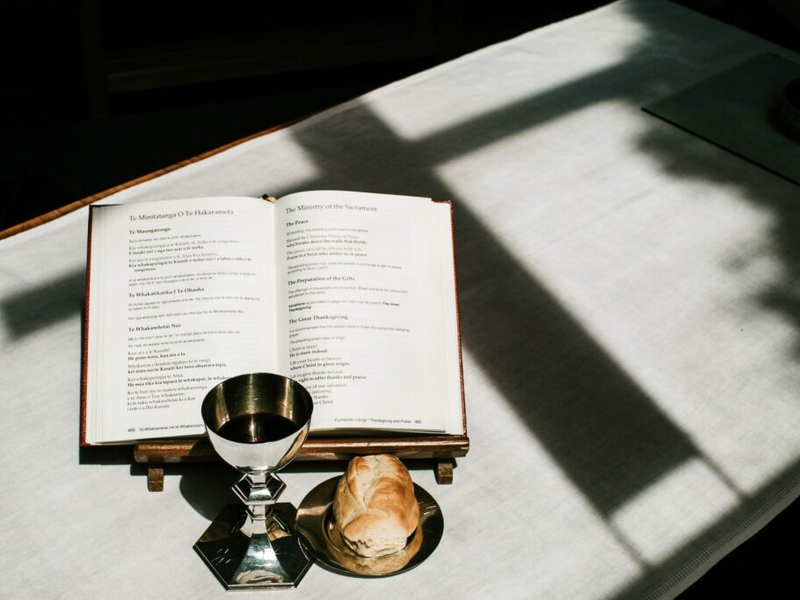
Doing the Lord’s Supper

From time to time I am asked how I think the Lord’s Supper should be done. This essay is my response to that question. To start with, we should agree that the Lord’s Supper is the only ritual we are obligated to do in the New Covenant on a routine…

by James B. JordanNovember 5, 1995

Showing page 268 of 309

See all
See all

Burning Offerings in Israel and Elsewhere

Erhard Gerstenberger ( Leviticus , 34) claims that “The completely burned sacrifice is probably an Israelite peculiarity.” James Watts ( Ritual and Rhetoric ) disagrees. He argues (75) that “The practice of burning offerings gained popularity during the first millennium and spread from its original home in northwest Syria. Burnt…

May 31, 2014

Blood and Water

Sacramental interpretations of the blood and water from Jesus’ side are too tempting to resist. We ought not resist them. Of course, it is the blood of the new covenant and the water of baptism (John 20:34). But the order brings us up short: Not water and blood, but blood…

May 31, 2014

Table Among Enemies

It’s one of the most famous lines in one of the most famous songs: “You spread a table before me in the presence of my enemies” (Psalm 23). Israel knows very well that this is what Yahweh the Shepherd does. This is how Israel was born as a people -…

May 31, 2014

Heartless

Ancient Israelites offered the inner organs of sacrificial animals - entrails, kidneys, a portion of the liver. The heart is never mentioned. In all of the complicated sacrificial instructions of Leviticus, the word leb never appears, even once. We learn what happens to the stomach (Deuteronomy 18:3) but not the…

May 31, 2014

Peace System

If we stay with the strict terminology of Leviticus, the word “sacrifice” ( zabach ) is not a generic term for offering animals on altars but is used specifically of the “peace offering,” often in phrases like “the sacrifice of the peace offerings.” The burnt or ascension offering ( olah…

May 30, 2014

Numerological Patterns in Leviticus

As Wilfried Warning points out in his engaging study, Literary Artistry in Leviticus , the book of Leviticus uses word repetitions to create meaningful literary and theological patterns. At times, the word repetitions are designed to highlight the themes of a particular section. “Fat” ( chalev ) occurs twelve times…

May 30, 2014

Showing page 597 of 2212

Browse by Category

In Medias Res

Your weekly digest for all things Theopolis.

Donate

Theopolis is nearly 100% donor-supported. Consider joining us on our mission.