Theopolis Logo

Writing

Explore our collection of theological essays, biblical studies, and reflections on faith and culture.

See all
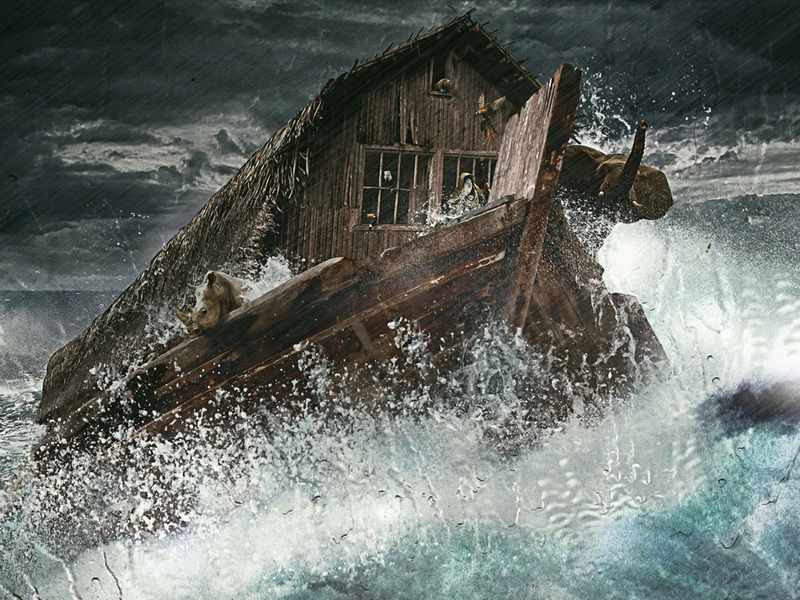
noahs-ark-genesis
Biblical Horizons

Who Rules the Land? The Meaning of the Noahic Covenant, Part 1

It is commonly held in Reformed thought that the Noahic Covenant is given to all men equally. The Noahic Covenant concerns "man," not simply "church," and establishes civil government as an institution among "mankind" — that is the theory. Sometimes the Noahic Covenant is regarded as a "covenant of common…

by James B. JordanNovember 23, 1990

tanner-mardis-xuxghzhibn4-unsplash-1-2
Daniel

The Babylonian Connection

The Fall of Jerusalem we have dated (provisionally) at 3426 Anno Mundi. In current B.C. dates this is 586 B.C. From this point forward in Biblical chronology we are required to make use of prophetic numbers rather than historical ones. Jeremiah prophesied that the captivity would last 70 years, but…

by James B. JordanNovember 16, 1990
screen-shot-2021-08-12-at-2-57-54-pm
Biblical Horizons

Taking the Situation Seriously

Evangelicals have in recent years become more interested in looking into their Bibles for wisdom to deal with modern problems. This is undoubtedly a welcome development, after many years of neglect. But there are dangers and costs as well. One of these is the tendency to fall into a modern…

by Peter LeithartOctober 19, 1990
carlo-alberto-burato-smdx3gleu_m-unsplash
Hermeneutics

The Unseen Things

Now faith is the substance of things hoped for, the evidence of things not seen (Hebrews 11:1). The famous definition of faith with which the eleventh chapter of Hebrews opens has received a number of different interpretations. The crux of the problem is the interpretation of the words translated in…

by Peter LeithartOctober 19, 1990
49980-nicolas_poussin_-_the_judgment_of_solomon_-_wga18330-800w-tn
Proverbs

Advice From a Sojourner, Part 8

15. The leech has two daughters, "Give," "Give." There are three things that will not be satisfied, Four that will not say, "Enough": 16. Sheol, And the barren womb, Earth, that is never satisfied with water, And fire that never says, "Enough." We are assuming, at least for the purposes…

by James B. JordanOctober 16, 1990
tanner-mardis-xuxghzhibn4-unsplash-1-2
Biblical Chronology

Confusion Among the Kings

As we have seen in previous installments in this series, the Old Testament is quite concerned with chronology, and carefully records chronological data for our use. For this reason, we can assume when we come to the chronology of the kings of Judah and Israel that the writers of the…

by James B. JordanOctober 2, 1990

Showing page 301 of 309

See all
See all

Burning Offerings in Israel and Elsewhere

Erhard Gerstenberger ( Leviticus , 34) claims that “The completely burned sacrifice is probably an Israelite peculiarity.” James Watts ( Ritual and Rhetoric ) disagrees. He argues (75) that “The practice of burning offerings gained popularity during the first millennium and spread from its original home in northwest Syria. Burnt…

May 31, 2014

Blood and Water

Sacramental interpretations of the blood and water from Jesus’ side are too tempting to resist. We ought not resist them. Of course, it is the blood of the new covenant and the water of baptism (John 20:34). But the order brings us up short: Not water and blood, but blood…

May 31, 2014

Table Among Enemies

It’s one of the most famous lines in one of the most famous songs: “You spread a table before me in the presence of my enemies” (Psalm 23). Israel knows very well that this is what Yahweh the Shepherd does. This is how Israel was born as a people -…

May 31, 2014

Heartless

Ancient Israelites offered the inner organs of sacrificial animals - entrails, kidneys, a portion of the liver. The heart is never mentioned. In all of the complicated sacrificial instructions of Leviticus, the word leb never appears, even once. We learn what happens to the stomach (Deuteronomy 18:3) but not the…

May 31, 2014

Peace System

If we stay with the strict terminology of Leviticus, the word “sacrifice” ( zabach ) is not a generic term for offering animals on altars but is used specifically of the “peace offering,” often in phrases like “the sacrifice of the peace offerings.” The burnt or ascension offering ( olah…

May 30, 2014

Numerological Patterns in Leviticus

As Wilfried Warning points out in his engaging study, Literary Artistry in Leviticus , the book of Leviticus uses word repetitions to create meaningful literary and theological patterns. At times, the word repetitions are designed to highlight the themes of a particular section. “Fat” ( chalev ) occurs twelve times…

May 30, 2014

Showing page 597 of 2212

Browse by Category

In Medias Res

Your weekly digest for all things Theopolis.

Donate

Theopolis is nearly 100% donor-supported. Consider joining us on our mission.








