Theopolis Logo

Writing

Explore our collection of theological essays, biblical studies, and reflections on faith and culture.

See all
timothy-eberly-djj49s6ud2o-unsplash
Leviticus

Yahweh's War Against Death

Stories, frankly all human stories are practically always about one thing aren’t they? Death. The inevitability of death. . . . “There is no such thing as a natural death. Nothing that happens to man is ever natural, since his presence calls the whole world into question. All men must…

by Brian MarrApril 14, 2014

screenshot-2023-09-21-at-4-52-42-pm
Matthew

Inescapable Blood

Matthew is organized around 5 discourses, which trace out the history of Jesus as a recapitulation of the history of God and Israel in the Old Testament. Jesus first speaks as a new Moses, instructing His disciples on a mountain about a righteousness that surpasses the righteousness of the scribes…

by Peter LeithartApril 10, 2014
screen-shot-2022-05-12-at-12-07-23-pm
Angels

Did Angels Marry People? The Sin of Cultural Intermarriage

The fall of the Sethites in Genesis 6 is the third fall of mankind, or the third degree of Adam’s original fall. Adam sinned in a Garden against his Father by stealing something he was supposed to wait to obtain. (“Every tree shall be food for you” Genesis 1:29.) Cain…

by James B. JordanApril 7, 2014
sixteen-miles-out-al48tflf4e8-unsplash
Angels

Did Angels Marry People? The Sons of God in Genesis 6

The recent fantasy film Noah and a slightly related blog comment by my friend Douglas Wilson have stirred up again the question of whether the “sons of God” in Genesis 6 who married the “daughters of men” were fallen angels or the priestly line of Seth. Doug argues for angels,…

by James B. JordanApril 4, 2014
kiwihug-l4gw27xzn1i-unsplash
Angels

The Angels of Jude

The prophecy of Jude concerns apostasy. An illustration of apostasy and its consequences is found in verse 6, which the New American Standard Bible translates this way: "And angels who did not keep their own domain, but abandoned their proper abode, He has kept in eternal bonds under darkness for…

by James B. JordanApril 3, 2014
screenshot-2023-09-21-at-4-22-42-pm
Matthew

Women at the Cross

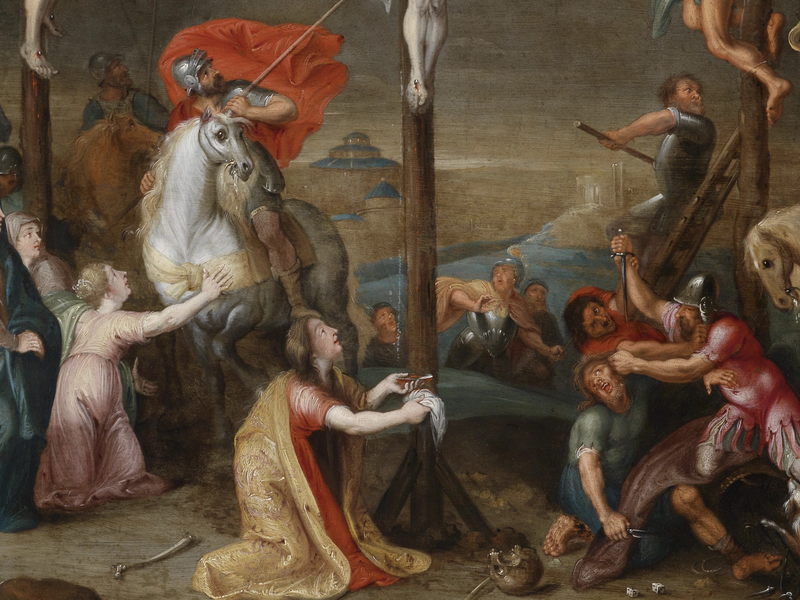
At His death, Jesus is surrounded by a Roman centurion and his cohort of Gentile solders. Matthew doesn't say that any disciples are there. But women are, and so is Joseph of Arimathea, identified as a “disciple” but, as John tells us, a “secret disciple for fear of the Jews,”…

by Peter LeithartMarch 31, 2014

Showing page 176 of 309

See all
See all

Local Grace

In his introduction to Charles Taylor’s A Secular Age , James KA Smith sums up Taylor’s argument that the Reformation hastened the “disenchantment” of the world ( How (Not) To Be Secular , 38-9). Taylor’s summary of Calvin sounds like a summary of Barth: “The Reformers ‘all see the reigning…

April 25, 2014

Encounter with Orthodoxy

John P. Burgess of Pittsburgh Theological Seminary spent a year with his family in Russia and recounts the experience of Russian Orthodoxy in his 2013 Encounters with Orthodoxy . It’s a very personal, sympathetic account. He describes Orthodox practices, and also some theology, in a way that I suspect an…

April 25, 2014

Confessional and Catholic?

Willem van Asselt’s Introduction to Reformed Scholasticism provides a superb overview of the history of Reformed Scholasticism, as well as a survey of the current state of the literature. Early on, he emphasizes the “catholicity” of Reformed Scholasticism: “those who practiced it explicitly aimed to stand within the tradition of…

April 25, 2014

Via Negativa

Benjamin Kaplan’s Divided By Faith is primarily a revisionist history of the rise of toleration in early modern Europe. He challenges the Enlightenment notion that 18th-century intellectuals introduced the idea, showing instead that toleration appeared first as a set of practices in religiously diverse regions of Europe and was first…

April 25, 2014

Lifted

Lifts might not have changed everything, but they changed a lot, according to Andreas Berard’s Lifted: A Cultural History of the Elevator . The TLS reviewer observes how the elevator transformed architecture, and the class distribution of vertical space: “The lift allowed the dramatic recalibration of building types. Staircases were…

April 24, 2014

Red, Black, Gray

How did religion survive and revive in China? Answering that question in Religion in China , Fenggang Yang sketches the outlines of a political-economic sociology of religion. Like many sociologists of religion, he rejects the theory of secularization. Modernity has not proven to be the solvent of religious faith that…

April 24, 2014

Showing page 626 of 2212

Browse by Category

In Medias Res

Your weekly digest for all things Theopolis.

Donate

Theopolis is nearly 100% donor-supported. Consider joining us on our mission.