Theopolis Logo

Writing

Explore our collection of theological essays, biblical studies, and reflections on faith and culture.

See all
elijah-1200x630-min
Biblical Horizons

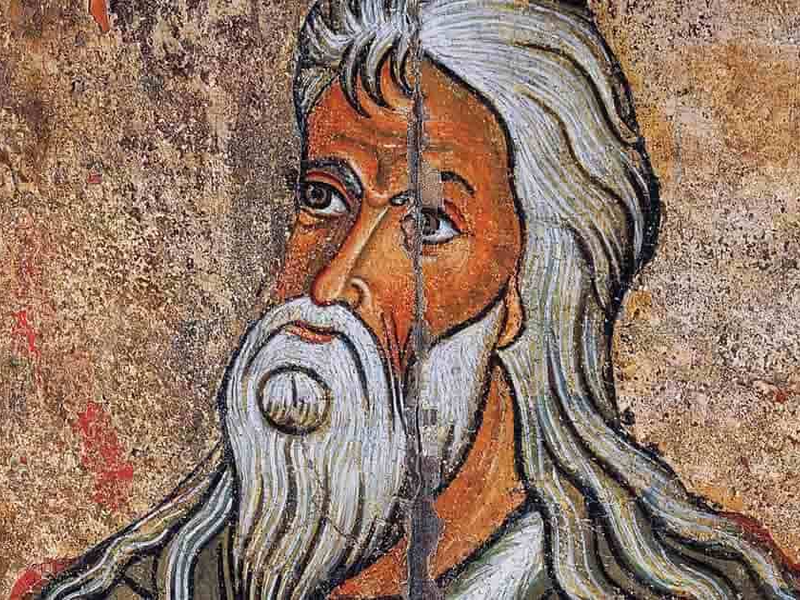
Elijah’s Exodus

1 Kings 17, which abruptly introduces Elijah into the history of the northern kingdom, is a carefully constructed literary unit. In its basic structure, it follows a clear exodus-return pattern. Like Jacob and his sons, Elijah was driven out of the land by a famine (vv. 1-4). In exile, Elijah…

by Peter LeithartJune 17, 1992

ales-krivec-4mibe6zg5r0-unsplash
Biblical Studies

All Things New

Now the Pharisees, who were lovers of money, were listening to all these things and they were scoffing at Him. And He said to them, "You are those who justify yourselves in the sight of men, but God knows your hearts; for that which is highly esteemed among men is…

by Mark HorneJune 6, 1992
aaron-burden-h8s0pf2rcqs-unsplash
Biblical Chronology

Chronologies and Kings, Part 11: The Knots of 2 Kings 11-14

In the year 3119, Ahaziah of Judah and Jehoram of Israel were both slain by Jehu as he carried out his God-appointed task of eliminating the seed and house of Ahab (2 Kings 9:13-33). Since the kings of Israel are usually counted as beginning their reign in the same year…

by James B. JordanMay 24, 1992
trnava-university-beeyeib-am8-unsplash
Biblical Studies

Gleanings from Robert Alter’s "Art of Biblical Narrative"

One of the most important developments in Biblical studies in recent years has been a movement of scholars devoted to studying the literary techniques of the Biblical writers. Tremper Longman, III of Westminster Theological Seminary has treated this movement from a Reformed perspective in his Literary Approaches to Biblical Interpretation…

by Peter LeithartMay 17, 1992
ian-schneider-iqbc4vu4ypq-unsplash
Biblical Horizons

Tentmaking

And because [Paul] was of the same trade, he stayed with [Aquila and Priscilla] and they were working; for by trade they were tentmakers (Acts 18:3). The fact that Paul was by trade a tentmaker has usually been taken as the springboard for a discussion of whether pastors should have…

by James B. JordanApril 24, 1992
screen-shot-2022-05-12-at-12-07-23-pm
Biblical Studies

Chronologies and Kings, Part 10: Jehoram of Judah

I pointed out in Chronologies and Kings Part 9 that the years of Judah’s kings are given in chronological fashion. "When we read of a Judahite king’s reign as lasting 4 years, it means that 4 years of the chronology have been given to him, and there is no chronological…

by James B. JordanApril 24, 1992

Showing page 290 of 309

See all
See all

Local Grace

In his introduction to Charles Taylor’s A Secular Age , James KA Smith sums up Taylor’s argument that the Reformation hastened the “disenchantment” of the world ( How (Not) To Be Secular , 38-9). Taylor’s summary of Calvin sounds like a summary of Barth: “The Reformers ‘all see the reigning…

April 25, 2014

Encounter with Orthodoxy

John P. Burgess of Pittsburgh Theological Seminary spent a year with his family in Russia and recounts the experience of Russian Orthodoxy in his 2013 Encounters with Orthodoxy . It’s a very personal, sympathetic account. He describes Orthodox practices, and also some theology, in a way that I suspect an…

April 25, 2014

Confessional and Catholic?

Willem van Asselt’s Introduction to Reformed Scholasticism provides a superb overview of the history of Reformed Scholasticism, as well as a survey of the current state of the literature. Early on, he emphasizes the “catholicity” of Reformed Scholasticism: “those who practiced it explicitly aimed to stand within the tradition of…

April 25, 2014

Via Negativa

Benjamin Kaplan’s Divided By Faith is primarily a revisionist history of the rise of toleration in early modern Europe. He challenges the Enlightenment notion that 18th-century intellectuals introduced the idea, showing instead that toleration appeared first as a set of practices in religiously diverse regions of Europe and was first…

April 25, 2014

Lifted

Lifts might not have changed everything, but they changed a lot, according to Andreas Berard’s Lifted: A Cultural History of the Elevator . The TLS reviewer observes how the elevator transformed architecture, and the class distribution of vertical space: “The lift allowed the dramatic recalibration of building types. Staircases were…

April 24, 2014

Red, Black, Gray

How did religion survive and revive in China? Answering that question in Religion in China , Fenggang Yang sketches the outlines of a political-economic sociology of religion. Like many sociologists of religion, he rejects the theory of secularization. Modernity has not proven to be the solvent of religious faith that…

April 24, 2014

Showing page 626 of 2212

Browse by Category

In Medias Res

Your weekly digest for all things Theopolis.

Donate

Theopolis is nearly 100% donor-supported. Consider joining us on our mission.