Theopolis Logo

Writing

Explore our collection of theological essays, biblical studies, and reflections on faith and culture.

See all
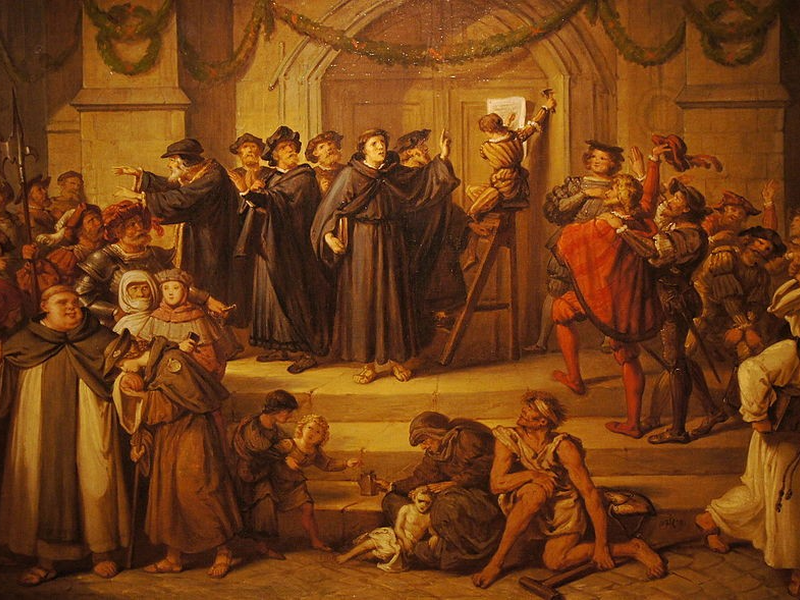
der_anschlag_von_luthers_95_thesen-1024x589
Church Calendar

Five Misconceptions of Reformation Day

For many people the date October 31 is significant not only for being the Eve of All Saints (All Hallows Eve, Halloween) but as the day in 1517 when Martin Luther nailed his 95 theses to the door of the Castle Church in Wittenburg. These theses were a list of…

by Timothy LeCroyOctober 31, 2017
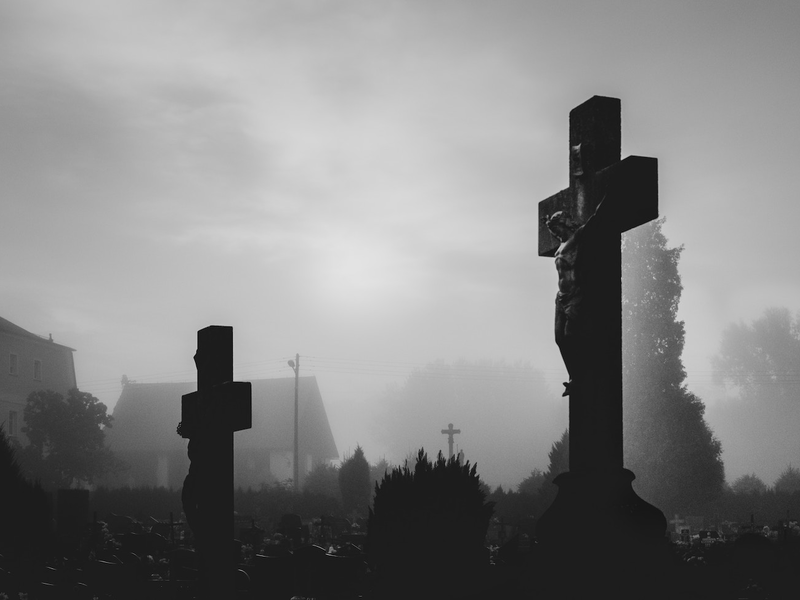
sacre-bleu-r__kixb0i5m-unsplash
Church Calendar

Concerning Halloween

It has become routine in October for some Christian schools to send out letters warning parents about the evils of Halloween, and it has become equally routine for me to be asked questions about this matter. "Halloween" is simply a contraction for All Hallows’ Eve. The word "hallow" means "saint,"…

by James B. JordanOctober 26, 2017
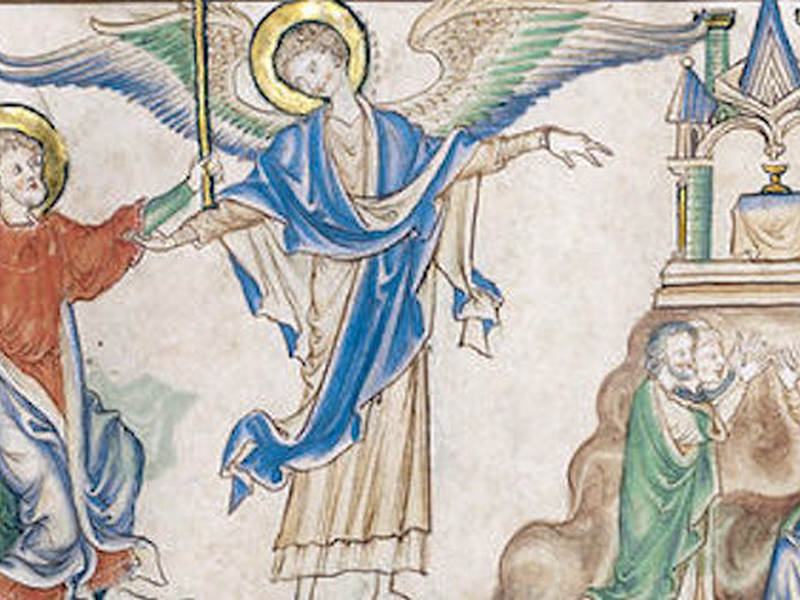
revelation-john-with-rod
Revelation

Preaching, An Art of Division

The following is an excerpt from Peter Leithart's forthcoming two-volume commentary on Revelation (T&T Clark). Y ou must prophesy again concerning many peoples and nations and tongues and kings,” a voice tells John (Rev. 10:11). Then someone gives him a “reed like a rod” and instructs him to measure (11:1).…

by Peter LeithartOctober 24, 2017
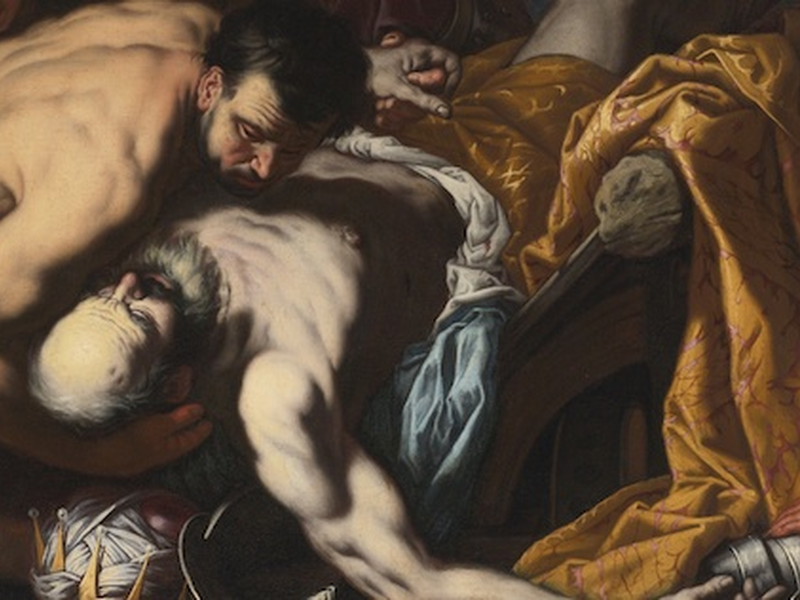
josiah-death

Back To Egypt

Josiah is an ideal Davidic king in many ways. He not only “did right,” but he “walked in the ways of his father David” and “did not turn aside to the right or to the left” (2 Chronicles 34:2). At the age of 16, he began to seek Yahweh, and…

by Peter LeithartOctober 19, 2017
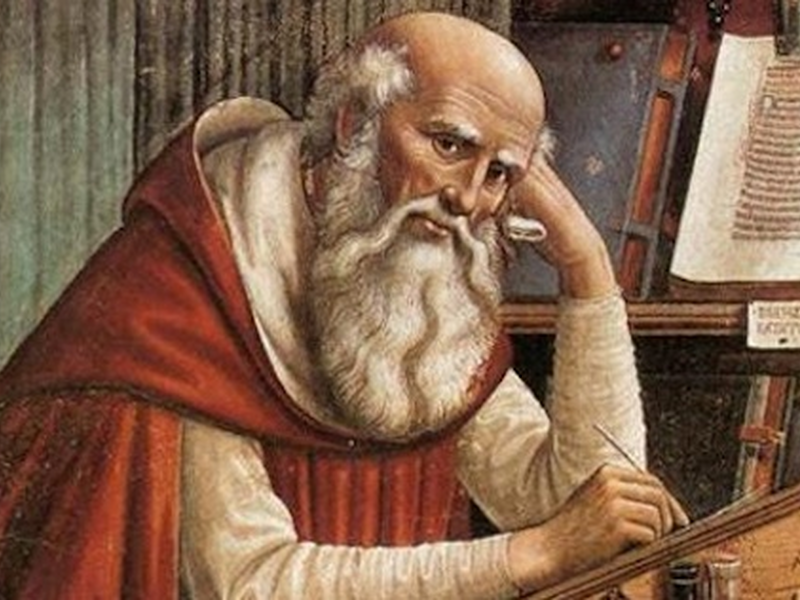
augustine
Augustine

Augustine and the Music of Time

One of the best discussions of Augustine’s views on time comes from Jeremy Begbie’s Theology, Music, and Time (ch. 3). Following Paul Ricoeur, Begbie claims that Augustine’s distentio “is conceived as the three-fold present, and the threefold present as distentio . The distentio consists in the non-coincidence of the mind’s…

by Peter LeithartOctober 17, 2017
img_1043
How to Worship

The Psalter Should be Woven into the Fabric of Worship

This has always been the position of the Christian Church, and from an historical perspective the present situation in evangelicalism is appalling. The early liturgies of the Church, which are still used in Episcopal and Lutheran worship, are laced with psalm phrases. The early hymns, such as the Te Deum…

by James B. JordanOctober 12, 2017

Showing page 104 of 309

See all
See all

Difference

Ancient Greeks sacrificed and ate pigs and dogs. Israelites were forbidden to do so. Ancient Greeks made blood pudding from sacrifices. Israelites were not supposed to eat blood. Ancient Greeks sometimes sacrificed pregnant sows. Israelites were commanded not to take both the eggs and the hen. Greek sacrificial goats were…

April 11, 2014

Equality and Privilege

Was sacrificial meat distributed equally or hierarchically in ancient Greece? Some have resolved the question diachronically: Archaic Greece had a more democratic sacrificial distribution that democratic classical Athens. Gunnel Ekroth concludes that the two systems lived side-by-side. Choice pieces were given to dignitaries and priests, but the bulk of the…

April 11, 2014

Hold, Cold, Between

Jesus charges the Laodicean angel with being lukewarm, neither hot nor cold (Revelation 3). This is understandably and rightly taken as a symbol of their indecisiveness and lethargic piety. But there’s a whole lot more going on. Hot and cold match day and night (Genesis 8:22). “Heat of the day”…

April 11, 2014

Thoughts on 1 Samuel 17

A few scattered thoughts on 1 Samuel 17. Saul offers David his armor for battle, but David refuses (v. 39). After the battle, though, David accepts the armor of Jonathan, signifying David’s elevation to crown prince (18:1-4). David kills Goliath with a rock, trusting in Yahweh the Rock. There is…

April 11, 2014

Socially Constructed Self

By the time a child is two, he or she has developed “narrative” memory, the ability to “store” and recall events in story form. This is essential to the development of thought and self-reflection, but it is, Daniel Siegel argues, a shared, social process ( The Developing Mind , 60-1),…

April 10, 2014

Pluralist Paralysis

Millennials aren’t apathetic or lazy, argues Zachary Fine in the NYT . They are simply paralyzed, and pluralism is one of the causes. “The art critic Craig Owens once wrote that pluralism is not a ‘recognition, but a reduction of difference to absolute indifference, equivalence, interchangeability.’ Some millennials who were…

April 10, 2014

Showing page 637 of 2212

Browse by Category

In Medias Res

Your weekly digest for all things Theopolis.

Donate

Theopolis is nearly 100% donor-supported. Consider joining us on our mission.