Theopolis Logo

Writing

Explore our collection of theological essays, biblical studies, and reflections on faith and culture.

See all
pawan-sharma-vt2efwhbs-e-unsplash
Authority

Eldership and Maturity, (Part 2)

(continued from previous issue) Between 30 and 50 What did the Levites do between age 30 and 50? Numbers 4 shows us that they carried the house of God on their shoulders. Lifting up the Lord is an image of worship in the Bible, and David’s restructuring of the Levites…

by James B. JordanJuly 8, 1995

venice-la-distruzione-del-tempio-di-gerusalemme-francesco-hayez-gallerie-accademia-venice
Romans

The Great Hangover, Parts 1-2

When God created the world, He created two lands: the Throne-land of Eden (entered through the sanctuary-garden, the Garden of Eden), and the Outlying Lands, such as the lands of Havilah and Cush. This essentially bi-polar world is the world of the Old Creation, and it continued to exist until…

by James B. JordanJuly 5, 1995
Architecture

Concerning Colors, Architecture, and Sacraments

Color is inescapable, except for those who are color blind. In our church architecture, we either employ color schemes that are helpful to worship, or we employ color schemes that are not helpful. Of course, this assertion merely begs the question: What color schemes are most helpful. God showed interest…

by James B. JordanJuly 4, 1995
baptism-of-christ
Baptism

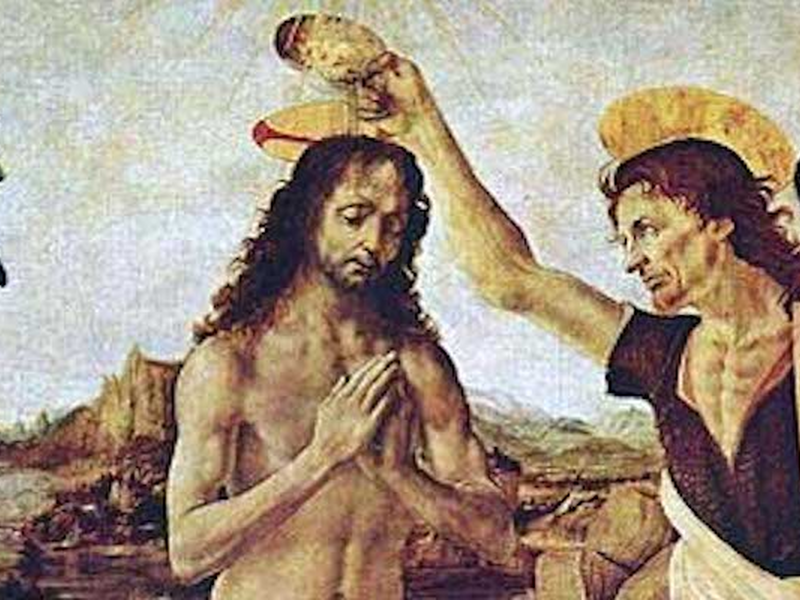
Jesus’ Baptism Into Priesthood

As I noted in an earlier article in Rite Reasons , the Church Fathers Tertullian, Ambrose, and Augustine all claimed that baptism inducts the baptized person into membership in the royal priesthood of the church, and Thomas Aquinas said that baptism, by imprinting an indelible “character” on the soul, confers…

by Peter LeithartMay 26, 1995
moses-gives-aaron-priesthood-39465-wallpaper
Baptism

Renewing Circumcision

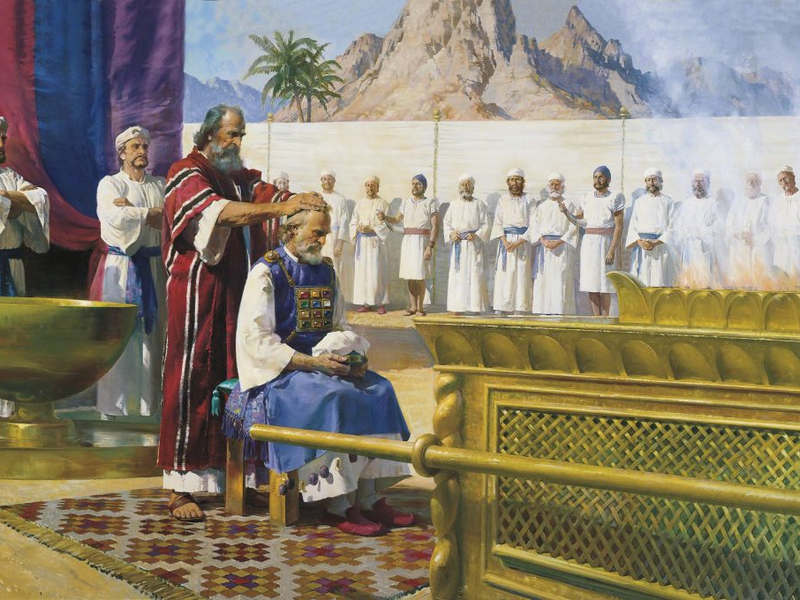
When the Aaronic priests were ordained, the blood of the ram of "filling” was placed on the lobe of the right ear, the right thumb, and the right big toe (Lev. 8:22-24). Similarly, the cleansing rite for a leper included smearing the right ear lobe, thumb, and big toe with…

by Peter LeithartMay 14, 1995
sixteen-miles-out-ki3hr9t8t7a-unsplash
Daniel

A Correction on Daniel 7

In my Preliminary Commentary on Daniel , which many of you have obtained, I argued in chapter 13 that the four monsters called up from the sea by the evangelistic work of the four winds (the saints) represented the deep hatred of God that evangelistic work brings to the fore…

by James B. JordanMay 7, 1995

Showing page 270 of 309

See all
See all

Circular Evolution

In his Natural History of Religion, David Hume proposes an evolutionary progress from natural polytheism to more developed monotheism. This, he thinks, is the natural and virtually inevitable progress: “As far as writing or history reaches, mankind, in ancient times, appears universally to have been polytheists” and idolaters. It makes…

March 11, 2014

Persistent Protest

Protestant problematics about sacraments still run in the background of early modern debates about religion. In response to evidence of similarities between Jewish and “savage” Indian religion, some early modern thinkers argued that the ritual similarities were marginal to Judaism. Some thought of Jewish ceremonies as a kind of prophylactic…

March 11, 2014

Jubilee: Real or Ideal?

Many scholars have concluded that the Jubilee legislation of Leviticus 25 is an idealized portrait of an institution that Israel never practiced. In a 2003 essay in Vetus Testamentum , Lee Casperson takes issue with this viewpoint: “There are extensive parallels in the ancient Near East, long predating the entry…

March 11, 2014

Reenacted Exodus

Leigh Trevaskis tries to suss out the rationale for sticking Leviticus 24 (menorah, showbread, blasphemy) between Leviticus 23 (Israel’s festival calendar) and Leviticus 25 (Jubilee). He proposes a symbolic solution to the puzzle. He observes that chapter 24 begins with a reverence to “light” (v. 2), alluding back to the…

March 11, 2014

Epistemological Dualism

Esther Lightcap Meek presents the most devastating little critiques of epistemological dualism I’ve ever read near the beginning of A Little Manual for Knowing . Epistemological dualism describes the way we “distinguish knowledge from beliefs, facts from values, reason from faith, theory from application, thought from emotion, mind from body,…

March 11, 2014

Righteous aggressors

Halbertal ( On Sacrifice , 72-3) offers this fine analysis of the self-justificating moves of aggressors: “The mind can play complicated games, and among them is the accusation that an aggressor directs toward his victim for causing him to become violent, which all too easily turns into a justification for…

March 10, 2014

Showing page 663 of 2212

Browse by Category

In Medias Res

Your weekly digest for all things Theopolis.

Donate

Theopolis is nearly 100% donor-supported. Consider joining us on our mission.