Theopolis Logo

Writing

Explore our collection of theological essays, biblical studies, and reflections on faith and culture.

See all
aaron-burden-h8s0pf2rcqs-unsplash
Galatians

The Restoration of the Galatians

While controversies over the writings of Paul continue in various corners of the intellectual globe, the word of God given through Paul and his scribe and all of the church’s interpreters and translators over the last two millennia is still readily available to the lofty and the lowly. Paul, as…

by Grace LangnessMarch 25, 2013

kiwihug-l4gw27xzn1i-unsplash
Deuteronomy

Law and History: How to Read the Law of Moses (Part 2)

The second in a series of studies in Deuteronomy. Deuteronomy 22:30: A man shall not take his father’s wife, and shall not uncover his father’s wing (Hebrew: kanaf ). There are a number of unusual features in this law that mark it out from the previous context, indicating that it…

by Ralph Allan SmithMarch 20, 2013
200403-moss-pilate-tease_pncfq5
History

Victimhood and the Gospel

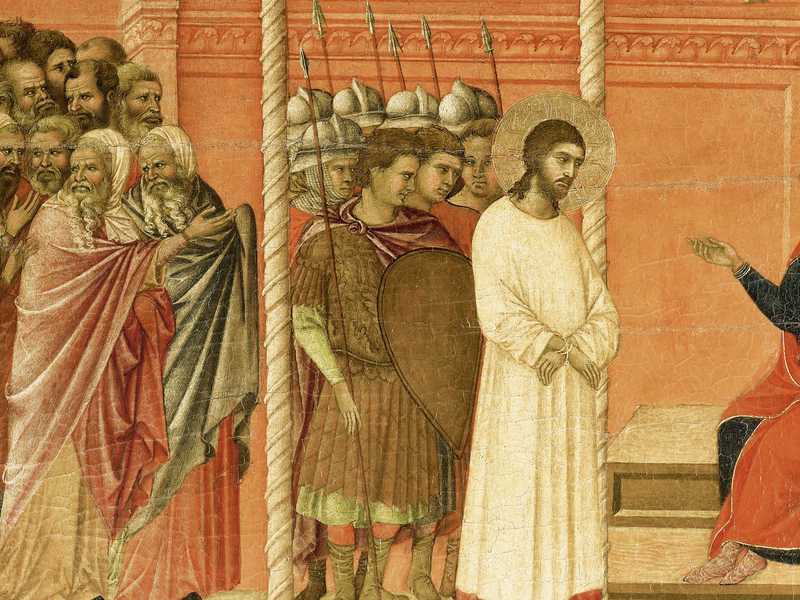
The texts of Christianity have been slowly at work, under the power of the Holy Spirit for 2000 years now. If we could be magically transported back into the world of two millennia ago, modern Americans would be shocked at the cruelty of that world. There was no concern for…

by Richard BledsoeMarch 18, 2013
aaron-burden-1ebsmyrau-s-unsplash
Luke

The Dysfunctional Family of the Gadarene Madman

The Story of the Gadarene Madman is told in all three synoptic Gospels (Matthew 8:28-34, Mark 5:1-20, Luke 8:26-37). Jesus ventures into a Gentile area when He passes over the Sea of Galilee. Upon disembarking from his boat, he is immediately met by a demon-possessed madman. Upon meeting Jesus, he…

by Richard BledsoeMarch 13, 2013
aaron-burden-1ebsmyrau-s-unsplash
Deuteronomy

Law and History: How to Read the Law of Moses

Part 1 of a multi-part series of studies on Deuteronomy 22:30-23:8. Eric Auerbach, in his classic work on Western literature, devotes his first chapter to contrasting Homer with the Bible. Of Homer, he writes of the “need of Homeric style to leave nothing which it mentions half in darkness and…

by Ralph Allan SmithMarch 12, 2013
markus-winkler-aid-xyrtlec-unsplash
Theopolis News

James Jordan in Korea, Japan

Trinity House Fellow James B. Jordan will be a speaker at an International Conference on Biblical Symbolism that will be held in Seoul on Monday, May 27 in 2013. He will address "The Importance of Biblical Symbolism and Symbolic Interpretation of the Bible." The conference will have three other speakers…

by Peter LeithartMarch 9, 2013

Showing page 197 of 309

See all
See all

Giving All To God

It is well known that Greeks rarely offered holocaust sacrifices - sacrifices in which the entire animal is offered to the gods by being consumed in the fire. the most common sacrifice was the thysia , which always culminated with a meal. Alongside the rare holocausts were the equally rare…

March 8, 2014

Auden’s Secrets

When I spot an essay entitled “The Secret Auden,” I get nervous. When it’s in the New York Review of Books , I get nervouser. Edward Mendelson’s recent piece on Auden does refer to Auden’s homosexuality, but the focus of the piece is elsewhere: Auden’s dirty little secret is that…

March 8, 2014

Pure Gift?

Is the olah , the “whole burnt offering,” a “pure gift, as Moshe Halbertal has it in On Sacrifice (14)? It seems so: The entire animal is burned, no meat remains for the worshiper, there is no evident benefit given in return for the total devotion of an animal to…

March 8, 2014

The Gift of Efficacy

Blood atones. That’s rooted in the created fact that life is in the blood, but in the Bible this doesn’t mean that blood is a kind of magical moral detergent. How then can it atone? It atones because God has “given” it for atonement: “I have given [blood] to you…

March 7, 2014

Atonement and Re-creation

Stephen A. Geller offers an intriguing reading of the day of atonement rituals. He points out that, for all the attention given to the scapegoat, one of the unique features of this day’s rites, it is not said that the scapegoat atones for sin. What puts the kafar into Yom…

March 7, 2014

Atonement by blood

Why, Stephen A. Geller asks, does “P” consider blood a necessary agent for achieving forgiveness and the re-creation that is atonement? He answers by noting the sequence of Leviticus 16-17, which moves from the bloody cleansing and reestablishment of the sanctuary to the command that butchering be done in the…

March 7, 2014

Showing page 665 of 2212

Browse by Category

In Medias Res

Your weekly digest for all things Theopolis.

Donate

Theopolis is nearly 100% donor-supported. Consider joining us on our mission.