Theopolis Logo

Writing

Explore our collection of theological essays, biblical studies, and reflections on faith and culture.

See all
e99a9334
Advent

Stretching Christmas

For many people Christmas comes on December 25 and is over December 26. The tree is taken down along with the lights and the other decorations, and everyone begins setting the house in order for the new year. No more Christmas hymns. No more celebrations (well, until New Year’s Eve).…

by Steve WilkinsDecember 24, 2016
ascension
Advent

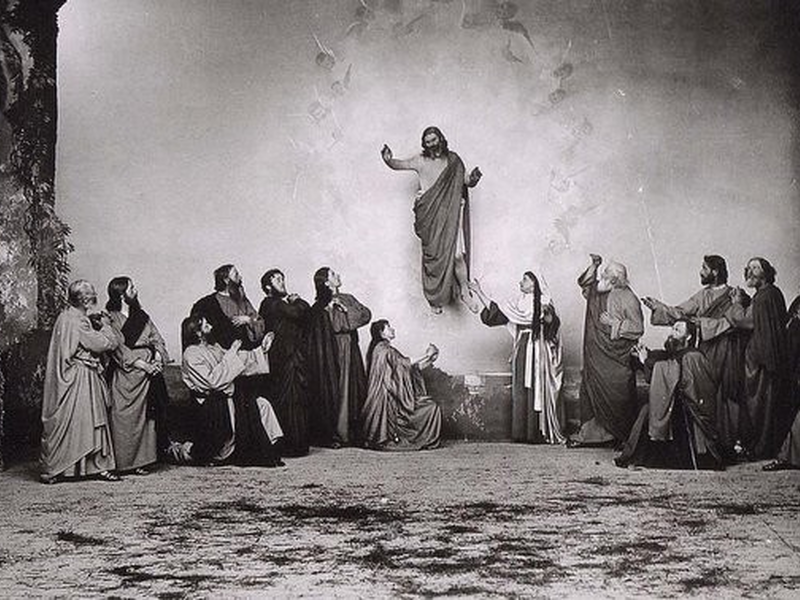
Ascension and Incarnation

The Ascension and the Incarnation should not be disconnected in our Christmas thinking or celebrations. As N.T. Wright notes, the ascension is "a central and vital feature without which all sorts of other things start to go demonstrably wrong. . . . where the ascension has been ignored or misunderstood,…

by Roy AtwoodDecember 23, 2016
nativity-rembrandt
Advent

Christmas Light

“In the Word was life, and the life was the light of men. And the light shines in the darkness.” Thus John describes the incarnation of the Son. He comes as the living and life-giving light of the world. That’s good news. In the beginning, God spoke and light shone…

by Peter LeithartDecember 23, 2016
nativity-chagall
Advent

The Spirit of Christmas

Christmas is all about Jesus. The angels announce Jesus’ birth, shepherds and wise men come to see Jesus, Herod wants to kill Jesus. We occasionally think of the Father who sent the Son, but we keep returning to the Son made flesh in Bethlehem’s manger. Meanwhile, as always, the Spirit…

by Peter LeithartDecember 22, 2016
nativity
Advent

The Humility of God

Christmas is about many things, but one of the chief things revealed in the gospel of Christmas is the humility of God. We don't often think of humility as an attribute of God. If God is glorious and exalted, we think, He must be haughty and proud and self-centered. We…

by Peter LeithartDecember 21, 2016
screenshot-2025-12-15-at-8-35-45-am
Advent

Advent of Unity

John famously begins his Gospel with a piece of theology: “In the beginning was the Word, and the Word was with God, and the Word was God.” Matthew starts with a genealogy. John celebrates Advent with a hymn, Matthew with a list. For John, Jesus is the Word of creation…

by Peter LeithartDecember 20, 2016

Showing page 120 of 309

See all
See all

Seal of Baptism

In an 1873 article in the Mercersburg Review, E.V. Gerhart, a professor at Mercersburg seminary, argued that nineteenth-century views of baptism had departed radically from the viewpoint of the Protestant confessions: “Claiming to be the faithful representative of Reformational ideas, the religious press of our day, generally at least, denies,…

February 28, 2014

Renewed in Baptism

E.V. Gerhart argues in his 1873 Mercersburg Review article that the Heidelberg Catechism teaches that “Baptism makes the sinner a new man.” He explains: “The word ‘renewed’ in this connection . . . is to be taken as affirming a new organic relation of the subject of Baptism with Christ,…

February 28, 2014

Historicism’s Dilemmas

At the beginning of her The Philosophical Question of Christ , Caitlin Smith Gilson sketches the multiple dilemmas of historicism. Historicism “takes the historicist out of history,” which is not only paradoxical but, on historicist terms, impossible, since outside history “there is no place to be” (xiii). How does this…

February 28, 2014

Pity the Subversive

Frank Kermode summarizes Alain Robbe-Grillet’s experimental novel, In the Labyrinth , in his The Sense of an Ending : “the soldier who is the central figure only slowly emerges (in so far as he does emerge) from other things, the objects described with equal objectivity, such as the mysterious packet…

February 27, 2014

Voluntary Impurity

In a contribution to Women and Water: Menstruation in Jewish Life and Law , Leslie Cook helpfully traces the differentiations of Leviticus back to the divisions of creation. In the creation accounts, God is differentiated from human beings and human beings from nature by “body, blood, food, time, and space”…

February 27, 2014

Bringing up the Cud

To be accounted clean, land animals have to “chew the cud.” The Hebrew for “chew” is alah , to bring up or to ascend. That’s quite literal. Animals that chew the cud swallow, and then regurgitate the food back to the mouth to chew. By the time we get to…

February 27, 2014

Showing page 671 of 2212

Browse by Category

In Medias Res

Your weekly digest for all things Theopolis.

Donate

Theopolis is nearly 100% donor-supported. Consider joining us on our mission.