Theopolis Logo

Writing

Explore our collection of theological essays, biblical studies, and reflections on faith and culture.

See all
kristina-flour-bcjdbykwquw-unsplash
Culture

On Foul Language

The Stranger: Do you have to use so many cuss words? The Dude: What the f*ck you talking about? - The Big Lebowski There was a man I knew, an elder at his church, who, whenever he was called upon to announce a pregnancy, preferred the euphemism “with child” because…

by Remy WilkinsJanuary 12, 2016
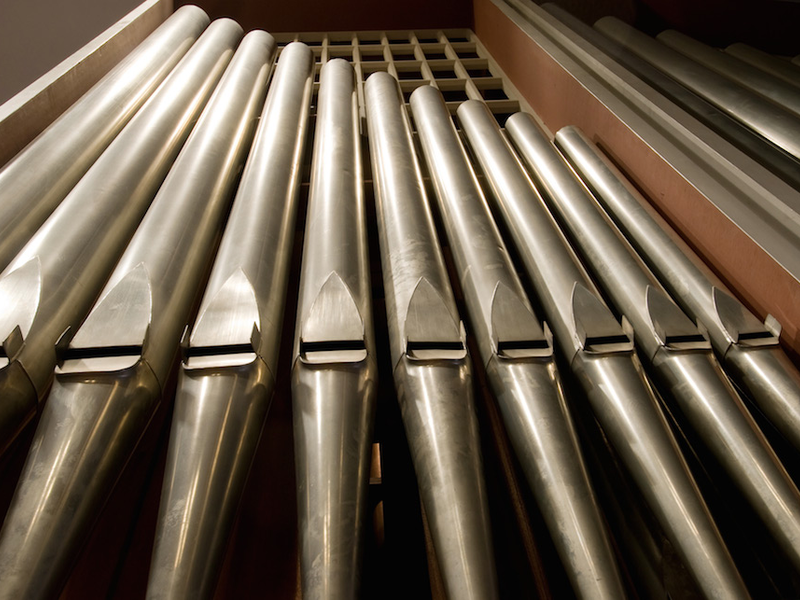
organ-pipes
How to Worship

Pipes Worth Playing

I know what you’re thinking. Organ: funeral, ball game, grand dusty cathedral. Why should modern Christians of such a technological age revisit a thousand year-old instrument? Don’t worry, I will not be trying to punch another hole in my Weird Music Preferences and Opinions card here. The truth is, our…

by Jarrod RicheyJanuary 7, 2016
tree-2
James

Do Things Have Natures?

Do things have natures? As I am posing the question, it is not simply a question of whether there are particular kinds of things in the world that have characteristic features, patterns of behavior, trajectories of growth and development. If that is what the word means, then the answer is…

by Peter LeithartJanuary 5, 2016
jim-leading-worship
Theopolis News

2016 Nevin Lectures with Father John Behr

We are excited to announce our 2016 Nevin Lectures featuring Father John Behr. Fr. John is the Dean of St. Vladimir's Seminary and Professor of Patristics, as well as the author of multiple works. He will be delivering three lectures over the course of two days dealing with "What Protestants…

by Brian MoatsJanuary 4, 2016
times-square
Creation

Time, Curse or Gift?

New Year's Day makes one reflective, at least about the past year, perhaps about life, perhaps, more broadly, about time itself. Many view time as a curse. Some see it as a curse because of missed chances. As one day or year moves on to the next, all we can…

by Peter LeithartDecember 31, 2015
nativity-2
Advent

The Manger

It seems a truism to say that we live in the world: that the world is outside of us. In reality the world is very much inside of us too. In fact the world passes through us as much as we pass through it. We breathe in its air, using…

by Arthur KayDecember 29, 2015

Showing page 138 of 309

See all
See all

Eclipse of Chronology

Newton and the Origin of Civilization by Jed Buchwald and Mordechai Feingold is a search for the historical Newton, an effort to show the single man who could create modern physics while spending his spare time with apocalyptic and biblical chronology. Along the way, the authors provide a treasure chest…

February 7, 2014

Fidelity

In an appendix to Why Priests? Garry Wills translates the letter to the Hebrews, and explains some of his translation choices. They are spot on. Pistis he translates as “fidelity,” and he explains: “The point of the famous praise of pistis in Hebrews 11.1-40 is established by what immediately precedes…

February 7, 2014

Newton’s Euhemerism

Euhemerism - the belief that ancient gods were original human beings - was popular during the early modern period, and most euhemerists were biblical euhemerists, keen to show how pagan myths grew out of biblical characters and episodes. Samuel Bochart was a master, relying on etymological connections to harmonize Scripture…

February 7, 2014

Voice, Hand, Lamp, Feet

Adopting a Hebraic literary technique, Revelation 1:9-20 repeats key words. “Voice” ( phone ) is used four times. John hears a voice (v. 10), turns to see it (v. 12), and the central feature of the glorified being he sees is a “voice” like the “voice” of many waters (v.…

February 6, 2014

Vladimir’s triumph

Why Sochi for the Olympics. Christian Caryl explains that it’s Putin’s declaration of victory over Chechen rebels, the subjugation of the northern Caucasus: “Russia launched its Olympic bid in 2006, a moment when Putin was basking in his hard-won status as the leader who had finally vanquished the long-running rebellion…

February 6, 2014

Of Gardeners and Kings

In an essay in Temple in Antiquity , John Lundquist outlines some features of the common temple ideology of the Ancient Near East. Among these, he argues, is the tree of life, “an integral part of the ‘primordial landscape’” that temples reproduced. From this, it was a natural conclusion to…

February 6, 2014

Showing page 689 of 2212

Browse by Category

In Medias Res

Your weekly digest for all things Theopolis.

Donate

Theopolis is nearly 100% donor-supported. Consider joining us on our mission.