Theopolis Logo

Writing

Explore our collection of theological essays, biblical studies, and reflections on faith and culture.

See all
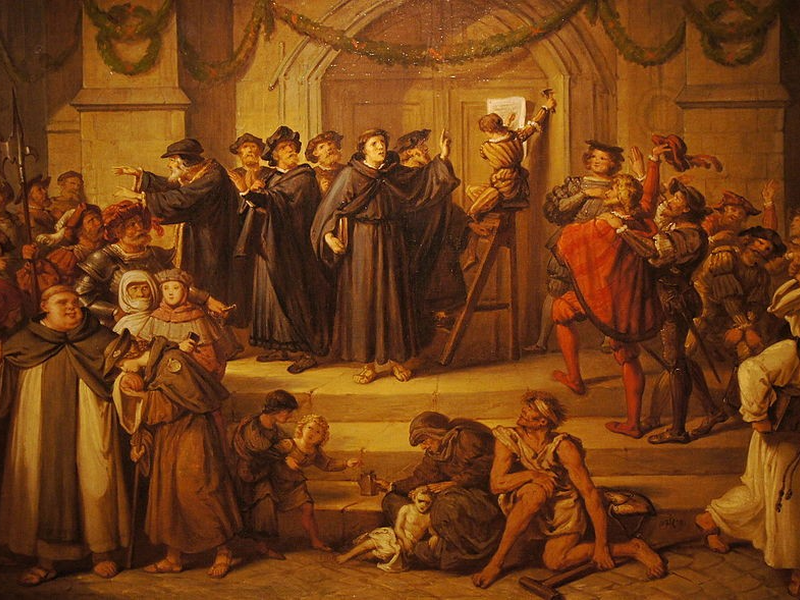
der_anschlag_von_luthers_95_thesen-1024x589
Church Calendar

Five Misconceptions of Reformation Day

For many people the date October 31 is significant not only for being the Eve of All Saints (All Hallows Eve, Halloween) but as the day in 1517 when Martin Luther nailed his 95 theses to the door of the Castle Church in Wittenburg. These theses were a list of…

by Timothy LeCroyOctober 31, 2017

sacre-bleu-r__kixb0i5m-unsplash
Church Calendar

Concerning Halloween

It has become routine in October for some Christian schools to send out letters warning parents about the evils of Halloween, and it has become equally routine for me to be asked questions about this matter. "Halloween" is simply a contraction for All Hallows’ Eve. The word "hallow" means "saint,"…

by James B. JordanOctober 26, 2017
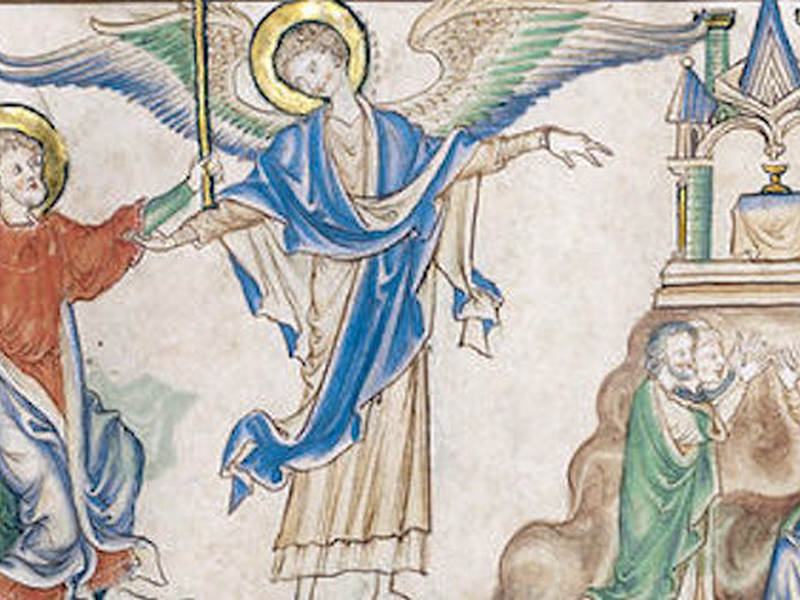
revelation-john-with-rod
Revelation

Preaching, An Art of Division

The following is an excerpt from Peter Leithart's forthcoming two-volume commentary on Revelation (T&T Clark). Y ou must prophesy again concerning many peoples and nations and tongues and kings,” a voice tells John (Rev. 10:11). Then someone gives him a “reed like a rod” and instructs him to measure (11:1).…

by Peter LeithartOctober 24, 2017
josiah-death

Back To Egypt

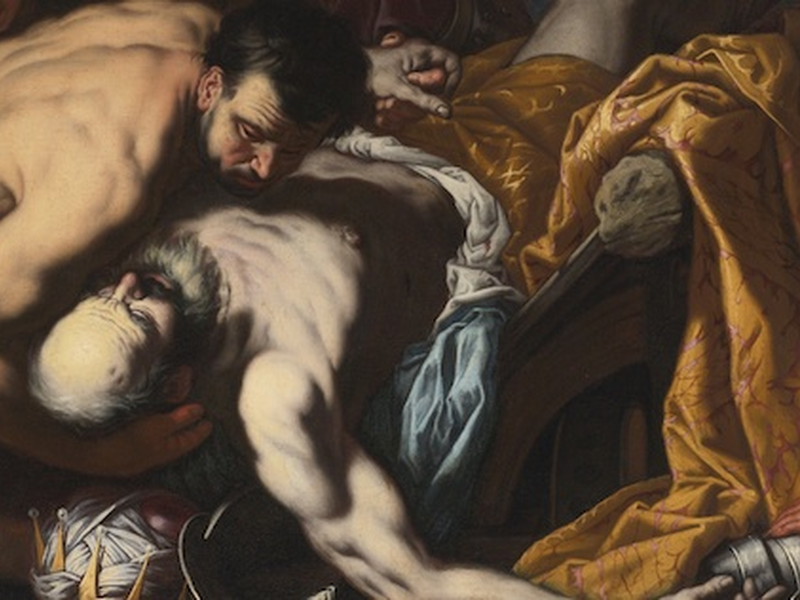
Josiah is an ideal Davidic king in many ways. He not only “did right,” but he “walked in the ways of his father David” and “did not turn aside to the right or to the left” (2 Chronicles 34:2). At the age of 16, he began to seek Yahweh, and…

by Peter LeithartOctober 19, 2017
augustine
Augustine

Augustine and the Music of Time

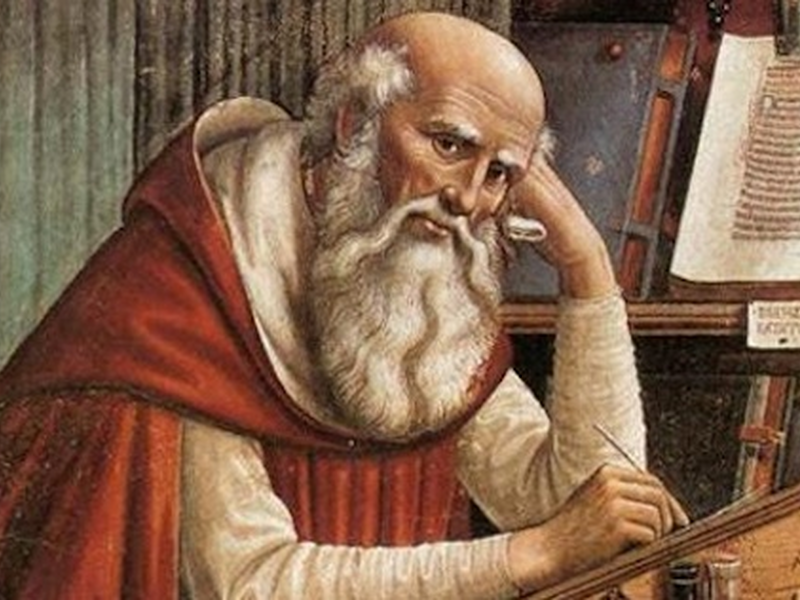
One of the best discussions of Augustine’s views on time comes from Jeremy Begbie’s Theology, Music, and Time (ch. 3). Following Paul Ricoeur, Begbie claims that Augustine’s distentio “is conceived as the three-fold present, and the threefold present as distentio . The distentio consists in the non-coincidence of the mind’s…

by Peter LeithartOctober 17, 2017
img_1043
How to Worship

The Psalter Should be Woven into the Fabric of Worship

This has always been the position of the Christian Church, and from an historical perspective the present situation in evangelicalism is appalling. The early liturgies of the Church, which are still used in Episcopal and Lutheran worship, are laced with psalm phrases. The early hymns, such as the Te Deum…

by James B. JordanOctober 12, 2017

Showing page 104 of 309

See all
See all

Camels

When the nations bring their treasures to Zion (Isaiah 60:6), they come with camels. It’s an unusual site. The patriarchs have camels (the word is used 18x in Genesis 24 alone, 25x in Genesis). After that, camels are typically the mounts for Gentile visitors or invaders. Midianites riding camels swarm…

January 8, 2014

Dreadful joy

When Zion sees her sons and daughters returning home in the arms of the nations, she is stunned (Isaiah 60:5). Her heart trembles ( pachad ; cf. Deuteronomy 28:66-67) and grows large ( rachab ; cf. Isaiah 54:2). In short, she has a heart attack, and a flushed face to…

January 8, 2014
Uncategorized

Transformed Enlightenment

Romanticism is often seen as a reaction against the Enlightenment. Louis Dupre thinks that’s too simplistic ( The Quest of the Absolute: Birth and Decline of European Romanticism , 4-5). Rather, Romanticism transforms the values of the Enlightenment by turning them into a sublime. Dupre writes, “Romanticism incorporates what the…

January 8, 2014

Forgetful

Augustine puzzled over the mysteries of memory and forgetfulness. Where are memories “stored”? Where do they go when we forget something? You forget where you left your phone, or forget what you were going to say, and then it comes back to you. Where was it in the meantime? Forgetfulness…

January 8, 2014
Philosophy

Kierkegaard the Catholic?

In his introduction to Kierkegaard’s Kierkegaard’s Attack Upon “Christendom” 1854-1855 , Walter Lowrie suggests that Kierkegaard was “moreevidently andmore fundamentally a Catholicor perhaps it would be better to say,more consciously in revolt against Protestantism.” His evidence: “This-appears plainlyin the Instant by his insistence upon works , and by the fact…

January 7, 2014

Final Cause

Modernity is marked by the reduction of causes to efficient causes, and the elimination of final causation, of teleology or purpose.Final causes are not so easily eliminated, Hart argues ( The Experience of God: Being, Consciousness, Bliss , 78-9). Our experience is not “an immediate perception of phenomena - appearances,…

January 7, 2014

Showing page 713 of 2212

Browse by Category

In Medias Res

Your weekly digest for all things Theopolis.

Donate

Theopolis is nearly 100% donor-supported. Consider joining us on our mission.