Theopolis Logo

Writing

Explore our collection of theological essays, biblical studies, and reflections on faith and culture.

See all
temp_bg
Biblical Studies

Biblical Allusion and the Meaning of Othello

Understanding Shakespeare’s Biblical references is vital for the interpretation of many, if not all, of Shakespeare’s plays. For Othello , it is especially important, not only because the interpretation of the play is contested among various approaches — feminist, homosexual, post-colonial, Marxist, Freudian, new historical, and others — but also…

by Ralph Allan SmithJune 16, 2017

e99a9492-2
Ecclesiology

Attaining Unity: A Reply to Mike Allen

Mike Allen of Reformed Theological Seminary, Orlando, scores some points in his review of The End of Protestantism . He lodges the fair complaint that my rhetoric sometimes outruns my evidence. He argues that more stress on the present reality of the church’s unity deepens the tragedy of division; divisions…

by Peter LeithartJune 13, 2017
trinity-1-2
Eschatology

Comic Trinity

I begin with two observations. First, on any millennial view, the Christian account of history is progressive, moving from the garden to the city. It is eschatological not only in that there is an end, but that the end is a glorified beginning, not merely a return to origins. To…

by Peter LeithartJune 8, 2017
e99a2225
Ecclesiology

Political Church

The church is a new form of polity that erupts into the world as much as the Son of God comes into the world. It’s a real-world political alternative to the polities of the ancient world. It resolves many of the political dilemmas of the ancient world, though not simply…

by Peter LeithartJune 6, 2017
img_1456
Baptism

Baptism Impasse: Baptists vs. Presbyterians, (Part 2)

In my last post , I explained how Baptists really have a “one-ordinance-one sacrament” ecclesiology. I said this: “what Baptists really believe, in modern parlance, is that there is one ordinance (baptism which is a sign or symbol only) and one sacrament (the Lord’s Supper in which feeding upon Jesus…

by Mani MarprelateMay 30, 2017
medieval-knights
Political Theology

Obedience of Rulers

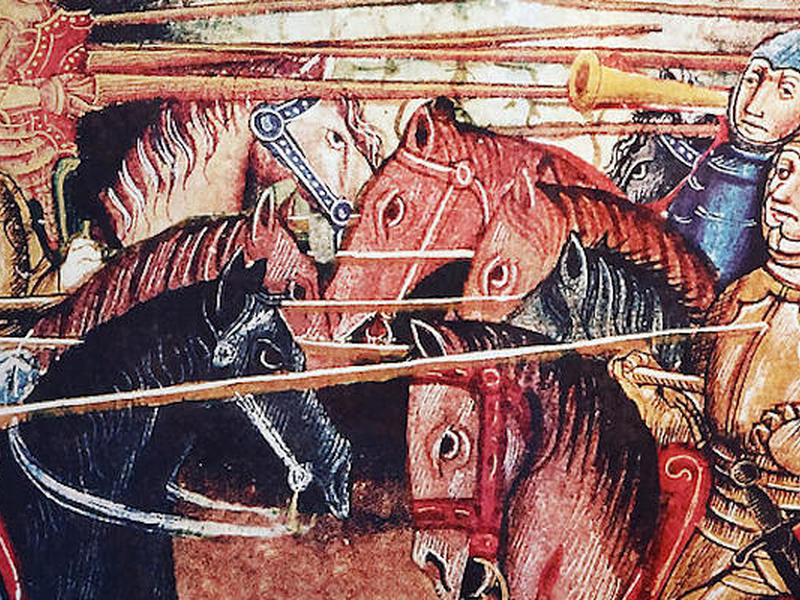
One of the most extensive and penetrating responses to the Yoder-Hauerwas attack on Constantiniansm is found in Oliver O’Donovan’s Desire of Nations , in a chapter entitled “The Obedience of Rulers.” O’Donovan defines the word “Christendom” as “a historical idea,” specifically “the idea of a professedly Christian secular political order,…

by Peter LeithartMay 30, 2017

Showing page 111 of 309

See all
See all

Camels

When the nations bring their treasures to Zion (Isaiah 60:6), they come with camels. It’s an unusual site. The patriarchs have camels (the word is used 18x in Genesis 24 alone, 25x in Genesis). After that, camels are typically the mounts for Gentile visitors or invaders. Midianites riding camels swarm…

January 8, 2014

Dreadful joy

When Zion sees her sons and daughters returning home in the arms of the nations, she is stunned (Isaiah 60:5). Her heart trembles ( pachad ; cf. Deuteronomy 28:66-67) and grows large ( rachab ; cf. Isaiah 54:2). In short, she has a heart attack, and a flushed face to…

January 8, 2014
Uncategorized

Transformed Enlightenment

Romanticism is often seen as a reaction against the Enlightenment. Louis Dupre thinks that’s too simplistic ( The Quest of the Absolute: Birth and Decline of European Romanticism , 4-5). Rather, Romanticism transforms the values of the Enlightenment by turning them into a sublime. Dupre writes, “Romanticism incorporates what the…

January 8, 2014

Forgetful

Augustine puzzled over the mysteries of memory and forgetfulness. Where are memories “stored”? Where do they go when we forget something? You forget where you left your phone, or forget what you were going to say, and then it comes back to you. Where was it in the meantime? Forgetfulness…

January 8, 2014
Philosophy

Kierkegaard the Catholic?

In his introduction to Kierkegaard’s Kierkegaard’s Attack Upon “Christendom” 1854-1855 , Walter Lowrie suggests that Kierkegaard was “moreevidently andmore fundamentally a Catholicor perhaps it would be better to say,more consciously in revolt against Protestantism.” His evidence: “This-appears plainlyin the Instant by his insistence upon works , and by the fact…

January 7, 2014

Final Cause

Modernity is marked by the reduction of causes to efficient causes, and the elimination of final causation, of teleology or purpose.Final causes are not so easily eliminated, Hart argues ( The Experience of God: Being, Consciousness, Bliss , 78-9). Our experience is not “an immediate perception of phenomena - appearances,…

January 7, 2014

Showing page 713 of 2212

Browse by Category

In Medias Res

Your weekly digest for all things Theopolis.

Donate

Theopolis is nearly 100% donor-supported. Consider joining us on our mission.