Theopolis Logo

Writing

Explore our collection of theological essays, biblical studies, and reflections on faith and culture.

See all
indiana-protests
American Politics

In Whom Do We Trust?

"Put not your trust in princes, in a son of man, in whom there is no salvation. When his breath departs, he returns to the earth; on that very day his plans perish. Blessed is he whose help is the God of Jacob, whose hope is in the Lord his…

by Gregory LaughlinMarch 31, 2015
macbeth
Literature

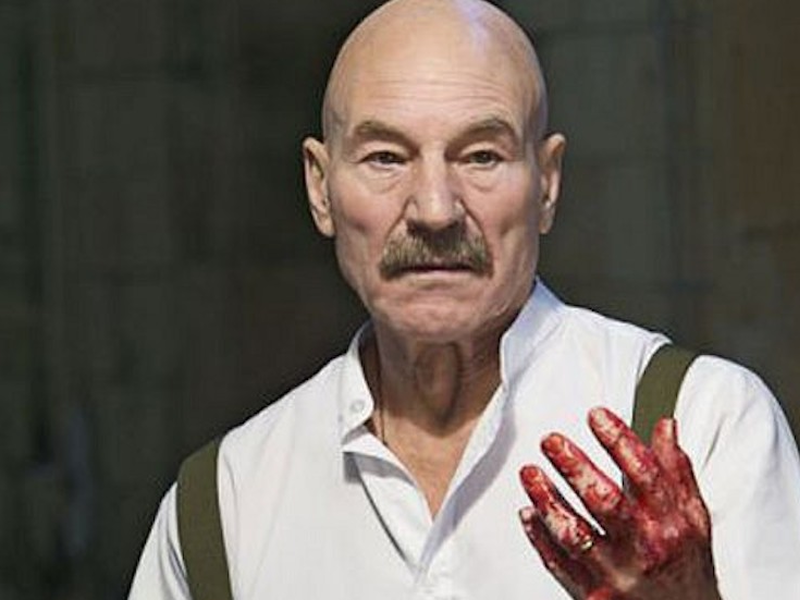
Macbeth and Nihilism

When it comes to the interpretation of Shakespeare, Harold Bloom is my favorite enemy. His writing is brilliant, his knowledge of things Shakespearean encyclopedic, and the insights he offers may puzzle, startle, or amaze, but they always educate. How then can he be an enemy? Because his anti-Christian bias is…

by Ralph Allan SmithMarch 31, 2015
london
Theopolis News

Theopolis in the UK

Theopolis President Peter Leithart spent the last week of March lecturing on worship and sacraments in England. He delivered four lectures on liturgy in Bolton, a town north of Manchester, arguing that Christian worship must be worship fit for the king and fit for the kingdom that has come in…

by TheopolisMarch 31, 2015
claudel-rheault-zvbv1aka-l4-unsplash
Creation

Heavenizing Earth: Eschatology in the Beginning

When we think about eschatology, we think immediately of Daniel, of Matthew 24-25, of 1 Corinthians 15 and 2 Thessalonians 2, and of course of Revelation. We don’t, I suspect, think about Genesis. Perhaps Genesis 3:15, with its promise of the woman’s seed, would come to mind. So might the…

by John BarachMarch 26, 2015
baptism
Baptism

Baptism as Exorcism

Alexander Schmemann in his book, Of Water and the Spirit, expounds the question that appears in nearly all the older baptismal liturgies, “Do you renounce the devil and all his works, the vain pomp and glory of the world and all sinful lusts of the flesh.” This renunciation, according to…

by Steve WilkinsMarch 24, 2015
day-2-ferguson-protests-nationwide
American Culture

Franklin Graham and the Problem of Reaction

Franklin Graham recently posted the following statement on his Facebook page: “Listen up—Blacks, Whites, Latinos, and everybody else. Most police shootings can be avoided. It comes down to respect for authority and obedience. If a police officer tells you to stop, you stop. If a police officer tells you to…

by A. K. ShaukuMarch 20, 2015

Showing page 157 of 309

See all
See all

Camels

When the nations bring their treasures to Zion (Isaiah 60:6), they come with camels. It’s an unusual site. The patriarchs have camels (the word is used 18x in Genesis 24 alone, 25x in Genesis). After that, camels are typically the mounts for Gentile visitors or invaders. Midianites riding camels swarm…

January 8, 2014

Dreadful joy

When Zion sees her sons and daughters returning home in the arms of the nations, she is stunned (Isaiah 60:5). Her heart trembles ( pachad ; cf. Deuteronomy 28:66-67) and grows large ( rachab ; cf. Isaiah 54:2). In short, she has a heart attack, and a flushed face to…

January 8, 2014
Uncategorized

Transformed Enlightenment

Romanticism is often seen as a reaction against the Enlightenment. Louis Dupre thinks that’s too simplistic ( The Quest of the Absolute: Birth and Decline of European Romanticism , 4-5). Rather, Romanticism transforms the values of the Enlightenment by turning them into a sublime. Dupre writes, “Romanticism incorporates what the…

January 8, 2014

Forgetful

Augustine puzzled over the mysteries of memory and forgetfulness. Where are memories “stored”? Where do they go when we forget something? You forget where you left your phone, or forget what you were going to say, and then it comes back to you. Where was it in the meantime? Forgetfulness…

January 8, 2014
Philosophy

Kierkegaard the Catholic?

In his introduction to Kierkegaard’s Kierkegaard’s Attack Upon “Christendom” 1854-1855 , Walter Lowrie suggests that Kierkegaard was “moreevidently andmore fundamentally a Catholicor perhaps it would be better to say,more consciously in revolt against Protestantism.” His evidence: “This-appears plainlyin the Instant by his insistence upon works , and by the fact…

January 7, 2014

Final Cause

Modernity is marked by the reduction of causes to efficient causes, and the elimination of final causation, of teleology or purpose.Final causes are not so easily eliminated, Hart argues ( The Experience of God: Being, Consciousness, Bliss , 78-9). Our experience is not “an immediate perception of phenomena - appearances,…

January 7, 2014

Showing page 713 of 2212

Browse by Category

In Medias Res

Your weekly digest for all things Theopolis.

Donate

Theopolis is nearly 100% donor-supported. Consider joining us on our mission.