Theopolis Logo

Writing

Explore our collection of theological essays, biblical studies, and reflections on faith and culture.

See all
aaron-burden-h8s0pf2rcqs-unsplash
Luke

The Second Isaiah and His Message

Higher critics have, for a long time, posited a Second Isaiah to account for the structural and tone differences in the book from chapter 40 on. Now, we do believe in a Second Isaiah, but believe that the form critics have generally suffered from a lack of imagination both in…

by Richard BledsoeOctober 5, 1995

whichbooksbelongintheot
Leviticus

Getting the Translation Right

A couple of the most serious mistranslations in our Bibles are found in the book of Leviticus. The main reason these errors have gone unreformed, I believe, is because Leviticus is simply not studied often enough, so the problem has never been fully addressed. The first mistranslation is found right…

by James B. JordanOctober 4, 1995
Biblical Horizons

Prophecy and the Coming Christian Revolution

Thomas Kuhn’s book, The Structure of Scientific Revolutions , is really a parenthesis inside of the larger reality of Christian history. Progress and forward movement inside of science is a footnote to the larger and more general reality of covenant renewals in both Biblical and Christian history. The fundamental mark…

by Richard BledsoeSeptember 5, 1995
luca-tosoni-wneuvexggjg-unsplash
Biblical Horizons

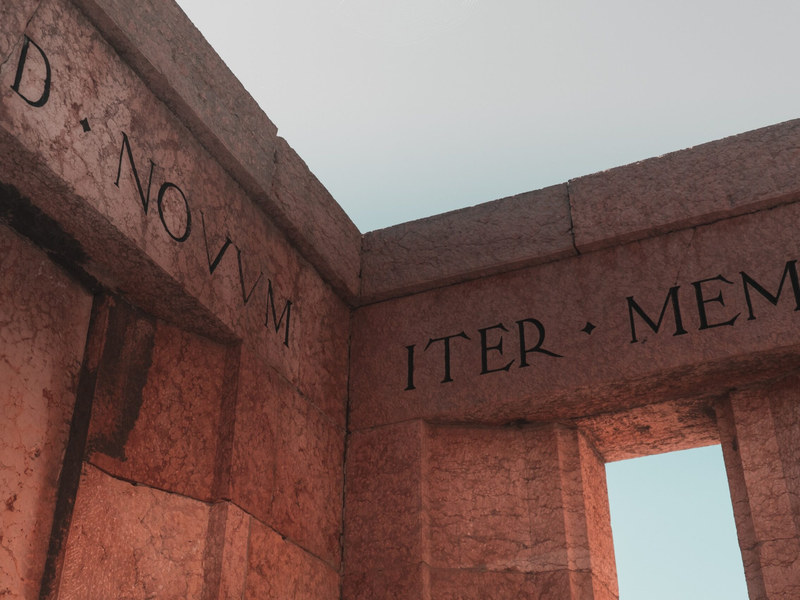
In Defense of Latin

James Jordan, in the June/July 1995 Biblical Horizons, wrote a very helpful essay, "The Great Hangover," the gist of which I entirely agree with. The theme of the essay was that the Church to move forward must shuck off the old husks of Hellenism, Rabbinism, and undo admiration for all…

by Richard BledsoeSeptember 5, 1995
pawan-sharma-vt2efwhbs-e-unsplash
Biblical Horizons

The Triune Office Reconsidered

Traditionally, the three offices in the Presbyterian churches have been teaching elder, ruling elder, and deacon. These have been associated with priest, elder, and Levite respectively. We have seen that the deacon is in fact an apprentice and assistance elder. We have also seen that Levites as well as priests…

by James B. JordanSeptember 4, 1995
jordan-wozniak-xp_agmeea6s-unsplash-2
Biblical Studies

When the Son Is Glorified

John 7:39 interprets Jesus’ offer of living water as an offer of the Spirit to those who believe, "for," John continues, "the Spirit was not yet, because Jesus was not yet glorified." John was not making an ontological statement about the Spirit, as if the Spirit did not exist until…

by Peter LeithartJuly 27, 1995

Showing page 269 of 309

See all
See all

Camels

When the nations bring their treasures to Zion (Isaiah 60:6), they come with camels. It’s an unusual site. The patriarchs have camels (the word is used 18x in Genesis 24 alone, 25x in Genesis). After that, camels are typically the mounts for Gentile visitors or invaders. Midianites riding camels swarm…

January 8, 2014

Dreadful joy

When Zion sees her sons and daughters returning home in the arms of the nations, she is stunned (Isaiah 60:5). Her heart trembles ( pachad ; cf. Deuteronomy 28:66-67) and grows large ( rachab ; cf. Isaiah 54:2). In short, she has a heart attack, and a flushed face to…

January 8, 2014
Uncategorized

Transformed Enlightenment

Romanticism is often seen as a reaction against the Enlightenment. Louis Dupre thinks that’s too simplistic ( The Quest of the Absolute: Birth and Decline of European Romanticism , 4-5). Rather, Romanticism transforms the values of the Enlightenment by turning them into a sublime. Dupre writes, “Romanticism incorporates what the…

January 8, 2014

Forgetful

Augustine puzzled over the mysteries of memory and forgetfulness. Where are memories “stored”? Where do they go when we forget something? You forget where you left your phone, or forget what you were going to say, and then it comes back to you. Where was it in the meantime? Forgetfulness…

January 8, 2014
Philosophy

Kierkegaard the Catholic?

In his introduction to Kierkegaard’s Kierkegaard’s Attack Upon “Christendom” 1854-1855 , Walter Lowrie suggests that Kierkegaard was “moreevidently andmore fundamentally a Catholicor perhaps it would be better to say,more consciously in revolt against Protestantism.” His evidence: “This-appears plainlyin the Instant by his insistence upon works , and by the fact…

January 7, 2014

Final Cause

Modernity is marked by the reduction of causes to efficient causes, and the elimination of final causation, of teleology or purpose.Final causes are not so easily eliminated, Hart argues ( The Experience of God: Being, Consciousness, Bliss , 78-9). Our experience is not “an immediate perception of phenomena - appearances,…

January 7, 2014

Showing page 713 of 2212

Browse by Category

In Medias Res

Your weekly digest for all things Theopolis.

Donate

Theopolis is nearly 100% donor-supported. Consider joining us on our mission.