Theopolis Logo

Writing

Explore our collection of theological essays, biblical studies, and reflections on faith and culture.

See all
puritans
History

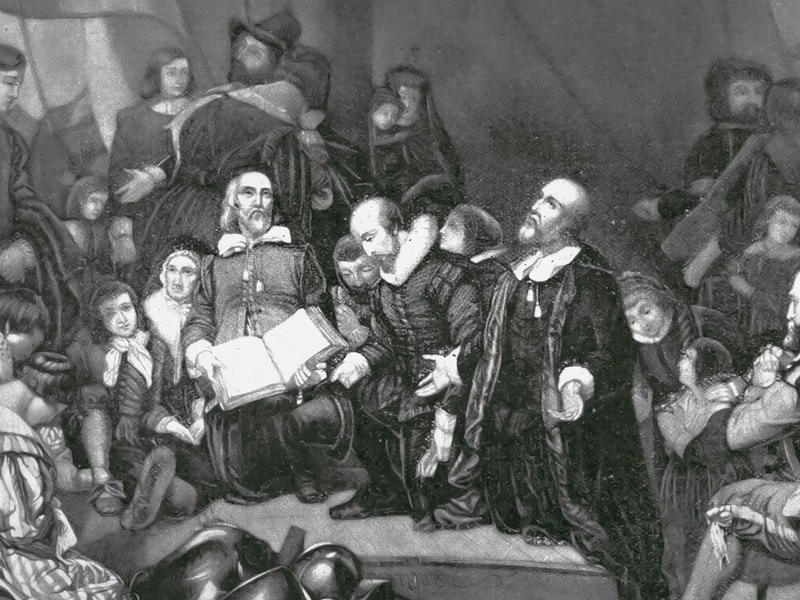
Congregational Theocracy: That Time Theocrats Ran Puritan New England

Timon Cline wrote recently that “theonomists” didn’t run Puritan New England. 1 He is correct, in his major thesis, that the claim that “Puritanism and the natural law tradition are antithetical” is “wildly ahistorical.” Mr. Cline demonstrates that Puritans repeatedly extolled natural law. Besides the Puritan sources Mr. Cline mustered,…

by John CarpenterAugust 9, 2022

screen-shot-2022-08-04-at-9-36-57-am
Mark

The Land of the Walking Trees

The Church is the land of the walking trees. In Mark’s Gospel, the identity of Jesus is slowly and progressively revealed. Though St. Mark announces at the beginning of his narrative that Jesus Christ is “the Son of God” (1:1), this is a reality that must be spoon-fed to His…

by Jackson ShepardAugust 4, 2022
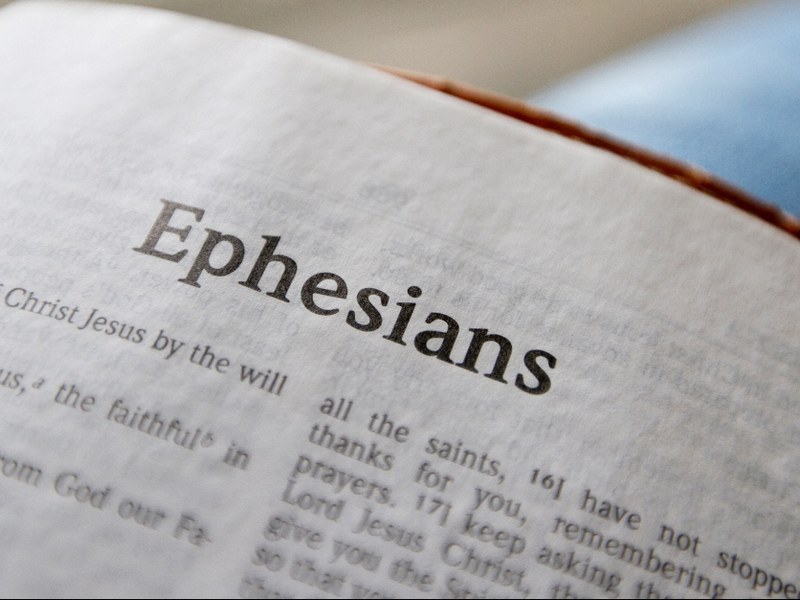
11982-sparrowstockephesians
Ephesians

The Significance of Ephesians (with a comparison to Romans)

All Scripture is of ultimate significance as the word of God, but it may be helpful to think about what makes a book (in this case, a letter) possibly unique within the canon. In this case, the “general” nature of Ephesians should stand out, but it often is not recognized…

by Mark HorneAugust 2, 2022
davide-ragusa-g32g_ibprfa-unsplash
Ecclesiastes

A Time to Kill (Ecclesiastes 3:3)

Where do we draw the lines between what is right and wrong? This question is fundamental to civilization, fundamental to a free society. To put this question in the bluntest and most offense terms: if there is a time to kill — which Solomon says there is — whom shall…

by Ralph Allan SmithJuly 28, 2022
screen-shot-2018-04-12-at-9-48-08-am
Biblical Horizons

Broadening Our View of the Trinity

This article was originally posted in May of 1994. We speak of God as Father, Son, and Holy Spirit. The early Church tended to speak of Him as Father, Word, and Spirit. In this short essay, I want to suggest some other ways to think of the Trinity, ways that…

by James B. JordanJuly 26, 2022
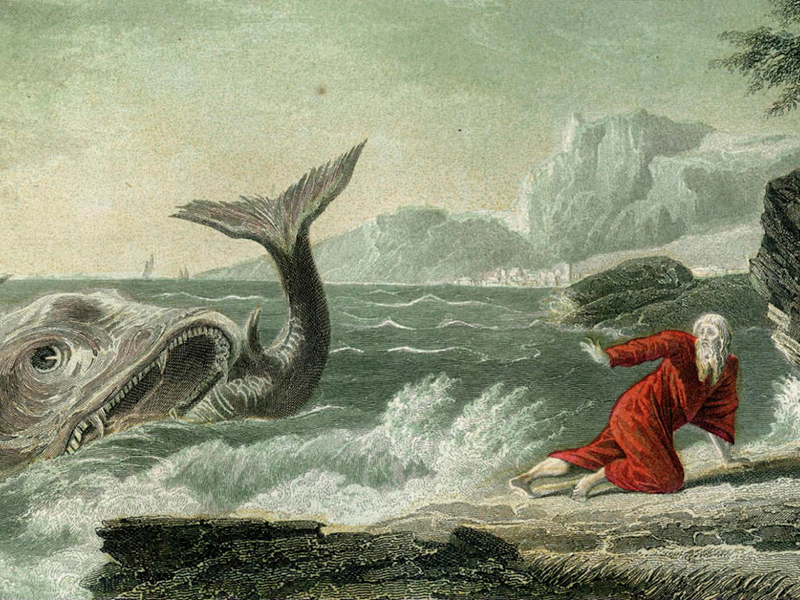
jonahwhale-1552x900
Jonah

Journeying Prophets in Kings

Jonah’s Home The story of JONAH belongs in the book of KINGS. JONAH balances the story of the unnamed Judean prophet (1K13) in KINGS’ literary structure. Each story describes a journeying prophet that crosses land or sea to confront a wayward king. The two stories are located during the reigns…

by Scott FairbanksJuly 21, 2022

Showing page 41 of 309

See all
See all

Camels

When the nations bring their treasures to Zion (Isaiah 60:6), they come with camels. It’s an unusual site. The patriarchs have camels (the word is used 18x in Genesis 24 alone, 25x in Genesis). After that, camels are typically the mounts for Gentile visitors or invaders. Midianites riding camels swarm…

January 8, 2014

Dreadful joy

When Zion sees her sons and daughters returning home in the arms of the nations, she is stunned (Isaiah 60:5). Her heart trembles ( pachad ; cf. Deuteronomy 28:66-67) and grows large ( rachab ; cf. Isaiah 54:2). In short, she has a heart attack, and a flushed face to…

January 8, 2014
Uncategorized

Transformed Enlightenment

Romanticism is often seen as a reaction against the Enlightenment. Louis Dupre thinks that’s too simplistic ( The Quest of the Absolute: Birth and Decline of European Romanticism , 4-5). Rather, Romanticism transforms the values of the Enlightenment by turning them into a sublime. Dupre writes, “Romanticism incorporates what the…

January 8, 2014

Forgetful

Augustine puzzled over the mysteries of memory and forgetfulness. Where are memories “stored”? Where do they go when we forget something? You forget where you left your phone, or forget what you were going to say, and then it comes back to you. Where was it in the meantime? Forgetfulness…

January 8, 2014
Philosophy

Kierkegaard the Catholic?

In his introduction to Kierkegaard’s Kierkegaard’s Attack Upon “Christendom” 1854-1855 , Walter Lowrie suggests that Kierkegaard was “moreevidently andmore fundamentally a Catholicor perhaps it would be better to say,more consciously in revolt against Protestantism.” His evidence: “This-appears plainlyin the Instant by his insistence upon works , and by the fact…

January 7, 2014

Final Cause

Modernity is marked by the reduction of causes to efficient causes, and the elimination of final causation, of teleology or purpose.Final causes are not so easily eliminated, Hart argues ( The Experience of God: Being, Consciousness, Bliss , 78-9). Our experience is not “an immediate perception of phenomena - appearances,…

January 7, 2014

Showing page 713 of 2212

Browse by Category

In Medias Res

Your weekly digest for all things Theopolis.

Donate

Theopolis is nearly 100% donor-supported. Consider joining us on our mission.