Theopolis Logo

Writing

Explore our collection of theological essays, biblical studies, and reflections on faith and culture.

See all
e99a7415
Church Calendar

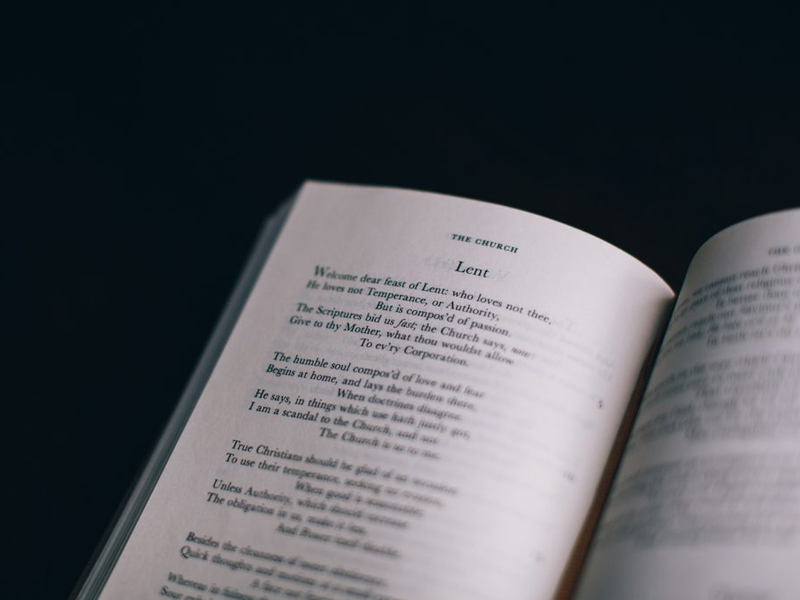
Herbertian Lessons for Lent

I live in an area where Mardi Gras is in full swing, and I can remember from my upbringing that Fat Tuesday was a last ditch effort at debauchery before the pseudo-spiritual practice of “giving something up for Lent” really began. In my youth I would give up some kind…

by Brian G DaigleFebruary 13, 2018

screen-shot-2018-02-08-at-9-58-52-am
Biblical Theology

Of Wine and Wineskins

Part 1: Observations from the Texts (Matthew 9:14-17, Mark 2:18-22, Luke 5:33-39) The precipitating context for the new wine/old wineskins discussion is people asking Jesus why His disciples did not fast. His immediate answer is that you can’t get the friends of the groom to fast at the bachelor party…

by Tim NicholsFebruary 8, 2018
businessman
Culture

True Progress

Simply, “progress” means to move forward. In that sense, a slug can progress from one end of the sidewalk to the other. But for us in twenty-first century America, progress means something else. For us, it is almost a synonym for goodness. The slug can only “progress” if the other…

by Christian LeithartFebruary 6, 2018
woman-bw
Abortion

On Abortion and Real Love

I have the privilege of being able to counsel a lot of women who are seeking abortions. I can tell you that the majority of them are seeking to end their pregnancies not because they feel like it would be a fun thing to do, but because they are scared…

by MargaretAnn HesterFebruary 1, 2018
screen-shot-2018-01-29-at-3-03-21-pm
Culture

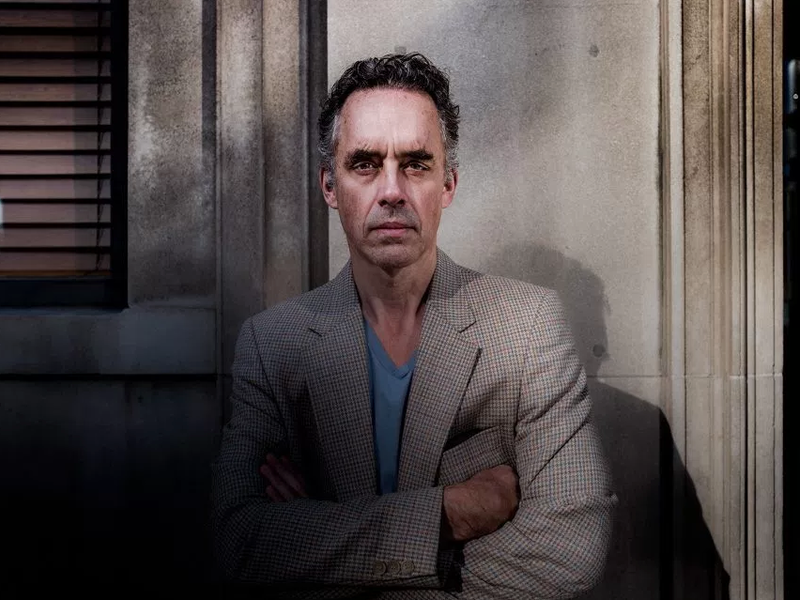
What Pastors Could Learn From Jordan Peterson

Last night, along with a few online friends, I watched this debate on the meaning of life between William Lane Craig, Rebecca Goldstein, and Jordan Peterson, hosted by Wycliffe College. While watching it, and reflecting upon Peterson’s work more generally (about which I’ve written in the past ), I was…

by Alastair RobertsJanuary 30, 2018
greg-rakozy-ompaz-dn-9i-unsplash-2
Epistemology

Seeking Integration in a Fragmented World

I’m glad to have been invited to contribute regularly to the Theopolis Institute website. Thank you, readers, for welcoming and joining what I hope will be a venture of integration. Integration itself is what I want to explore. And for me personally, this is the shape of my current integrative…

by Esther Lightcap MeekJanuary 25, 2018

Showing page 99 of 309

See all
See all

Camels

When the nations bring their treasures to Zion (Isaiah 60:6), they come with camels. It’s an unusual site. The patriarchs have camels (the word is used 18x in Genesis 24 alone, 25x in Genesis). After that, camels are typically the mounts for Gentile visitors or invaders. Midianites riding camels swarm…

January 8, 2014

Dreadful joy

When Zion sees her sons and daughters returning home in the arms of the nations, she is stunned (Isaiah 60:5). Her heart trembles ( pachad ; cf. Deuteronomy 28:66-67) and grows large ( rachab ; cf. Isaiah 54:2). In short, she has a heart attack, and a flushed face to…

January 8, 2014
Uncategorized

Transformed Enlightenment

Romanticism is often seen as a reaction against the Enlightenment. Louis Dupre thinks that’s too simplistic ( The Quest of the Absolute: Birth and Decline of European Romanticism , 4-5). Rather, Romanticism transforms the values of the Enlightenment by turning them into a sublime. Dupre writes, “Romanticism incorporates what the…

January 8, 2014

Forgetful

Augustine puzzled over the mysteries of memory and forgetfulness. Where are memories “stored”? Where do they go when we forget something? You forget where you left your phone, or forget what you were going to say, and then it comes back to you. Where was it in the meantime? Forgetfulness…

January 8, 2014
Philosophy

Kierkegaard the Catholic?

In his introduction to Kierkegaard’s Kierkegaard’s Attack Upon “Christendom” 1854-1855 , Walter Lowrie suggests that Kierkegaard was “moreevidently andmore fundamentally a Catholicor perhaps it would be better to say,more consciously in revolt against Protestantism.” His evidence: “This-appears plainlyin the Instant by his insistence upon works , and by the fact…

January 7, 2014

Final Cause

Modernity is marked by the reduction of causes to efficient causes, and the elimination of final causation, of teleology or purpose.Final causes are not so easily eliminated, Hart argues ( The Experience of God: Being, Consciousness, Bliss , 78-9). Our experience is not “an immediate perception of phenomena - appearances,…

January 7, 2014

Showing page 713 of 2212

Browse by Category

In Medias Res

Your weekly digest for all things Theopolis.

Donate

Theopolis is nearly 100% donor-supported. Consider joining us on our mission.