Theopolis Logo

Writing

Explore our collection of theological essays, biblical studies, and reflections on faith and culture.

See all
night-sky
Astral imagery

The Lady and Her Jewels: An Epiphany Meditation

And a great portent appeared in heaven, a woman clothed with the sun, with the moon under her feet, and on her head a crown of twelve stars; she was with child and she cried out in her pangs of birth, in anguish for delivery (Revelation 12:1-2). Then Joshua spoke…

by Richard BledsoeJanuary 6, 2015
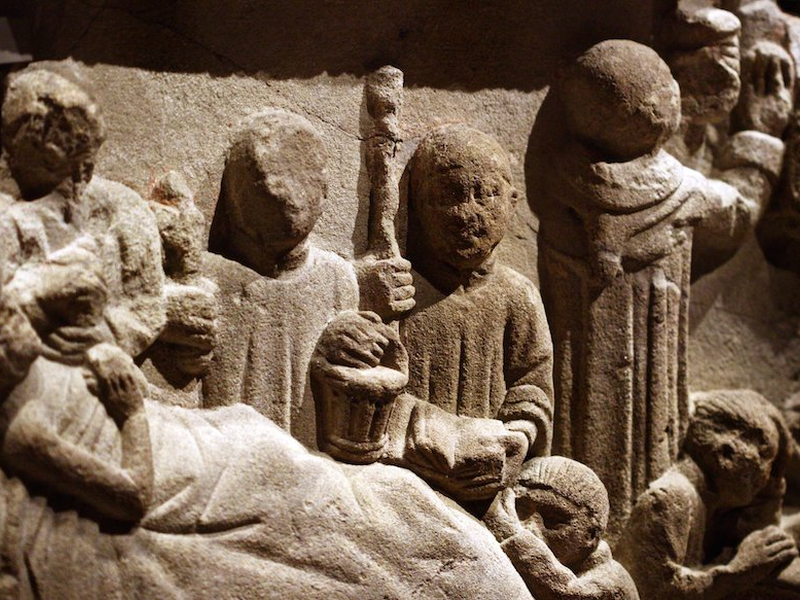
extreme-unction
Anointing

Fattening Our Suffering

In his post asking Ought we Anoint the Dying? Peter Leithart makes an excellent and important point about our suffering as members of Christ. However, he only parenthetically mentions that the verb in question in James 5 is not chrio but aleipho . By assuming that these words are interchangeable,…

by Robert MaddoxDecember 30, 2014
sacre-bleu-r__kixb0i5m-unsplash
James

Death as Frenemy

We spend a lot of time in the church talking about what it means to live like a Christian. But what does it mean to die like a Christian? If we are to follow Christ in life, what does it mean for us to follow him in death as well?…

by Rich LuskDecember 23, 2014
giammarco-zeh-ljawhtg-unsplash
Literature

Was Shakespeare A Christian?

How would one go about answering the question posed by my title? That depends on what the question means. Obviously, different definitions of the question would require different approaches to an answer. Right off hand, I can think of at least three possible — though not necessarily mutually exclusive —…

by Ralph Allan SmithDecember 23, 2014
day-2-ferguson-protests-nationwide
American Culture

Phobophobia

In recent weeks and months, we have seen events that are not the event. The drama around these events is not the events themselves, but the anxiety about the events, and then even the anxiety about the anxiety about the events. That is the real event. The events in Ferguson,…

by Richard BledsoeDecember 22, 2014
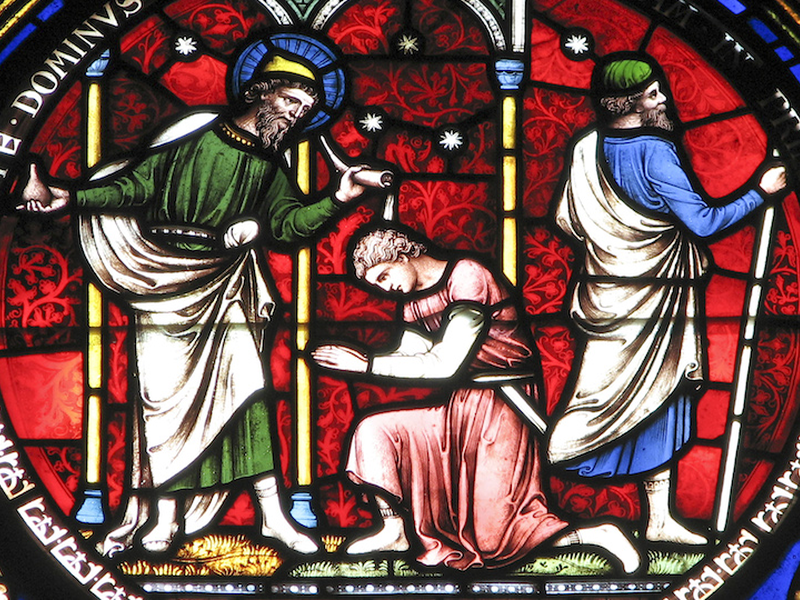
anointing-david
Anointing

Ought We Anoint the Dying?

Anointing the sick, including the dying, is one of the traditional seven sacraments of the Catholic Church. The Reformers denied that the rite qualified as a sacrament. Formally, this was because anointing did not have a direct authorization from Jesus; more theologically, it was not one of the marks that…

by Peter LeithartDecember 18, 2014

Showing page 163 of 309

See all
See all

The argument of Romans

Mark Horne continues his studies in Romans at the Trinity House site.

June 17, 2013
American Religion

Founded on founding

Prior to the founding of America, argues Hannah Arendt in On Revolution , political orders were justified and legitimated by appeal to absolutes: “a divinity, not nature but nature’s God, not reason but a divinely informed reason” gave validity to political order and buttressed political power. Over time, the early…

June 16, 2013
Philosophy

Piety and Nihilism

Theory, Nietzsche argued, arises from the will to “correct existence.” Taking his cues from Nietzsche, Lyotard describes the difference between “pious” and “pagan” theorizing. The former is guilty of Nietzsche’s charge: Since Plato, Lyotard argues, philosophers have attempted to formulate a perfect theory of justice or freedom on the grounds…

June 16, 2013

New Frontiers

In their contribution to American Space/American Place: Geographies of the Contemporary United States , John Agnew and Joanne Sharp describe the context and import of Frederick Jackson Turner’s famed “Frontier Thesis.” Turner wrote in the context of the downturn of the 1890s, and his argument was partly about the future…

June 16, 2013
Economics

Papal economics

Michael Miller’s essay in Christian Theology and Market Economics focuses on “Business as a moral enterprise.” In part, he offers a summary of John Paul II’s teaching on economics and business, especially as expressed in the encyclical Centessimus Annus . As one might expect, John Paul puts business into the…

June 13, 2013

Productive Money

In his contribution to Christian Theology and Market Economics , Stephen Grabill reviews the “pre-Enlightenment” history of economic theory. That is to say, scholastic economics. For many economic historians, the notion of a scholastic economic theory is fallacious, and Exhibit #1 is always the scholastic prohibition of usury, grounded in…

June 13, 2013

Showing page 719 of 2212

Browse by Category

In Medias Res

Your weekly digest for all things Theopolis.

Donate

Theopolis is nearly 100% donor-supported. Consider joining us on our mission.