Theopolis Logo

Writing

Explore our collection of theological essays, biblical studies, and reflections on faith and culture.

See all
max-kukurudziak-qbc3zmxw0g8-unsplash
History

Report from Ukraine

We lost Crimea. That is very clear. Putin proved he was not lying when he said he would place women and children ahead of his soldiers to storm Ukrainian military bases. Russian soldiers did exactly that with women (some who volunteered and some who were forced). Russia now occupies all…

by San SanychMarch 28, 2014

screenshot-2023-09-21-at-3-59-23-pm
Church Calendar

God Gone Silent

Sound is an indicator of life and energy. “Sound signals the present use of power, since sound must be in active production to exist at all.” Things don’t have to be alive to make themselves visible, and “a primitive hunter can see, feel, smell, and taste an elephant when the…

by Peter LeithartMarch 26, 2014
web-lead-image_final_dostoevsky
Books

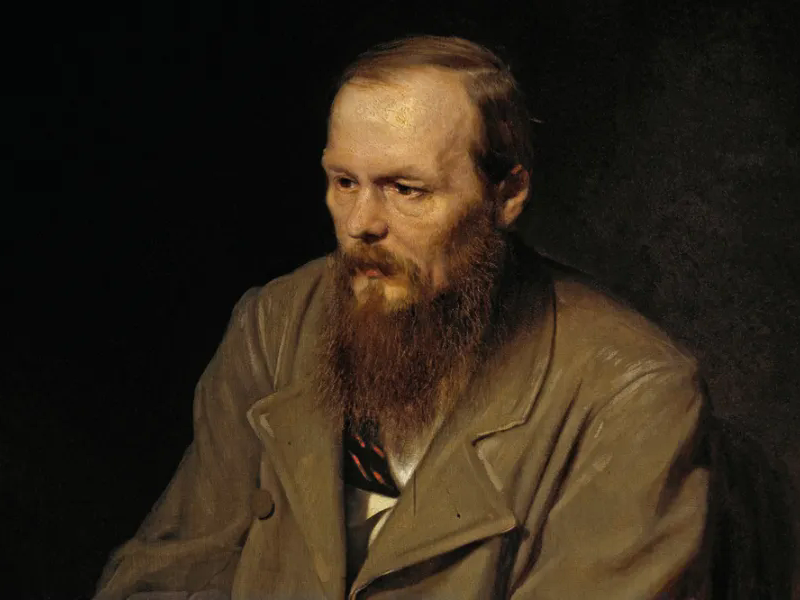
Dostoevsky the Liberal

In the most famous section of his best-known novel, Dostoevsky’s Ivan Karamazov brings forward his case against God. He opens with a horrific litany of outrages against children. Turkish soldiers make a baby laugh and then shoot a pistol into his face. A little girl is beaten, thrashed, kicked by…

by Peter LeithartMarch 24, 2014
kelly-sikkema-ggs0_g6wi-i-unsplash
Epistemology

Subsidiary-Focal Integration and Liturgy

​At the heart of Esther Lightcap Meek's splendid ​Little Manual for Knowing is a concept she picked up from Michael Polanyi, "subsidiary-focal integration." The concept begins from the insight that all our knowing, all our experience, is double. We focus on something, but we are capable of "indwelling" that focal…

by Peter LeithartMarch 19, 2014
engin-akyurt-uz9qpvbol0e-unsplash
Revelation

White Stone

Jesus promises the overcomers of Pergamum "hidden manna" and a "white stone." The hidden manna is often linked with the manna stashed away in the ark of the covenant. The white stone has proved more elusive. Exodus tells us that manna was white (Exodus 16:31) and like bdellium (Numbers 11:7),…

by Peter LeithartMarch 17, 2014
226961fgsdl
Leviticus

A Theology of Festivity

Leviticus 23 begins with a reference to “Yahweh’s appointed times” ( mo’ade-YHWH ). Mo’ed is the common term for the feasts of Israel. A few dimensions to this term. First, it means “appointed time” or “designated time.” It is a time set by Yahweh. Yahweh has claimed certain times as…

by Peter LeithartMarch 12, 2014

Showing page 177 of 309

See all
See all
Science

God or the Multiverse

Sheldrake ( The Science Delusion , 10-12) explains why physicalism - the hope that physics will finally vindicate materialism - is doomed. One reason is the “Cosmological Anthropic Principle,” which claims that “if the laws and constants of nature had been slightly different at the moment of the Big Bang,…

April 4, 2013
Science

Die to Live

During his PhD research, Rupert Sheldrake ( The Science Delusion , 1-2) made an original discovery about plant cells: “dying cells play a major part in the regulation of plant growth, releasing the plant hormone auxin as they break down in the process of ‘programmed cell death.’ Inside the growing…

April 4, 2013
History

Constantine and Constantinianism

Constantine permitted transfer of legal cases from civil to ecclesiastical courts, and also permitted ministers to manumit slaves. Both, Potter says ( Constantine the Emperor , 181 ), were steps that effectively turned clergy into civic authorities. On the first decision, Potter notes that “The main problem with Constantine’s decision,…

April 3, 2013
History

Turning point

TD Barnes has vigorously contested popular ideas of the Edict of Milan: It was not issued in Milan and didn’t affect Italy; it didn’t legalize Christianity, which was already legal; it was not an edict. This can leave the impression that the declaration of Licinius on June 13, 313 was…

April 3, 2013
History

What Did Constantine Do?

Potter ( Constantine the Emperor , 95) asks what Constantine was doing during the great persecution. His answers are speculative; we don’t and can’t know for sure, since Constantine’s feelings and thoughts were never recorded. But it is a worthwhile speculation: “He was a visible member of the court; many…

April 3, 2013
History

Burkhardt redux

David Potter’s Constantine the Emperor has many virtues. Potter is hugely well-informed about Roman history, and is able to place Constantine in his context like few others. His discussion of Diocletian’s “interventionist” policy (his Price Edict and his edicts regarding Christianity) is superb, as is his sense of the limits…

April 3, 2013

Showing page 760 of 2212

Browse by Category

In Medias Res

Your weekly digest for all things Theopolis.

Donate

Theopolis is nearly 100% donor-supported. Consider joining us on our mission.