Theopolis Logo

Writing

Explore our collection of theological essays, biblical studies, and reflections on faith and culture.

See all
little-girl
Children

Honor God With Your Body

I am making a new rule in our house! We are actually kind of skimpy on the house rules. I try very hard to keep things simple: love God, love others, be joyful. It’s not complicated to avoid discipline here. But I have found myself repeating this new rule over…

by Lindsey TollefsonApril 9, 2015

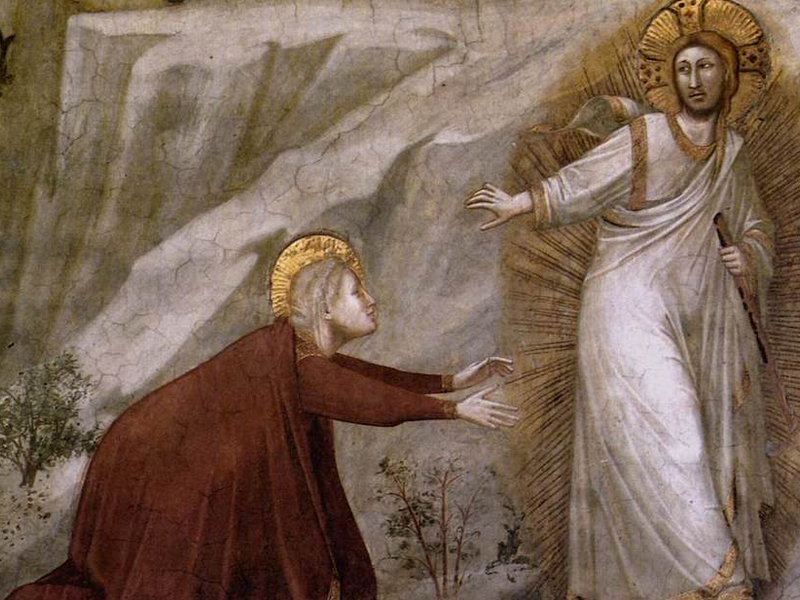
giotto-noli-me-3
John

The Gardener and the Beloved, (Part 3)

Click HERE for Part 2 The voice of Jesus transforms and changes Mary when she hears him speak her name. This is her last “turning.” So also the woman in the Song of Songs longs to hear the voice of her beloved. Let me see your face, let me hear…

by Jeff MeyersApril 6, 2015
giotto-noli-me-2
John

The Gardener and the Beloved, (Part 2)

Click HERE for Part 1. The details of this story call the attentive reader back to the drama of Solomon’s Song of Songs. And the Song of Song’s alludes to, ties us into the story of Adam and Eve in the Garden and the promise of a coming Messiah that…

by Jeff MeyersApril 4, 2015
easter-term-2015-2
Theopolis News

Easter Term, 2015

“The course was a paradigm shift for me,” said Jonathan Sedlak, a Milwaukee electrical contractor who attended Theopolis’s course on Revelation. “I am left with a book that is far more practical than it has ever seemed before.” Jonathan Anderson of Louisville, Kentucky found the course “refreshing.” “I finished with…

by TheopolisApril 2, 2015
psalm-singing
Genesis

Worship as Response: Liturgical Logic, (Part 1)

“It is only by participation in a rational, practice-based community that one becomes rational.” – Alasdair MacIntyre It may be perfectly clear to a chef why adding unsifted powdered sugar to a hot frosting is a bad idea. But for an amateur cook, this may be the kind of rule…

by Jonathan BarlowApril 2, 2015
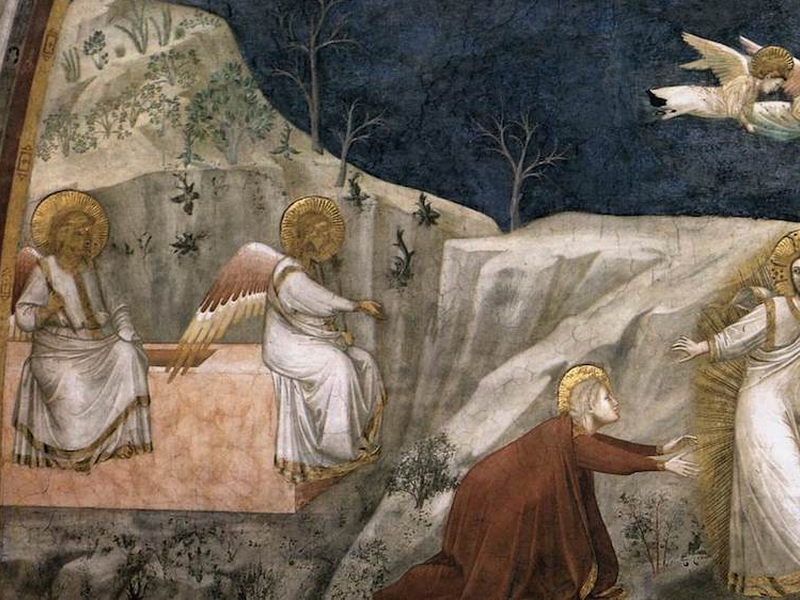
giotto-noli-me
John

The Gardener and the Beloved, (Part 1)

On a fresco in a chapel in Padua, Italy, there is a famous painting depicting the dramatic post-resurrection scene in John 20 with Mary and Jesus outside of the garden tomb. Giotto di Bondone painted it in the early 14th century. Jesus is striding from the tomb with a victor’s…

by Jeff MeyersApril 1, 2015

Showing page 156 of 309

See all
See all

Adorned with Gentiles

Isaiah 49 is reassurance to Zion that Yahweh has not forgotten her. Her walls are continuously ( tamid ) before Yahweh, like the sacrifices and showbread (v. 16). And Yahweh goes beyond the assurance of His concern to promise that Zion will be surrounded by gathered people, returned exiles and…

November 2, 2012

Euphony in Isaiah 49

The Hebrew of Isaiah 49:17 is beautifully symmetrical. Transliterated, it reads: miharu banayik meharsayik umacharivayik mimmek yetze’u . The endings of the six words form a neat pattern: one - u followed by four words ending with the second person singular pronomial suffix ( k ), and then another -…

November 2, 2012

Wombs

The Hebrew word beten frequently means “womb” (Genesis 25:23; Number 5:22; Psalm 22:9-10; 71:6; Jeremiah 1:5). In a few instances, though, the word is used in unusual contexts. When Yahweh offers Ezekiel a scroll to eat, He orders him to eat it with his beten and to fill his “bowels”…

November 1, 2012

God Needs Nothing

God has no needs. Philo, Seneca, and classic Christian theology agree on that. But I think the explanation differs. Seneca ( On Benefits (The Complete Works of Lucius Annaeus Seneca) , bk. 4) explains that “God bestows upon us very many and very great benefits, with no thought of any…

November 1, 2012
History

Plagues and purity

The Christian conviction that Jesus had defeated the powers and brought an end to old rites had major effects on early Christian social engagement, Gary Ferngren implies in his 2009 Medicine and Health Care in Early Christianity . “Before the advent of Christianity,” he says, “there was no concept of…

November 1, 2012
Literature

Joyce, Synopticist

For all its reputation for iconoclasm, modernism, says Robert Alter in Canon and Creativity: Modern Writing and the Authority of Scripture (The Franz Rosenzweig Lecture Series) , is more accurately described as a “paradoxical amalgam of iconoclasm and hypertraditionalism” (p. 8). Alter’s book explores this phenomenon, along with the “double…

November 1, 2012

Showing page 854 of 2212

Browse by Category

In Medias Res

Your weekly digest for all things Theopolis.

Donate

Theopolis is nearly 100% donor-supported. Consider joining us on our mission.