Alastair Roberts
54 articles

Twin Nativities
In the accounts of our Lord’s nativity and early childhood, so familiar to us from many years of Advent and Christmas services, we often fail to recognize in them the gentle intimations of a greater nativity that is yet to come. The attentive ear, however, can discover in these passages…

Navigating and Celebrating the Complexity of Scripture: A Conversation with Richard Hays
Editors’ note: For those interested in a review of Richard Hays’s latest book, see here . Richard Hays is a renowned New Testament scholar. The professor of New Testament at Duke Divinity School originally studied English literature, giving his reading of Scripture a pronounced literary sensibility. He’s perhaps best known…

The Scriptures Made Strange
The history of the Reformation couldn’t adequately be recounted without discussing the remarkable role played by the relatively recent innovations and developments in book production and printing. The printing press facilitated the rapid production and dissemination of multiple copies of pamphlets and books, which enabled the Reformers to circulate their…

Exodus in 1 Kings
In the four hundred and eightieth year after the Exodus, Solomon began to build the temple of the Lord in Jerusalem. [1] That the author of Kings should date the start of the building of the temple from the Exodus is noteworthy. In Exodus 15:17, in Moses’ song following the…
The Levite, the Concubine, and Israel's Story
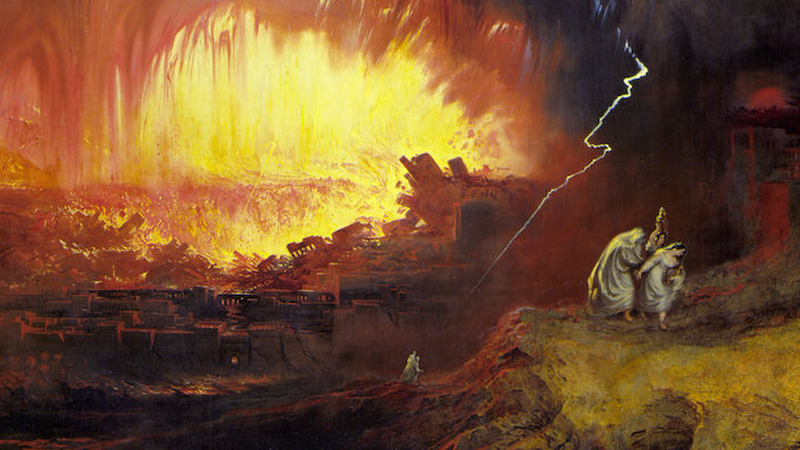
The story of Judges 19 and the subsequent chapters are some of the most shocking and appalling accounts in all of Scripture. The callousness of the old host and the Levite, and the monstrous brutality of the men of Gibeah, leaves us feebly scrabbling for words by which to surmount…

Hero's Theme
In a recent post , Ian Paul discusses the practice of allegorical interpretation, reflecting in particular upon a conversation he had with someone concerning the reading of the story of Rahab. Paul’s interlocutor argued strongly for an allegorical reading of the Rahab story, writing: “Joshua is a type of Christ…

The Falls of Man
The story of the Fall enjoys a peculiar place in Christian thought. Together with the creation account in the two chapters that precede it, it is one of the few Old Testament narratives consistently to escape the relative neglect the Hebrew Scriptures often suffer. While the characters of Abraham, Moses,…
A Musical Case for Typological Realism, (Part 4)
Time as a realm of participation can be difficult for us imaginatively to grasp. While music is a profoundly temporal art, exploring the medium of time like no other, most of our temporal experience seems decidedly unmusical in character, disjointed and unorchestrated. The form in which we naturally discover time…

A Musical Case for Typological Realism, (Part 3)
Thinking about time in terms of music also helps us to appreciate its unity and inner relations. Henri Bergson observes our cultural habit of dividing time into discrete moments, and conceiving of these as if akin to objects in a spatial succession. [1] Against such a notion, Bergson argues for…
A Musical Case for Typological Realism, (Part 2)
As we attend to these and other aspects of music’s temporality, Begbie suggests, we will find means by which to resist some of our habitual modern ways of conceptualizing time, most especially our tendency to conceive of time as if it were a homogeneous set of technologically quantifiable units laid…
A Musical Case for Typological Realism, (Part 1)
Metaphor exerts a surprisingly powerful influence within our thinking. Although it is easily dismissed as little more than a figure of speech, when we attend more closely to the ways in which we use it, metaphor’s importance swiftly becomes more apparent. Although many of our metaphors have become quite invisible…
Embracing Embodiment: Baptism and the Nuptial Meaning of the Body
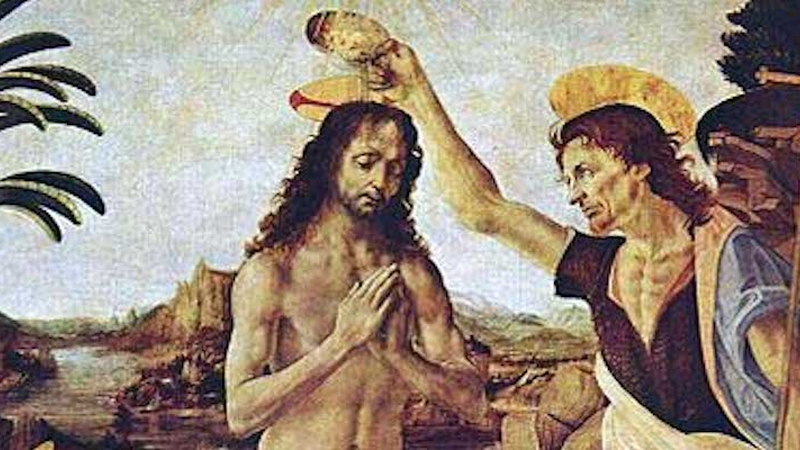
In my previous two articles, I argued for the significance of the fact that baptism addresses our bodies in their objectivity. In the body, the self has an existence that runs deeper than our consciousness, decision, self-expression, and action. In washing our passive bodies, baptism seals us with an anticipatory…
Showing page 4 of 5