Theopolis Logo

Writing

Explore our collection of theological essays, biblical studies, and reflections on faith and culture.

See all
kiwihug-l4gw27xzn1i-unsplash
Hermeneutics

Beginning and New Beginning in Luke

Although the events are, of course, not perfectly parallel, Luke in his gospel intends us to connect Jesus’ birth from the womb and His re-birth from the tomb. Luke 1:27 introduces us to Joseph and in verse 30 we learn that his betrothed wife was named Mary. An angel appeared…

by James B. JordanDecember 28, 1996
screenshot-2023-08-30-at-11-50-23-am
Matthew

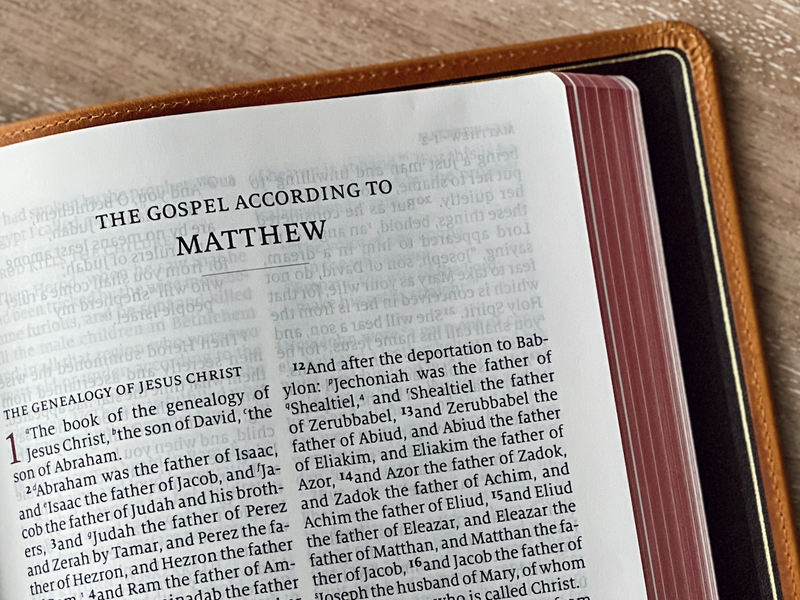
A Note on Matthew

The apostle Matthew is also known as Levi son of Alphaeus. While not much is said about this man, the few things that are told us are significant. Matthew in Greek is Matthaios and comes from the Hebrew name Mattithiah, or Mattith-Yah, "Gift of Yah(weh)." Matthew’s other name is Levi,…

by James B. JordanDecember 28, 1996

aaron-burden-qjdzyt_k8xg-unsplash
Biblical Horizons

Twelve Fundamental Avenues of Revelation (Part 1)

Theologians often speak of "special" and "general" revelation, or of "natural" and "supernatural" revelation, or of "word" and "deed" revelation. While there are many worthwhile insights in these discussions, particularly in the discussions in Cornelius Van Til’s Introduction to Systematic Theology , I have not found any that satisfied my…

by James B. JordanDecember 28, 1996

jan-kahanek-g3o5ztrk2e4-unsplash
Ezekiel

Countdown to Exile IV: Ezekiel and the Structure of History

Ezekiel’s 430 Years In Ezekiel 4, the prophet is told to begin his ministry by setting up a model of Jerusalem and lying on his side and prophesying against it. He is to do this for 430 days, a day for a year. 390 days are against "Israel," and 40…

by James B. JordanDecember 28, 1996

img_7664
Biblical Horizons

The Oddness of the Feast of Booths

The Feast of Ingathering in the seventh month of the Sinaitic calendar is also called the Feast of Sukkoth, of Booths, also called Feast of Tabernacles. I have usually called it by that last phrase, and it is the most common today; but there is a problem: A tabernacle is…

by James B. JordanDecember 28, 1996

sixteen-miles-out-ki3hr9t8t7a-unsplash
Ezekiel

Countdown to Exile III: Warnings Against False Hopes

The End of Jehoiakim’s Reign We have seen that Jehoiakim rejected Jeremiah’s prophetic warnings at the beginning of his reign. Let us now make a year-by-year survey of his reign down to its end. In the spring of 605 BC, Nebuchadnezzar defeated the Egyptians at Carchemish. In the summer, he…

by James B. JordanNovember 28, 1996

Showing page 261 of 309

See all

Showing page 10 of 43

See all

Exegetical progress

If the fathers have already explained the Scriptures, Andrew of St. Victor asked, why do I need to? He answered that truth dwells “deep” and “screens herself from mortal sight.” There is always more truth to dig up because truth “hides, yet so as never wholly to be hidden. Careful…

April 4, 2007
Literature

Jane Austen, Economist

England’s economy in Austen’s time was still dominated by land ownership. Land was the most settled and permanent form of wealth, and writers like Coleridge and Burke asserted that landownership formed a “natural” governing class that had a physical stake in the nation. In 1710, Parliament enacted property qualifications for…

April 4, 2007
History

Equality and fashion

In 1767, one N. Foster wrote, “In England the several ranks of men slide into each other almost imperceptibly, and a spirit of equality runs through every part of their constitution. Hence arises a strong emulation in all the several stations and conditions to vie with each other; and the…

April 3, 2007
History

Consumer revolution

In the 1982 symposium, The Birh of a Consumer Society , Neil McKendrick identifies some of the chief features of the demand-side of the social and economic of the 18th century. What did it mean for England to become a “consumer society”? 1. More people than ever could acquire material…

April 3, 2007
History

Mimetic adverts

Samuel Johnson recognized the character of avertising quite early. he noted in 1761 that “advertisements are now so numerous that they are very negligently perused, and it is therefore become necessary to gain attention by magnificence of promises and by eloquence sometimes sublime and sometimes pathetic.” And he saw that…

April 3, 2007
History

Early advertising

Seen in the advertising section of many 18th-century English newspapers: “a fine young breast of milk willing to enter a gentleman’s household.” Presumably attached to a wet nurse. And an advertisement for a bed that “at the head . . . in the full centre front, appears sparkling with electrical…

April 3, 2007

Showing page 1697 of 2212

Browse by Category

In Medias Res

Your weekly digest for all things Theopolis.

Donate

Theopolis is nearly 100% donor-supported. Consider joining us on our mission.