Theopolis Logo

Writing

Explore our collection of theological essays, biblical studies, and reflections on faith and culture.

See all
tanner-mardis-xuxghzhibn4-unsplash-1-2
Biblical Studies

Tweets-turned-Notes on the Bible’s Chronology

Summary In what follows, I will consider the “year-stamps” employed in Scripture, i.e., statements of the form, “Such-and-such an event took place in the Xth year of Y.” In the process, I will suggest some ways in which the Biblical narrative might relate to events in the extra-Biblical world, though…

by James BejonJuly 16, 2019
durer-prodigal-son-2
Luke

Perspectives on the Prodigal, (Part 2)

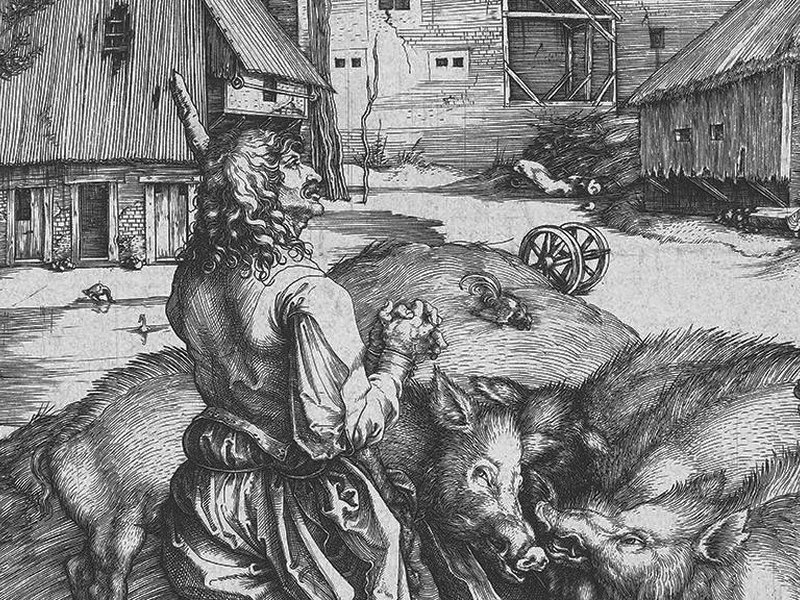
In the first essay on the parable of the Prodigal Son, I suggested that the problems commentators and others encounter in interpreting Jesus three-part parable are not accidental. These are not just problems in our ignorance of cultural background. They are intentional features of the stories —stories designed to poke…

by Ralph Allan SmithJuly 11, 2019
durer-prodigal-son-2
Luke

Perspectives on the Prodigal, (Part 1)

The story of the Prodigal Son is perhaps the most well-known story in the Bible. As others have observed, it may also be one of the most misunderstood. In two short essays, I will point out features of this story that are commonly neglected, aspects of Jesus’ parable that might…

by Ralph Allan SmithJuly 9, 2019
de-rijke-man-en-de-arme-lazarus-by-jacopo-da-ponte-16th-century
Luke

Lazarus and the Rich Man

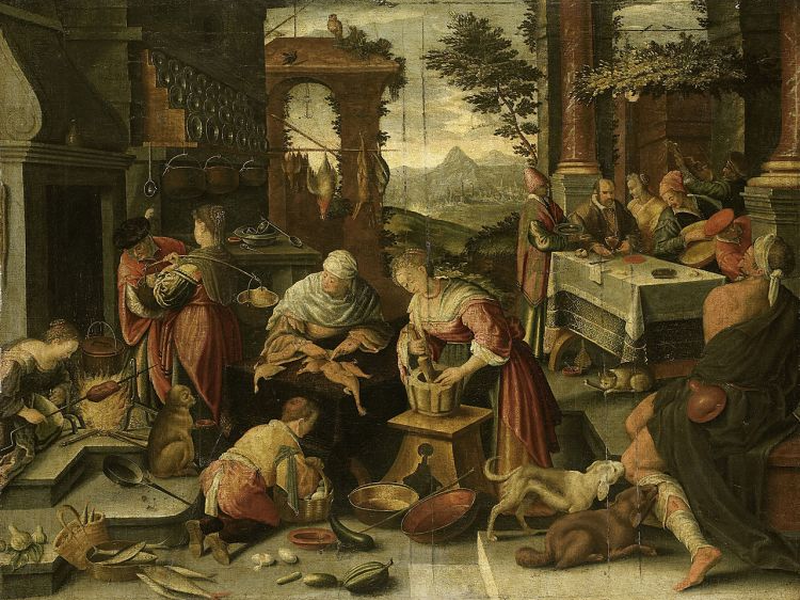
The parable of Lazarus and the nameless rich man is not an independent story. It is part of a long context that begins in Luke 15:1, where Jesus is eating with tax collectors and sinners and the scribes and Pharisees grumble. In response to their hardheartedness, Jesus tells a three-part…

by Ralph Allan SmithJuly 4, 2019
aaron-burden-uynrnfdkjwg-unsplash
Luke

Everybody has Dropsy - Luke 14:1-24

The Bible is written so that even when a reader cannot pick up on what might be deeper or more detailed aspects of a text, there is virtually always a message to be heard. In the ancient world, where the “reader” of Scripture would likely be a church official facing…

by Ralph Allan SmithJuly 2, 2019
communion
Biblical Theology

Fruit Trees and Grain Plants

The distinction between garden (or vineyard) and field begins in Genesis 2. This relates to the ordering of the formless world. Plants of the field are contrasted with the garden planted by God in Genesis 2:5&8. Later on, under the Old Covenant the Israelites will be required to keep their…

by James B. JordanJune 27, 2019

Showing page 77 of 309

See all

Showing page 10 of 43

See all

Body Work

Like his book on the sacraments , Henry de Candole's brief study of the Eucharist, The Church's Offering , shows that liturgical renewal is inevitably also a renewal of ecclesiology. De Candole distinguishes between private prayers and the public worship of the church. The latter "is not simply the gathering…

March 2, 2018
Modernity

Unrevolutionary Revolution

In the opening essay to Reflexive Modernization , Ulrich Beck defines the phrase in the book's title as "the possibility of a creative (self-)destruction for an entire epoch." This creative destruction is not the product of a crisis but the result of the "victory of Western modernization" (2). Quoting Marx…

March 2, 2018
Medicine

Secular Medicine

In After God , Tristram Engelhardt notes that autonomy is not merely a source of authority in secular culture, but "a cardinal directing value or goal." In today's world, one is "obliged freely to choose in conformity with very particular understandings of freedom. The result is that morally condemning autonomously…

March 2, 2018

Pharisees and Sinners

Just before Luke records Jesus' visit to the home of Simon the Pharisee (Luke 7:36-50), he records Jesus teaching about the responses of the Jewish leaders to His ministry and the ministry of John (7:30-35). They don't catch the tune of the times, but the tax gatherers and sinners do.…

March 1, 2018

Shakespeare for Lent

The following essay was first published at Firstthings.com . Lent is a time of renunciation and fasting, spiritual striving, self-examination, contrition, and penitence. It seems a grim and black season of self-accusation. But that’s all superficial. Lent is better understood as a season of Christian comedy. It’s not the glum…

March 1, 2018

Who Do You Say That I Am? Part 2

Even after the disciples have seen Jesus calm the storm and walk on the sea, even after they have eaten miracle bread, they don’t understand. They don’t know what we know – that Jesus is Son of God. The problem isn’t a lack of evidence. They have plenty of evidence…

February 28, 2018

Showing page 90 of 2212

Browse by Category

In Medias Res

Your weekly digest for all things Theopolis.

Donate

Theopolis is nearly 100% donor-supported. Consider joining us on our mission.