Theopolis Logo

Writing

Explore our collection of theological essays, biblical studies, and reflections on faith and culture.

See all
aaron-burden-qjdzyt_k8xg-unsplash
Federal Vision

Justification by Union with Christ Only Through Living Faith

A Brief Comparison of Calvin’s Institutes with the Westminster Confession and Catechisms regarding the shape of imputation This essay is a brief argument that the soteriology of John Calvin in his Institutes of the Christian Religion regarding union with Christ and the imputation of his righteousness is the same as…

by Mark HorneJune 5, 2003

ben-white-mo9vkbg5csg-unsplash
Baptism

Some Thoughts on the Means of Grace: A Few Proposals

The thoughts in this paper were largely prompted by a study of Walter E. Krebs, “The Word and the Sacraments,” Mercersburg Review (July, 1867), 366-383. The discussion in this paper presupposes my earlier studies of baptism, “Baptismal Efficacy and the Reformed Tradition: Past, Present, and Future” and “Calvin on Baptism,…

by Rich LuskJune 3, 2003
aaron-burden-qjdzyt_k8xg-unsplash
Baptism

Faith, Baptism, & Justification

Sometimes our systematic theology creates an illusion of precision. For example, we distinguish the ground and instrument of justification. Justification is grounded in Christ’s work alone, and is instrumentally received by faith alone. That makes good sense and guards us from thinking that faith itself is somehow meritorious. All the…

by Rich LuskJune 1, 2003
todd-cravens-g2pdilavgcy-unsplash
Covenant

DO THIS AS MY MEMORIAL: Understanding How the Lord’s Supper Reminds God to Keep Covenant

Whenever we participate in the Sacrament of the Eucharist, we remember Christ and His Work for us. We remember. And in remembering, we imitate God, as His creatures made after His image. God remembers. This is mysterious to us because we usually think of remembering in the context of our…

by Mark HorneMay 30, 2003
24542-cropped-john-calvin
Baptism

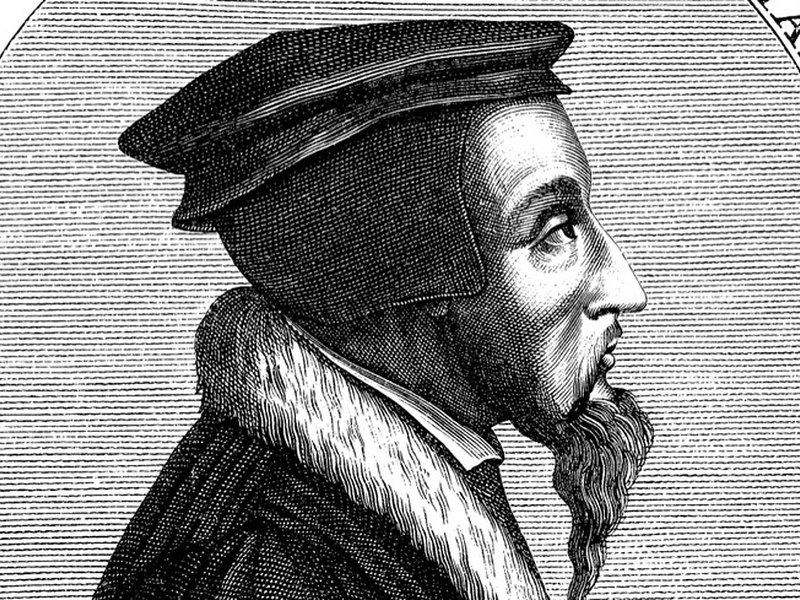
Calvin & the Efficacy of Infant Baptism

It is standard in paedobaptist circles to argue for the baptism of infants out of the Old Covenant system. Because there is no explicit command in the New Testament, we are left to the broader principles and patterns of Scripture. In the Old Covenant, we continually find that the children…

by Rich LuskMay 30, 2003
sixteen-miles-out-d40gdcd_-he-unsplash
Biblical Theology

Why the Law/Gospel Paradigm is Flawed

Luther popularized the law/gospel hermeneutic. Luther argued that any demands God made upon us fell into the category of “law” and could only condemn. By contrast, anything God gave us was “gospel” and came with no strings attached. Calvin paid lip service to this law/gospel antithesis, even though it was…

by Rich LuskMay 29, 2003

Showing page 232 of 309

See all

Showing page 11 of 43

See all

Necessity of Incarnation

Would the Son have been incarnate if Adam had not sinned? 1 Corinthians 15:44-45 provides a prooftext for an affirmative answer. Verse 44 says that the “spiritual body” is implied by the existence of the “natural body.” Human beings were created in a natural state, but they were destined from…

August 12, 2006
Philosophy

Decentered Self of Modernity

Bishop Joseph Butler of Durham worried about the consequences of Locke’s empiricism: “That personality is not a permanent, but a transcient thing: that it lives and dies, begins and ends continually: that no one can any more remain one and the same person two moments together, than two successive moments…

August 12, 2006
History

Embedded mind

Modernity ignores the social, linguistic, and political context of thought, and the way interest shapes the mind; postmodernity foregrounds all this. Perhaps, but . . . . Descartes said that his travels demonstrates that “all those who hold notions strongly contrary to our own are not for that reason barbarians…

August 12, 2006
History

Self and World

For premoderns - ancients and medievals - there was a homology between the self and the world. Man was seen as microcosm, and, as Seigel puts it, they believed that “the world, like the self, is structured so as to fulfill intelligible moral ends.” The initial shift in early modernity,…

August 12, 2006
Philosophy

Birth of the Modern Self?

Seigel views with “considerable skepticism” the notion that Descartes constructed “a general theory of the human self and subject on the basis of the cogito .” In his treatise on the Passions of the Soul , Descartes claimed that the soul was linked with the body, which acts on the…

August 12, 2006
History

Purity

According to Seigel, “Descartes’s view of reason as most pure and solid when it was free of corruption by the world’s confusions implied nothing less than the attempt to break free of all social and cultural experience.” Not for the first time, I wish there were an anthropological history of…

August 12, 2006

Showing page 1812 of 2212

Browse by Category

In Medias Res

Your weekly digest for all things Theopolis.

Donate

Theopolis is nearly 100% donor-supported. Consider joining us on our mission.