Theopolis Logo

Writing

Explore our collection of theological essays, biblical studies, and reflections on faith and culture.

See all
alexander-mils-my9sd3hm3ja-unsplash
American Culture

Charlie Kirk and the Biblical Cycle of History: A Response to Mark Horne

Mark Horne has done a good job elucidating how martyrdom paves the way for revival and success of Christ’s kingdom in the world, just as it also can bring more hardship and suffering. The diverging wheat and tares both growing up together, both benefitting from the watering of blood on…

by Jackson WatersOctober 7, 2025

andre-chipurenko-4wue5dqnxsw-unsplash
Isaiah

Masters of Allusion: Prophecy as Spiritual War (Part 2)

For Part 1, click HERE . Anyone who has read James B. Jordan’s Through New Eyes: Developing a Biblical View of the World and appreciated it as a revelation of how God communicates in symbols and types—both in His Word and in the created order—understands what it is like to…

by Mike BullOctober 2, 2025
screenshot-2025-09-26-at-11-20-00-am
American Politics

What I Wish Christians Understood about Charlie Kirk's Murder

Abel was the first martyr in history. There is no evading this. Jesus pairs him with a murdered prophet (Matthew 23:35; 2 Chronicles 24:20-22). Abel’s blood was heard by God (Genesis 4:10), and God responded to the cry by driving out Cain, Abel’s killer, from the eastern borderland near Eden…

by Mark HorneSeptember 26, 2025
andre-chipurenko-4wue5dqnxsw-unsplash
Isaiah

Masters of Allusion: Prophecy as Spiritual War (Part 1)

Adapted from The Shape of Isaiah: A Covenant-Literary Analysis The prophetic texts are the most difficult parts of the Bible to understand. And when it comes to baffling the reader, they are no respecter of persons, perplexing with their Delphic wiles even the studied scholars. It has been said that…

by Mike BullSeptember 25, 2025
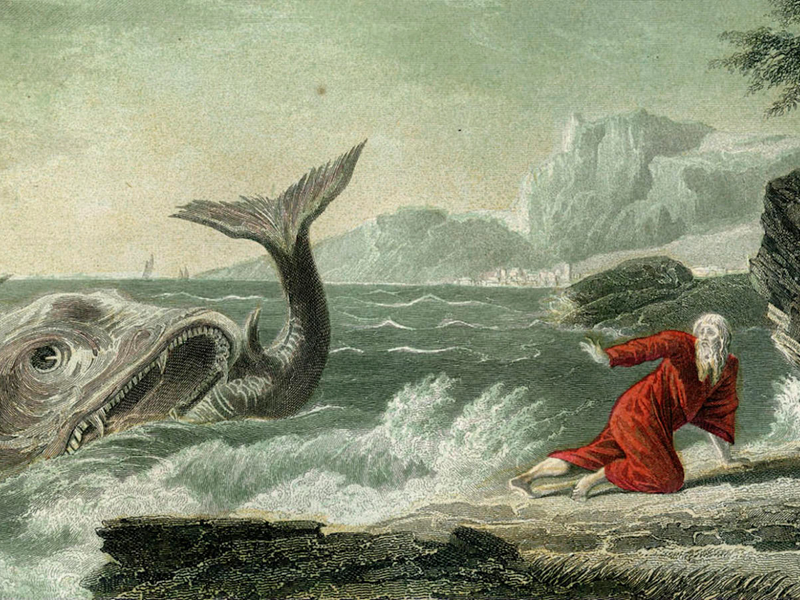
jonahwhale-1552x900
Jonah

Is Jonah a True Story?

The subtitle for the 2004 film Dodgeball is “A True Underdog Story.” If the viewer lets the words pass by without a double-take, he or she will likely spend the rest of the movie, which applies the “unlikely teammates make the best teams” trope to the “sport” of dodgeball, asking,…

by Kelly HahnSeptember 23, 2025
screenshot-2025-09-18-at-9-14-57-am
Ezra

Holy Dishes

The book of Ezra gives an almost odd amount of attention to vessels. These holy vessels, whether cups, bowls, or flagons, are either dedicated as tribute or were used in temple service. The two Hebrew words translated as ‘vessel’ in most English translations are used a total of 14 times.…

by Jason SvintsitskySeptember 18, 2025
See all

Showing page 11 of 43

See all
Literature

Ibsen

Ibsen, Steiner argues, did not write tragedies. Ibsen wrote “dramatic rhetoric” calling society to reform. For real tragedy, there is no such “solution” to be found, there is no remedy, except destructive sacrifice and perhaps a deus ex machina. From this angle, tragedy is perhaps among the STOICHEIA that prepared…

January 7, 2004
Literature

More Quotations from Steiner

Some more quotations from Steiner’s Death of Tragedy : “We cannot understand the romantic movement if we do not perceive at the heart of it the impulse toward drama . . . . The romantic mode is neither an ordering nor a criticism of life; it is a dramatization. And…

January 7, 2004
Theology

NT Wright’s Rutherford House Lecture

Some thoughts on NT Wright’s Rutherford House Lecture, August 2003. I have little disagreement with much of the lecture, and it clarified a number of things for me. Wright’s views on justification, however, continue to puzzle me at a number of points. Here’s an attempt to clarify my (or NTW’s)…

January 7, 2004
Theology

NT Wright’s Rutherford House Lecture

Some thoughts on NT Wright’s Rutherford House Lecture, August 2003. I have little disagreement with much of the lecture, and it clarified a number of things for me. Wright’s views on justification, however, continue to puzzle me at a number of points. Here’s an attempt to clarify my (or NTW’s)…

January 7, 2004
Literature

European Drama

Steiner notes that, following the Renaissance, European drama operated under the shadows of neo-classical and Elizabethan dramatic practice, the former “closed” and rigidly adhering to Aristotelian criteria, the other open and experimental. He discusses the theory of Thomas Rymer (a neo-classicist) at some length, concluding that the controversies that Rymer…

January 6, 2004
Literature

Shakespearean Difference

George Steiner in his Death of Tragedy describes the “Shakespearean difference” as mainly due to Shakespeare’s avoidance of fascination with Hellenic models: “The neo-classic view [which rigidified Aristotelian conceptions of tragedy] expresses a growing perception of the miracle of Greek drama. This perception was fragmentary. There were few translations of…

January 6, 2004

Showing page 2141 of 2212

Browse by Category

In Medias Res

Your weekly digest for all things Theopolis.

Donate

Theopolis is nearly 100% donor-supported. Consider joining us on our mission.