Theopolis Logo

Writing

Explore our collection of theological essays, biblical studies, and reflections on faith and culture.

See all
chris-bair-ndczc5739ck-unsplash
Deuteronomy

Allusive Torah

In the first part of this essay, I argued that the story of the covenant is what unifies and grounds the laws in the book of Deuteronomy. In the third section of this essay, as part of my argument that Deuteronomy 14:1-21 forms a distinct pericope, I claimed that these…

by Ralph Allan SmithJuly 22, 2013

blogging-guide-k5dy18hy5jq-unsplash
Economics

So You Wanna Be Rich?

Paul ends 1 Timothy with convicting warnings about the temptations of wealth and the danger of pursuing wealth. Godliness involves contentment and gratitude for the basics – food and clothing (1 Timothy 6:8). To reinforce the point, Paul reminds Timothy that we came into the world without anything, which is…

by Peter LeithartJuly 17, 2013
channel-82-urfja47nuhu-unsplash
Catholicism

The Festival and the Mass

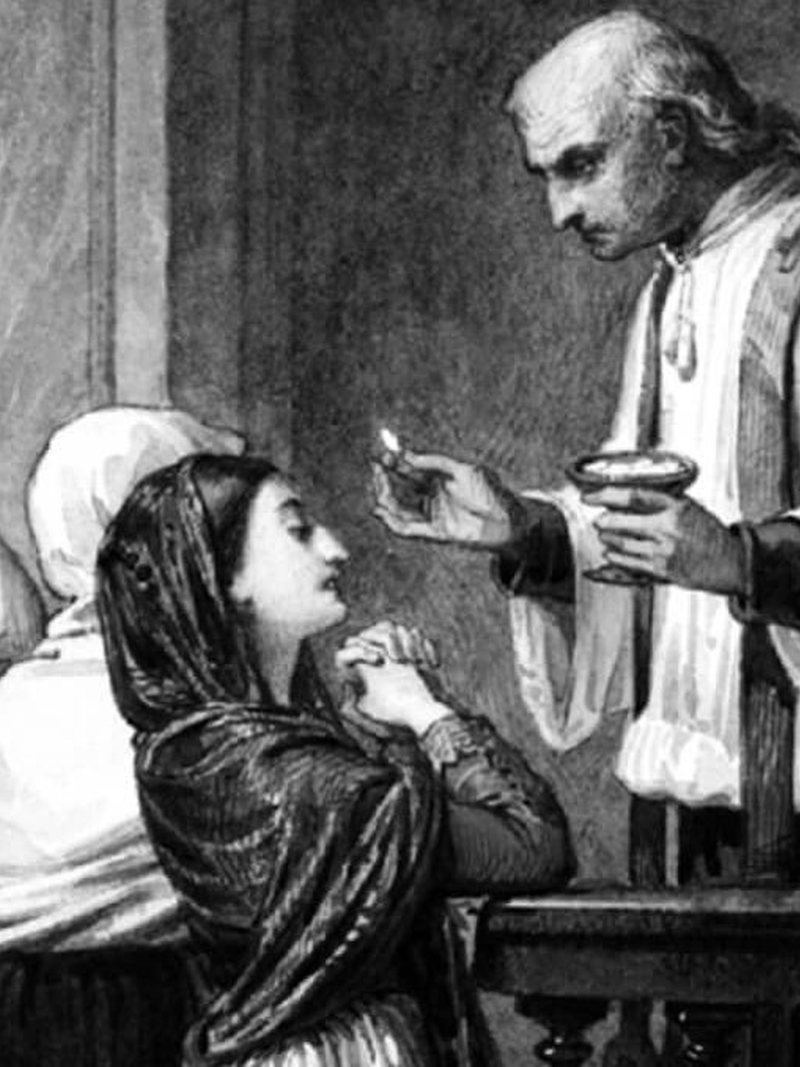
Like Marx himself, the Marxist sociologist Henri Lefebvre was a firm believer in the dictum that “the criticism of religion is the premise of all criticism,” though he dissented from Marx’s prior claim that the criticism of religion is essentially complete. He includes a vicious, sarcastic, Marxist diatribe against the…

by Peter LeithartJuly 15, 2013
markus-winkler-aid-xyrtlec-unsplash
Theopolis News

Biblical Horizons Summer Conference

This week, Trinity House fellows James Jordan, Jeff Meyers, Rich Bledsoe, and Peter Leithart will be lecturing in Niceville, Florida, at the Biblical Horizons Summer Conference. Fore more information, check the Biblical Horizons web site.

by Peter LeithartJuly 15, 2013
guido-jansen-nz-zat4qiuu-unsplash
Isaiah

Combustible God

Fire seems to be a motif in Isaiah 6. The chapter opens “in the year that king Uzziah died,” and we know that Uzziah died a leper because he tried to burn incense in the temple against the law of God. And in this context, in the year king Uzziah…

by Daniel StanleyJuly 10, 2013
sixteen-miles-out-d40gdcd_-he-unsplash
Biblical Studies

Rehabilitating the Quadriga

According to the medieval theory of the "Quadriga" or the "fourfold sense" of Scripture, each passage of Scripture has four dimensions of meaning. Protestants generally cast a suspicious eye on this "method" of reading. That's a mistake. It's a handy guide to the questions we should always ask as we…

by Peter LeithartJuly 8, 2013

Showing page 191 of 309

See all

Showing page 15 of 43

See all
History

Eschatological self

Jerrold Seigel suggests that Locke’s self has “three different aspects”: We are selves to others “by virtue of what they know about our mental and moral life”; we are “selves to ourselves, but incompletely so, through the imperfect consciousness we have of our lives and deeds in the here and…

August 15, 2006
Science

Interior Senses

Murphy goes into admiring detail describing Thomas’s theory of interior senses in higher animals. Apart from its purely historical interest and the anticipations of later scientific theories, Thomas’s discussion has philosophical and theological interest in its own right. He claims, for instance, that there are a number of interior senses…

August 14, 2006
Science

Dueling Theodicies

Robert Young claims that the controversy over Darwinism in the 19th century was not so much a religion-v.-science controversy as a duel between competing theodicies. At one level, he argues, “the protagonists in the debate were in fundamental agreement. They were fighting over the best ways of rationalizing the same…

August 14, 2006
Philosophy

Mind-Body and Energy

Murphy offers an amusing discussion of the question, Assuming a Cartesian dualism of mind and body, how can the mind cause a physical object like the body to move? If one assumes that physicists are correct that physical energy can be transferred to a physical system, it has to arise…

August 14, 2006
Theology

Effects of dualism

Murphy makes this interesting comment, which she admits is an oversimplification: “the adoption of a dualist anthropology in the early centuries of the church was largely responsible for changing Christians’ conception of what Christianity is basically all about. I am suggesting that original Christianity is better understood in socio-political terms…

August 14, 2006
Theology

Physicalism and the Bible

In her Bodies and Souls, or Spirited Bodies? (Cambridge, 2006), Nancey Murphy argues for a non-reductionist version of physicalism on the question of the “body-soul” problem: “This is the view that humans are composed of only one ‘part,’ a physical body.” She spends a bit over six pages near the…

August 14, 2006

Showing page 1810 of 2212

Browse by Category

In Medias Res

Your weekly digest for all things Theopolis.

Donate

Theopolis is nearly 100% donor-supported. Consider joining us on our mission.