Theopolis Logo

Writing

Explore our collection of theological essays, biblical studies, and reflections on faith and culture.

See all
nativity
Advent

The Rough Places Plain

“What’s the fastest route” he asks me as we quickly come to a stop behind a sea of red brake lights. I pull out my phone and map all the options. Every way is red with traffic backed up. Deep down I must be a small town girl because traffic…

by Lindsey TollefsonDecember 24, 2015

markus-winkler-aid-xyrtlec-unsplash
Theopolis News

2015 Letter from the President

Dear Friend of Theopolis, I have signed a stack of documents in the years since we started Theopolis, but my heart jumped a few beats as I looked at the thick lease contract. “This is real,” I thought. “This makes it really real.” Theopolis has been real for nearly three…

by Brian MoatsDecember 23, 2015
trinity-1-3
Books

Headship of Christ and Queens

In the Edenic world of Perelandra, from C.S. Lewis’s Space Trilogy, Ransom notices something about how the Green Lady treats the animals: [1] “There was in her face an authority, in her caresses a condescension, [2] which by taking seriously the inferiority of her adorers made them somehow less inferior…

by Remy WilkinsDecember 22, 2015
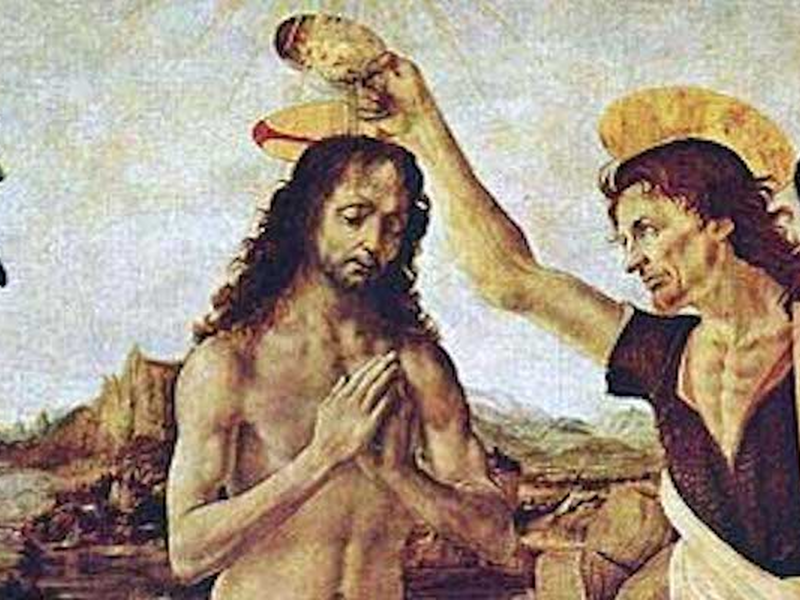
baptism-of-christ
Baptism

Embracing Embodiment: Baptism and the Nuptial Meaning of the Body

In my previous two articles, I argued for the significance of the fact that baptism addresses our bodies in their objectivity. In the body, the self has an existence that runs deeper than our consciousness, decision, self-expression, and action. In washing our passive bodies, baptism seals us with an anticipatory…

by Alastair RobertsDecember 17, 2015
holy-family
Advent

A Child Is Born

Judah is a sinful nation, weighed down with iniquity. They are not the seed of Abraham, but the seed of iniquity. Their worship is abominable to Yahweh, because their hands are covered with innocent blood. They have not done good, or sought justice, or reproved the ruthless, or defended the…

by Peter LeithartDecember 15, 2015
baptism-2
Baptism

Presenting Limbs and Organs: Baptism and Sacrificial Ethics

Although we tend to define ourselves by our subjectivity —our perceptions, thoughts, feelings, decisions, actions—we are frequently forgetful of the objectivity of the self as body, the reality of the self that underlies and precedes all of our subjectivity. The body is the site of our ‘givenness’, where we are…

by Alastair RobertsDecember 10, 2015

Showing page 139 of 309

See all

Showing page 15 of 43

See all
Philosophy

Autonomy and Tragedy

Early in his Tragic Sense of Life , Unamuno captures the profound connection between autonomy and tragic character in a passage of hyperventilating passion: “The visible universe, the universe that is created by the instinct of self-preservation, becomes all to narrow for me. It is like a cramped cell, against…

December 10, 2003

Chiasm in Romans 3:19-31

There’s something chiastic going on in 3:19-31 (or maybe 2:25-3:30). A. by works of law no flesh shall be justified, 19-20 B. Apart from law, righteousness of God is revealed, 21 C. righteousness through faith in Jesus—> for all have sinned, 22-23 D. being justified as a gift through Jesus…

December 10, 2003
Literature

Spenserian Humor

A touch of Spenserian humor: Spenser has a witch create a false Florimell (Book 3) for her slothful and unattractive son, who is smitten with the beauty of the real Florimell. The witch uses materials from Petrarchan love sonnets to construct the lady ?Eactual lamps for eyes, actual golden wire…

December 9, 2003
Literature

Spenser and Milbank

Spenser might provide a Milbankian response to Milbank’s endorsement of homosexual sex and “threesomes.” In Book 3 of The Faerie Queene , Spenser’s heroine is Britomart, the lady knight who represents a militant chastity directed toward marital and sexual consummation rather than a fearful virginity that simply avoids sex. Britomart…

December 9, 2003
Literature

Hero and Eros

William Allan Oram in a book on Spenser writes that “one of the fruitful false etymologies of the Renaissance was the derivation of HERO from EROS: by this understanding, love does not hinder noble deeds but spurs them on.”

December 9, 2003
Literature

Shakespeare for Readers

Also in the November 7 TLS (belatedly on my desk) is a review of Lukas Erne’s Shakespeare as Literary Dramatist , in which Erne challenges the popularly accepted notion that Shakespeare was writing for viewers rather than readers. He shows that plays were being written for publication in Shakespeare’s time,…

December 9, 2003

Showing page 2154 of 2212

Browse by Category

In Medias Res

Your weekly digest for all things Theopolis.

Donate

Theopolis is nearly 100% donor-supported. Consider joining us on our mission.