Theopolis Logo

Writing

Explore our collection of theological essays, biblical studies, and reflections on faith and culture.

See all
abortion
Abortion

Letters on Abortion, (Part 1)

What is below is fairly self-explanatory. This is an exchange I had with a local liberal clergyman on the subject of abortion. The circumstances of the debate are included in the text itself. I initially e-mailed this out to a list of clergy in our city after a local (and…

by Richard BledsoeNovember 17, 2015

wall-2
Ezra

The Perfumed Butler and the Wisdom of Civil Obedience

The seemingly humdrum parts of the Bible often hide overlooked wisdom. Take, for example, the books of Ezra and Nehemiah. Their stories aren't exactly the most gripping or memorable. They are far less concrete than, say, the story of the Exodus. No one in Ezra is stricken blind or devoured…

by Christian LeithartNovember 10, 2015
sparkler
Happiness

"Happy! Happy! Happy!" Authentic Happiness and Its Knock-Offs

For most of the past century, philosophical perspectives on life in the western world have been overtly grim and pessimistic. The optimism of the Enlightenment, generated by confidence in the scientific method and the potential of an increasingly civilized humanity to redress the evils of the world, was shattered by…

by Bill DeJongNovember 5, 2015
aaron-burden-1ebsmyrau-s-unsplash
Hermeneutics

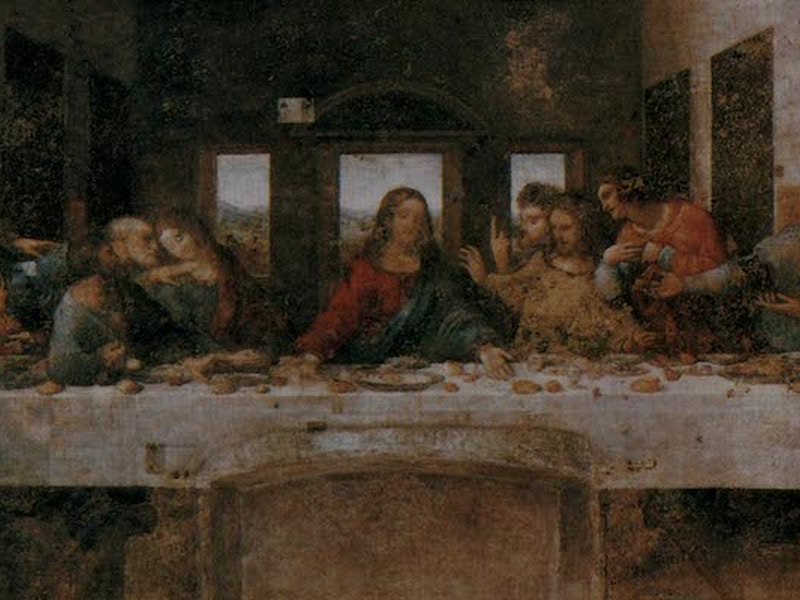
How Does a Chiasm Mean?

Chiastic structures are found all over the Bible, and in recent decades commentators have become more adept at spotting them. But identifying these literary structures is only part of the challenge. There remains the challenge of understanding what they mean. Part of the answer is found in the recognition that…

by Steve JefferyNovember 3, 2015
last-supper
Eucharist

How To Change the World, (Part 2)

Part 1 can be found HERE . Clearly, more than just getting worship right is important in changing the world, but since worship is the central act of God’s people, performed on the first day of the week at the center of the world before the very face of God,…

by James B. JordanOctober 29, 2015
solomonsidolatry
Biblical Theology

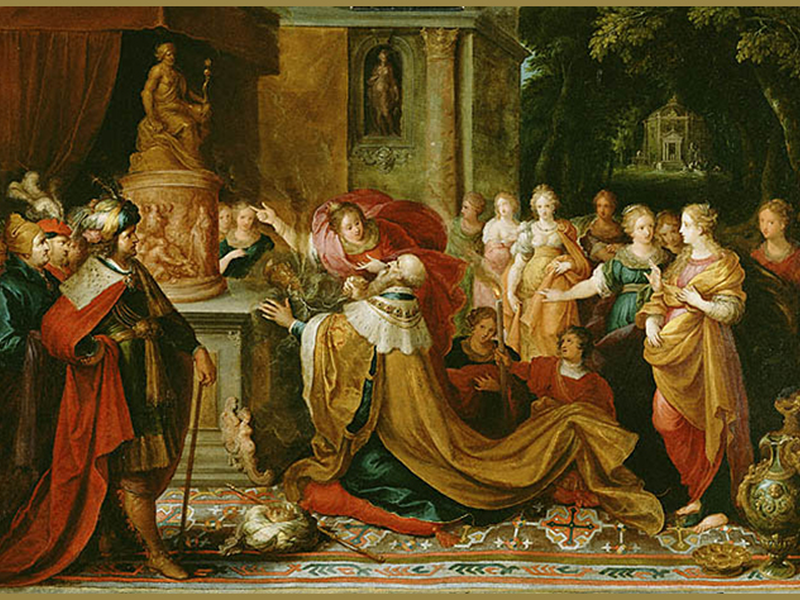
Big Love: A History of Stolen Fruit

“Blessed is the womb that bore you, and the breasts at which you nursed.” ( Luke 11:27 ) Arguing for Christian morality in a secular society is difficult. A culture which accepts evolutionary dogma has no intellectual place — or inherent desire — for absolute morality, since it believes morality…

by Mike BullOctober 27, 2015

Showing page 141 of 309

See all

Showing page 16 of 43

See all

Conveniens

Bauerschmidt notes that Aquinas frequently argues, especially when speaking of the incarnation, not for “proof” of doctrine but for its “fittingness.” Reason has the role of “manifesting how [the incarnation] fits together (convenire means literally ‘to come together’) with other things that Christians hold true about God.” Perhaps this can…

March 23, 2006

Extra-Augustinisticum

In Epistle 137, Augustine writes: “The Christian teaching nowhere holds that God was so poured into human flesh as either to desert or lose - or to transfer and, as it were, compress within this frail body - the care of governing the universe. This is the thought of people…

March 23, 2006

Thomas on Merit

Commenting on ST I-II, q. 109, Frederick Bauerschmidt says that Thomas uses the word “merit” analogically when we speak of God rewarding human action “since we can act in the first place only because God has given us the capacity to act.” This applies even to Jesus: “even when Thomas…

March 23, 2006

On Seneca, de Beneficiis, Books 1-2

Seneca suggests that ingratitude is the worst of vices, and nothing is more “harmful to society” than ingratitude (I.1). Later in Book I, he lists a series of moral ills that plague society – “homicides, tyrants, thieves, adulterers, ravishers, sacrilegious, traitors” – but concludes that “worse than all these is…

March 23, 2006
Literature

Prospero the Magus

I am grateful to Ralph Smith for references to Frances Yates’ work on Shakespeare’s plays. In an analysis of The Tempest, Frances Yates writes: “It is inevitable and unavoidable in thinking of Prospero to bring in the name of John Dee, the great mathematical magus of whom Shakespeare must have…

March 22, 2006
History

Elizabethan Magic

Educated Elizabethans lived in a world of similitudes. As EMW Tillyard argued, the Elizabethan world picture was constituted by a series of analogous chains of being. The social world manifested and was manifested by the natural world; the universe as a whole resembled human beings; there was a hierarchy among…

March 22, 2006

Showing page 1867 of 2212

Browse by Category

In Medias Res

Your weekly digest for all things Theopolis.

Donate

Theopolis is nearly 100% donor-supported. Consider joining us on our mission.