Theopolis Logo

Writing

Explore our collection of theological essays, biblical studies, and reflections on faith and culture.

See all
freysteinn-g-jonsson-2baa-syyptk-unsplash
American Religion

Protestantism's Lost Soul

D. G. Hart’s The Lost Soul of American Protestantism vividly clarifies the differences between evangelical and Confessional Protestantism. In part the book is a manifesto for historians of American religion. Hart argues that historians of American Protestantism have operated with a simplistic binary contrast of evangelical/conservative v. liberal/progressive. At best,…

by Peter LeithartAugust 18, 2015
dostoyevsky
Books

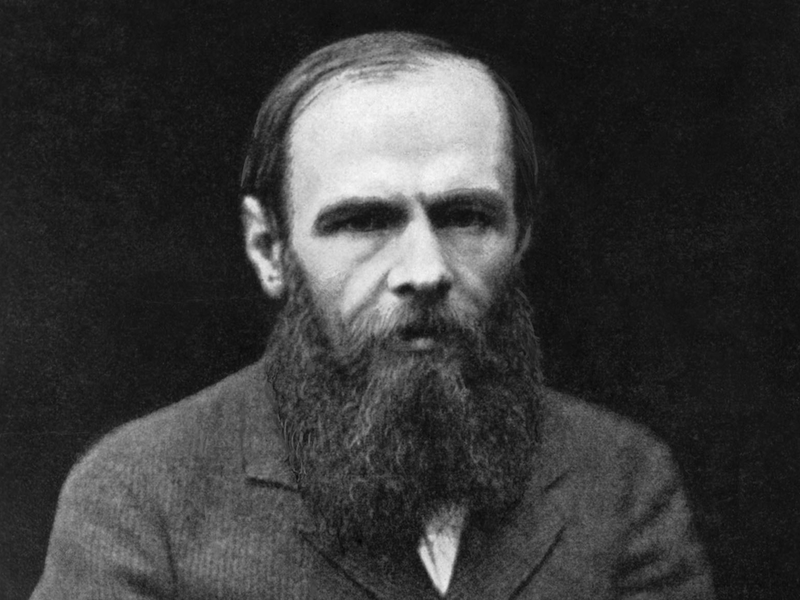
The Idiot and the Limits of Compassion

Dostoyevsky’s novel, The Idiot , like his other major works, is a complex evaluation of the human condition—a juxtaposition of the innate goodness and innate evil that resides within every human heart. There is much one can say about The Idiot . I am no specialist of Russian literature, or…

by Gerald HiestandAugust 13, 2015
same-sex-celebrations-2
Homosexuality

If There is “Natural Law” How Can People Believe in Same-Sex Marriage?

At risk of violating some secret handshake agreement on some important nuance to “natural law,” I will sum up what I understand in my own words. As far as I can tell natural law is supposed to be an area of knowledge that all people should be able to agree…

by Mark HorneAugust 11, 2015
falling-star
Biblical Studies

Cosmic Language, 2

The first installment of this article may be found here . The Image of Man This brings us to a substitutionary atonement which we do understand, the fulfilment of the cruciform Tabernacle in the cross of Christ. Although Jesus’ execution was Physical and Social, it was primarily Personal . Beginning…

by Mike BullAugust 6, 2015
branagh-macbeth
Genesis

Every Noise Appalls

The first two essays in this series drew attention to the structure of the first part of Macbeth and to the way Shakespeare incorporates the Garden of Eden into his story. Macbeth , we saw, is a temptation story in which, compared to the Biblical story, the temptation itself is…

by Ralph Allan SmithAugust 4, 2015
new-jerusalem
Revelation

The Warrior and the City: A Wedding Homily

Revelation 19:6-9 Then I heard something like the voice of a great multitude and like the sound of many waters and like the sound of mighty peals of thunder, saying, “Hallelujah! For theLord our God, the Almighty, reigns. Let us rejoice and be glad and give the glory to Him,…

by Peter LeithartAugust 3, 2015

Showing page 146 of 309

See all

Showing page 18 of 43

See all

Conveniens

Bauerschmidt notes that Aquinas frequently argues, especially when speaking of the incarnation, not for “proof” of doctrine but for its “fittingness.” Reason has the role of “manifesting how [the incarnation] fits together (convenire means literally ‘to come together’) with other things that Christians hold true about God.” Perhaps this can…

March 23, 2006

Extra-Augustinisticum

In Epistle 137, Augustine writes: “The Christian teaching nowhere holds that God was so poured into human flesh as either to desert or lose - or to transfer and, as it were, compress within this frail body - the care of governing the universe. This is the thought of people…

March 23, 2006

Thomas on Merit

Commenting on ST I-II, q. 109, Frederick Bauerschmidt says that Thomas uses the word “merit” analogically when we speak of God rewarding human action “since we can act in the first place only because God has given us the capacity to act.” This applies even to Jesus: “even when Thomas…

March 23, 2006

On Seneca, de Beneficiis, Books 1-2

Seneca suggests that ingratitude is the worst of vices, and nothing is more “harmful to society” than ingratitude (I.1). Later in Book I, he lists a series of moral ills that plague society – “homicides, tyrants, thieves, adulterers, ravishers, sacrilegious, traitors” – but concludes that “worse than all these is…

March 23, 2006
Literature

Prospero the Magus

I am grateful to Ralph Smith for references to Frances Yates’ work on Shakespeare’s plays. In an analysis of The Tempest, Frances Yates writes: “It is inevitable and unavoidable in thinking of Prospero to bring in the name of John Dee, the great mathematical magus of whom Shakespeare must have…

March 22, 2006
History

Elizabethan Magic

Educated Elizabethans lived in a world of similitudes. As EMW Tillyard argued, the Elizabethan world picture was constituted by a series of analogous chains of being. The social world manifested and was manifested by the natural world; the universe as a whole resembled human beings; there was a hierarchy among…

March 22, 2006

Showing page 1867 of 2212

Browse by Category

In Medias Res

Your weekly digest for all things Theopolis.

Donate

Theopolis is nearly 100% donor-supported. Consider joining us on our mission.