Theopolis Logo

Writing

Explore our collection of theological essays, biblical studies, and reflections on faith and culture.

See all
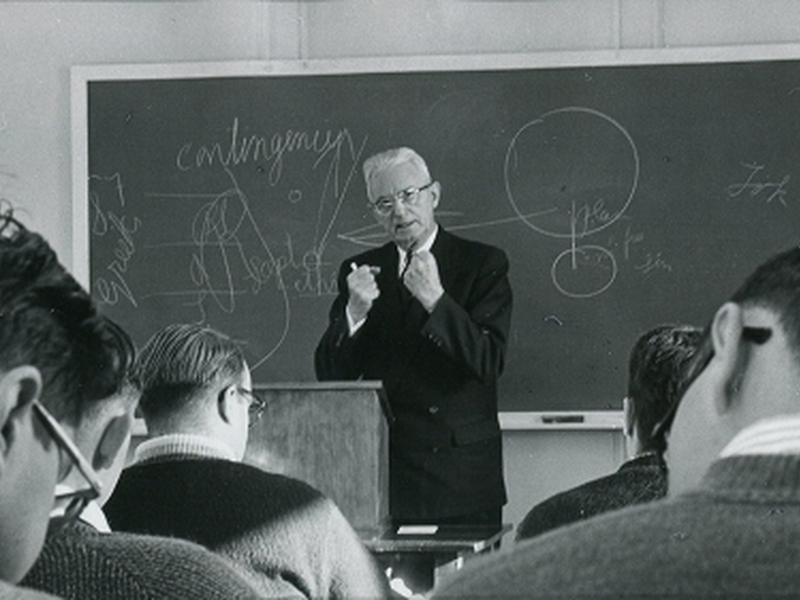
vantil-teaching
Deuteronomy

Torah as Testimony (Part 2)

Cornelius Van Til offered a revolutionary exposition of the Christian worldview through the lens of Reformed theology. He argued and, I believe demonstrated, that Biblical metaphysics, epistemology, and ethics mutually presuppose and include one another. Every ethical statement of the Bible — commands about righteousness — presuppose the existence and…

by Ralph Allan SmithJune 21, 2022

tanner-mardis-xuxghzhibn4-unsplash-1-2
Deuteronomy

Torah as Testimony (Part 1)

In the introductory portion of Deuteronomy, Moses’ last sermons to the people of Israel — people that he regarded as his own beloved children — there is a statement that may seem paradoxical to a modern reader. It invites questions and maybe even creates problems in our understanding. Here are…

by Ralph Allan SmithJune 14, 2022
mtmoriahnv
Biblical Studies

The View from Gerar: Looking Back to Moriah (and Forward to Sinai)

In his discussion of the biblical type scene, Robert Alter speaks of the “patterns of repetition, symmetry, [and] contrast” which characterize the narratives of Scripture, patterns that give pleasure to the reader while also building up a web of meaningful connections between texts. 1 But if readers are to notice…

by Josh JensenJune 7, 2022
v4mkpbd70x7bkvc7mqvu
Genesis

Did Eve Ruin Female Ordination?

In 1 Timothy 2, Paul writes: “I do not permit a woman to teach or to have authority over a man, but to be in silence. For Adam was formed first, then Eve. And Adam was not deceived, but the woman being deceived, fell into transgression” (1 Timothy 2:12-14). This…

by Adam McIntoshMay 31, 2022
helena-lopes-rotyxo1m0wo-unsplash
Matthew

Warhorse Meek

Blessed are the meek: for they shall inherit the earth. Matthew 5:5 When the above verse is read during a Lord’s Day service, no doubt, every extrovert in the room thinks to himself, “Well, that rules out me.” After all, the meek folks in the room are the ones you…

by Garrett SoucyMay 24, 2022
nathan-dumlao-5bb_atdt4oa-unsplash-2
Biblical Studies

Earth and Fire

The flames of the altar tell a mysterious story beyond mere atonement. The altar was a place of union, glory, worship, love and forgiveness, laughter and tears, renewal and hope. The altar is where Israel would feast with God, sacrifice to God, worship God, confess, and receive forgiveness from God.…

by Kyle LammottMay 23, 2022

Showing page 43 of 309

See all

Showing page 18 of 43

See all
Literature

Ibsen

Ibsen, Steiner argues, did not write tragedies. Ibsen wrote “dramatic rhetoric” calling society to reform. For real tragedy, there is no such “solution” to be found, there is no remedy, except destructive sacrifice and perhaps a deus ex machina. From this angle, tragedy is perhaps among the STOICHEIA that prepared…

January 7, 2004
Literature

More Quotations from Steiner

Some more quotations from Steiner’s Death of Tragedy : “We cannot understand the romantic movement if we do not perceive at the heart of it the impulse toward drama . . . . The romantic mode is neither an ordering nor a criticism of life; it is a dramatization. And…

January 7, 2004
Theology

NT Wright’s Rutherford House Lecture

Some thoughts on NT Wright’s Rutherford House Lecture, August 2003. I have little disagreement with much of the lecture, and it clarified a number of things for me. Wright’s views on justification, however, continue to puzzle me at a number of points. Here’s an attempt to clarify my (or NTW’s)…

January 7, 2004
Theology

NT Wright’s Rutherford House Lecture

Some thoughts on NT Wright’s Rutherford House Lecture, August 2003. I have little disagreement with much of the lecture, and it clarified a number of things for me. Wright’s views on justification, however, continue to puzzle me at a number of points. Here’s an attempt to clarify my (or NTW’s)…

January 7, 2004
Literature

European Drama

Steiner notes that, following the Renaissance, European drama operated under the shadows of neo-classical and Elizabethan dramatic practice, the former “closed” and rigidly adhering to Aristotelian criteria, the other open and experimental. He discusses the theory of Thomas Rymer (a neo-classicist) at some length, concluding that the controversies that Rymer…

January 6, 2004
Literature

Shakespearean Difference

George Steiner in his Death of Tragedy describes the “Shakespearean difference” as mainly due to Shakespeare’s avoidance of fascination with Hellenic models: “The neo-classic view [which rigidified Aristotelian conceptions of tragedy] expresses a growing perception of the miracle of Greek drama. This perception was fragmentary. There were few translations of…

January 6, 2004

Showing page 2141 of 2212

Browse by Category

In Medias Res

Your weekly digest for all things Theopolis.

Donate

Theopolis is nearly 100% donor-supported. Consider joining us on our mission.