Theopolis Logo

Writing

Explore our collection of theological essays, biblical studies, and reflections on faith and culture.

See all
little-girl
Children

Honor God With Your Body

I am making a new rule in our house! We are actually kind of skimpy on the house rules. I try very hard to keep things simple: love God, love others, be joyful. It’s not complicated to avoid discipline here. But I have found myself repeating this new rule over…

by Lindsey TollefsonApril 9, 2015

giotto-noli-me-3
John

The Gardener and the Beloved, (Part 3)

Click HERE for Part 2 The voice of Jesus transforms and changes Mary when she hears him speak her name. This is her last “turning.” So also the woman in the Song of Songs longs to hear the voice of her beloved. Let me see your face, let me hear…

by Jeff MeyersApril 6, 2015
giotto-noli-me-2
John

The Gardener and the Beloved, (Part 2)

Click HERE for Part 1. The details of this story call the attentive reader back to the drama of Solomon’s Song of Songs. And the Song of Song’s alludes to, ties us into the story of Adam and Eve in the Garden and the promise of a coming Messiah that…

by Jeff MeyersApril 4, 2015
easter-term-2015-2
Theopolis News

Easter Term, 2015

“The course was a paradigm shift for me,” said Jonathan Sedlak, a Milwaukee electrical contractor who attended Theopolis’s course on Revelation. “I am left with a book that is far more practical than it has ever seemed before.” Jonathan Anderson of Louisville, Kentucky found the course “refreshing.” “I finished with…

by TheopolisApril 2, 2015
psalm-singing
Genesis

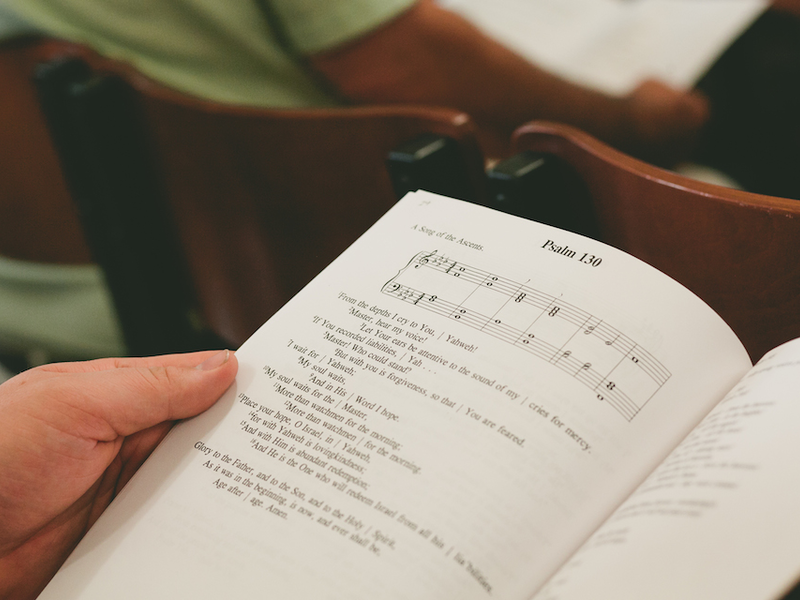
Worship as Response: Liturgical Logic, (Part 1)

“It is only by participation in a rational, practice-based community that one becomes rational.” – Alasdair MacIntyre It may be perfectly clear to a chef why adding unsifted powdered sugar to a hot frosting is a bad idea. But for an amateur cook, this may be the kind of rule…

by Jonathan BarlowApril 2, 2015
giotto-noli-me
John

The Gardener and the Beloved, (Part 1)

On a fresco in a chapel in Padua, Italy, there is a famous painting depicting the dramatic post-resurrection scene in John 20 with Mary and Jesus outside of the garden tomb. Giotto di Bondone painted it in the early 14th century. Jesus is striding from the tomb with a victor’s…

by Jeff MeyersApril 1, 2015

Showing page 156 of 309

See all
See all

Exhortation

“How can a man be born again when he is old?  Can he enter a second time into his mother’s womb?” Nicodemus’ way of putting the question sounds childish; but it’s a common question.  My life is a mess, and what’s done cannot be undone.  Then along comes Jesus mocking…

September 27, 2009

Transgressive film

Carroll again: He explains that much recent film criticism takes its cues from the effort to maximize aesthetic satisfaction.  This is evident in the respect given to “transgressive” films that overturn “what are called the codes of Hollywood filmmaking”: “Within the context of recent film criticism, it is appropriate to…

September 26, 2009
Literature

Consumerist structuralism

Noel Carroll argues that anti-intentionalist structuralist criticism aims to maximize aesthetic enjoyment, at the expense of all other purposes of art and literature.  This, he argues, “has a very ‘consumerist’ ring to it.  In Buberesque lingo, it reduces our relation to the text to an I/it relationship.”  By contrast, Carroll…

September 26, 2009
Literature

Finnegans Wake

In case you got bogged down and missed the plot, Thornton Wilder helpfully summarizes what he describes as Joyce’s “Night Book”: “We overhear and oversee [the hero] in bed above his tavern at the edge of Dublin.  His conscience is trying him for some obscure misdemeanors committed - or perhaps…

September 25, 2009
Philosophy

Static Hellenism?

In his treatise Contra Gentiles , Athanasius reproduces an argument from the Phaedrus that provides the immortality of the soul.  Anything that has to be moved by something else is mortal and finite; whatever moves of itself is immortal, and immortally mobile.  What is most fully mobile is what is…

September 25, 2009
Art

Disinterestedness

Adorno sees disinterestedness as a necessary stage in the development of aesthetic experience, but says that it has to be transcended by a recognition of the “interest inherent in disinterestedness.” Disinterestedness applies only to certain kinds of works, he says.  Try reading Kafka and remaining in disinterested contemplation: Kafka’s novels…

September 24, 2009

Showing page 1345 of 2212

Browse by Category

In Medias Res

Your weekly digest for all things Theopolis.

Donate

Theopolis is nearly 100% donor-supported. Consider joining us on our mission.